mud, petroglyphs, oil, and fire: quintessentially azerbaijan

Sandwiched in the Caucasus, between the Caspian and Black Seas, Azerbaijan is a bit of a latecomer to global tourism. But catching up fast.

Unusual on multiple counts, four features and their unique mix set the country even further apart from the ordinary: Mud, petroglyphs, oil, and fire. Where else can one find such a cocktail! To add to its appeal, they come candy-wrapped in picturesque settings at a short distance from the capital Baku in the surrounding Absheron Peninsula.

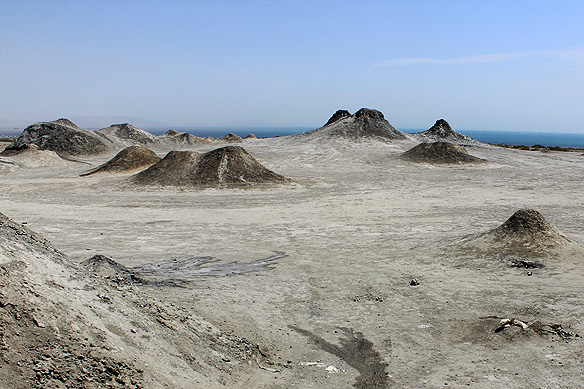
Of the 700 mud volcanoes found around our planet, 40 percent lie in Azerbaijan. They bubble away on barren stretches courtesy of methane gas trapped under the earth’s crust. When the pressurized gas encounters groundwater, and together they find an opening in a fault line, they ooze out in the form of mud, cool to the touch.

Ranging from 1 to 700 metres high, and a few centimetres to a few kilometres wide, they function similarly to regular volcanoes. When they erupt, they can spew flames and mud from the bowels of the earth. Kinezadagh [397 metres high] and Turaghay [400 metres high] are the largest mud volcanoes in the country.

Azerbaijan is also among the oldest inhabited regions in the world, going back to the Stone Age. The Gobustan Rock Art Cultural Landscape Reserve, a UNESCO-listed World Heritage Site, contains an exceptionally large collection of petroglyphs. Etched into rock with sharp stone tools, and with the advent of the Bronze and Iron Ages, with metal, the earliest of the lot is 40,000 years old.

Subjects range from dancing figures, shamans, boats with oarsmen, and battle and hunting scenes; the latter replete with bison, gazelles, horses, and goats. Some of these were ‘drawn’ even before the region’s ancient men and women shifted to farming and husbandry as a source of food. Continue reading
travel shorts: a tale of two heritage cities—shamakhi and sheki in azerbaijan

This slideshow requires JavaScript.

This is the tale of two cities in the land of fire, oil, and gas: Shamakhi where Azerbaijan’s rich medieval heritage took birth. And Sheki, which witnessed this same heritage’s closing chapter before the country was enveloped, first into the Russian empire and soon after, into the Soviet Union.

One specific dynasty’s rule had dominated Azerbaijan’s windswept plains and highlands in the Middle Ages. They were the Shirvan Shahs who ruled the Shirvan region, and whose capital Shamakhi was a trading post on the famed Silk Road.

Such was the glory and power of the Shirvan Shahs that their capital Shamakhi flourished for seven hundred years, from the 9th to 15th Centuries. When it did end its role as their capital, it was only because of nature’s unpredictable jostles. Shamakhi was prone to earthquakes. In the 15th Century, after one of the worst earthquakes the city had seen till then, its rulers felt it was wiser to move their capital lock-stock-and-barrel to Baku.

Most of Shamakhi was razed to the ground in this earthquake. Except for Juma Mosque, Caucasus’ second oldest mosque dating to 743. Juma or Friday Mosque has consistently, and lovingly, always been restored over the centuries. Its most recent face-lift was in 2013. Continue reading

the 5 untold treasures of abu dhabi and sharjah

Think of the United Arab Emirates [UAE] and the one city that invariably pops up in our minds is Dubai—the city of steel, glass, and gold. But Dubai is not the only emirate. Notice the plural in the country’s name? There are six others, each with its own ruler, and of these, two are steadily vying with Dubai for a space in global tourism. For a reason: The incredible treasures they both hold which not many know about. They are Abu Dhabi and Sharjah.

Abu Dhabi is the richest emirate in the grouping and its city by the same name, Abu Dhabi, is the country’s capital. 96 percent of the UAE’s 100 billion barrels of proven oil reserves are within its borders, ranking it at number six worldwide. Abu Dhabi’s ruler is also the President of the UAE. Sharjah, on the other hand, is in a time-warp. It is older, more traditional, and regarded as the UAE’s cultural capital.

It was in 1958 when the UAE first discovered it had oil, and that too loads of it. Four years later, in 1962, Abu Dhabi, then a small fishing village on the edge of a desert, exported its first cargo of crude oil, and the country changed forever.

Supplying 4 percent of the world’s oil requirements with a production of 3.2 million barrels per day, the UAE has spiralled its way through progress at an astonishing speed. However, there is another side to the country that was formed on 2nd December, 1971. Its pre-oil era, swathed in a heritage that is beyond its oil. There is also a whole country that is beyond Dubai.

With ancient desert roots and a vision of unity through globalisation, here are some of UAE’s most spectacular treasures in its two lesser visited cities Abu Dhabi and Sharjah. For often the most beautiful sites are on the road less trodden. ❤ Continue reading

a self-guided walk through shimla, the british raj’s summer capital

1864. The British Crown was now directly in control of the Indian subcontinent. Five years had passed since they had squashed the Indian Mutiny. It had been a tough fight lasting nearly two years and two months, but they’d won in the end.

Summers in their new capital, Calcutta, were, however, brutal. Oh, how they longed for the grey overcast days back home, bathed in gentle drizzle.

Since the 1820s, the earlier British East India Company officers stationed in India had been escaping from the sun-baked plains to a hamlet in the middle hills of the Himalayas during such summers. The hamlet, comprising some 50 houses, was called Shayamala after a local Hindu goddess.

India’s new rulers decided to make this association more permanent. They renamed the hamlet ‘Shimla,’ and set up the British Raj’s ‘Summer Capital’ on its seven hills.

Every year, just before the sweltering heat clamped down on the Gangetic plains, the entire administrative machinery would move here, replete with traders, restaurateurs, and socialites. Once the heat cooled down, and snow started to peck its slopes, they would all move back again south-eastwards.

A mini-Britain was created in Shimla’s hills. Timber-strapped Tudor houses, soaring neo-Gothic churches, grand town halls, and a theatre for concerts and plays. On the Ridge, which offered rather splendid views, a bandstand was thrown in where military bands could play music and the gentry could indulge in leisurely strolls. Not too shabby now, perhaps they whispered to each other in relief.

Though it is now 77 years since the British have left, their summer capital’s remnants still dot Shimla, and more so on its main commercial pedestrian artery—Mall Road.

Here is a self-guided walk on what to watch out for should you ever be in the vicinity, with suggestions for eating and staying dating back to the colonial days. Take your time and savour its charms. After all, Shimla was always for the long haul. ❤

PS. Take the lift up to Mall Road, and on exiting the lift turn left towards Christ Church.

Continue reading

the complete travel guide to the treasures of sri lanka’s cultural triangle

Welcome to my travel guide on Sri Lanka’s Cultural Triangle told a bit differently—through short photo-essay chapters on the country’s ancient and medieval history.

Of the six UNESCO-listed cultural world heritage sites in Sri Lanka, five lie within the Cultural Triangle in the heart of the country. It is a region rooted in 2,500 years of history and heritage, both sacred and secular, from timeless Theravada Buddhist sites to splendid Sinhalese royal capitals. All surrounded in lush tropical jungles.

Before I write any further, I would like to briefly explain two terms used in this guide which are part of the warp and woof of the country. Theravada Buddhism and ‘Sinhalese.’ Theravada Buddhism is the oldest school of Buddhism and a direct offshoot of Buddha’s teachings. There are five countries in the world which have Theravada Buddhism as their official religion, and Sri Lanka is one of them. Sinhalese refers to the Indo-Aryan ethnic race native to Sri Lanka.

Whilst this guide covers the five UNESCO-listed sites, it also includes some gems scattered in-between. I hope you find it useful and it helps put the country’s Cultural Triangle as a seamless whole with all the dots connected. ❤

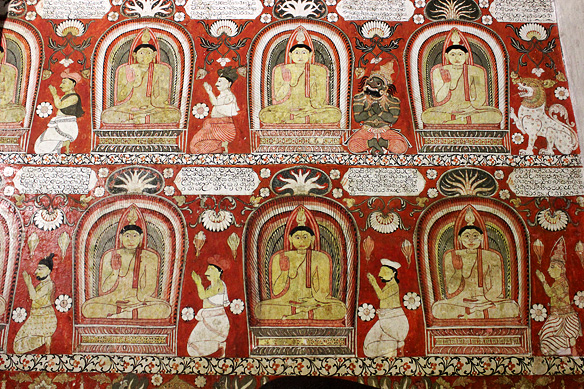
[Title photo: 18th Century Mural at Lankatilaka Vihara, Kandy.]

Table of Contents:

Continue reading

the road less travelled: delft island

Forty kilometres off the northern coast of Sri Lanka, is its farthest island—Delft.

It is an unusual name to come across for a tropical island in the Indian Ocean. After all, there is not much in common between the bleached island and the picture postcard region in Netherlands where white glazed pottery with blue decorations have been historically made. The 18th Century Dutch colonial rulers obviously felt differently; for them it was a perfect fit for their new home. Perhaps a gentle reminder of their roots in faraway lands.

Remote and sparsely populated, Delft is the largest island in the Palk Strait which separates Sri Lanka from the Indian subcontinent. Eight kilometres wide and 5.5 kilometres long, it is not just its name which is out of the ordinary. Delft Island used to be a coral reef in the distant past as revealed by the petrified coral chunks strewn on its emerald green beaches. Sans any streams, potable water is limited to catchment areas for surface water and a few pockets of ground water.

Despite these challenges, 1,300 Tamil Christian and Hindu families call the island their home today; their houses clustered around compounds in the north. Empty, windswept scrublands meanwhile stretch out in the south, right up to the rugged charred coastline. Continue reading

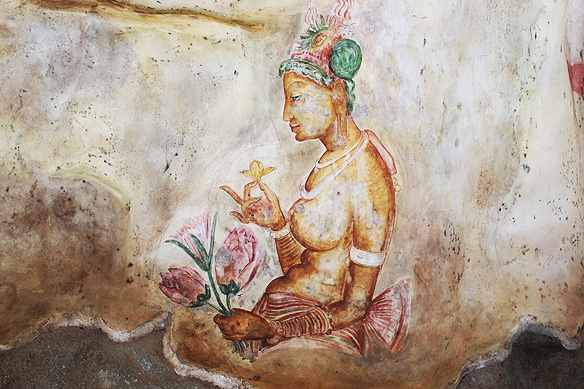
the sigiriya frescoes: king kassapa I and his 500 damsels

477 AD. Anuradhapura, Sri Lanka.

29-year-old Prince Kassapa I was filled with a deep burning desire to be king. So deep, it seemed to completely engulf him. To be the ruler of Anuradhapura, Sri Lanka’s ancient historical spiritual heart. How wondrous would that be!

And he would have been. Could have been. Except for one problem. His mother was the non-royal wife of Moriya King Dhatusena. The rightful heir to the coveted throne was his young half-brother Moggallana, offspring of his father’s chief consort.

Not to be deterred, Kassapa I, also known as Kashyapa I, decided to lead a palace coup with the help of Migara, the army commander who had a personal grudge of his own against the king. Young Moggallana, meanwhile, managed to escape, and took refuge in South India.

When Kassapa demanded to know the location of his father’s treasury, his imprisoned father responded saying Anuradhapura’s water tank was his one-and-only treasure. Miffed on hearing this, Kassapa had his father entombed alive.

For the rest of his life, Kassapa’s subjects and rivals, as well as the local Buddhist monks, would call him Pithru Ghathaka Kashyapa meaning Kashyapa the Patricide. It was a label he would not be able to shake off even after death.

In a bid to start afresh, away from public disgrace and the threat of a possible future retaliation by Moggallana, Kassapa moved his capital 75 kilometres south. Here, deep in Sri Lanka’s tropical plains stood a 180-metre-high monolith volcanic rock pillar with unhindered 360-degree views for miles on end. Continue reading

travel guide: turkmenistan’s 3 legendary unesco-listed treasures

For a history buff, Turkmenistan is what wish-lists are made of. Its historical sites comprise three of the greatest world cities of the past which served as the capitals of some of the region’s most powerful empires in the ancient and medieval world, namely, the Great Seljuks, Khwarezmshahs, and Parthians.

All three of these cities are UNESCO World Heritage Sites today: Merv in the south-east, Konye Urgench in the north, and Old Nisa near the capital Ashgabat.

Welcome to my travel guide on these legendary metropolises’ fantastic histories and breathtaking monuments. Places very few visit, in one of our world’s Least Visited Countries. ❤

MERV: ‘QUEEN OF THE WORLD’ AND CAPITAL OF THE GREAT SELJUKS

Coronation of Seljuk Sultan Ahmad Sanjar [r. 1118 – 1157]; Jami' al-Tawarikh by Rashid al-Din, Tabriz, Persia, 1307 AD.

Coronation of Seljuk Sultan Ahmad Sanjar [r. 1118 – 1157]; Jami’ al-Tawarikh by Rashid al-Din, Tabriz, Persia, 1307 AD.

Often described as ‘the wandering city,’ Merv is Turkmenistan’s grandest UNESCO World Heritage Site, both in scale and age: 1,236 hectares [including the buffer zone] and 4,500 years. Listed in 1999, it is also the oldest and best-preserved oasis city along the Silk Road in Central Asia. Continue reading

ghazni and its indomitable sultans

“The blood of the infidels flowed so copiously that the stream was discoloured, and people were unable to drink it.”

~ Al-Utbi, Tarikh Yamini [Mahmud of Ghazni’s court historian]

Al-Utbi’s lines describe the carnage Sultan Mahmud of Ghazni, a city in eastern Afghanistan, inflicted on the wealthy temple cities of medieval India. From 1001 to 1026, Mahmud attacked northwest India 17 times, revelling in the destruction of the Hindu idols, and stripping the cities of its gold, silver, and wealth.

Mahmud was not interested in permanently owning the sub-continent. The resistance by the likes of Rajput King Vidyadhara Chandela was at times way too stiff, so alliances were made instead when required. His strategy was simple: attack, loot, return. Every year. It was a vow he had made to himself.

Bereft of any other major source of income, the Indian booty helped finance Mahmud’s empire, its capital Ghazni, and army. Under Mahmud’s rule [998 – 1030], the Ghaznavid empire founded by his father, reached its zenith stretching from Iran to Punjab in northwest India. Continue reading

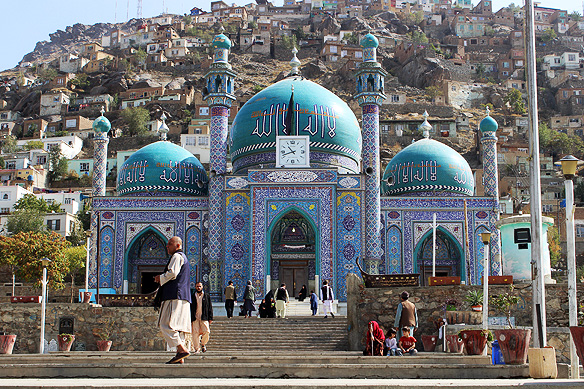
top 15 memorable things to do in kabul, afghanistan’s capital

Afghanistan’s capital, Kabul, is not your regular city. Hemmed in by the Hindu Kush Mountains and Kabul River, it is beautiful. And broken.

The city traces itself back some 3,500 years and was a strategic trading centre on the Silk Road linking India with the Hellenic world. Over the centuries, the Who’s Who of Central Asia’s rulers and empires have ruled over it.

One of its earliest turning points was in the 9th Century when it was conquered and Islamised by the Abbasid Caliphate. Prior to this, Kabul was politically and culturally a part of India with a Buddhist and Hindu populace and rulers. Another major turning point was in 1776, when it officially became the capital of ‘Afghanistan,’ a nation the country’s founding father Ahmed Shah Durrani had established a decade earlier. Continue reading