travel diaries: the caucasus and talysh mountains

Mountains come in all shapes, sizes, and colours in Azerbaijan. 🙂

Dear Diary,

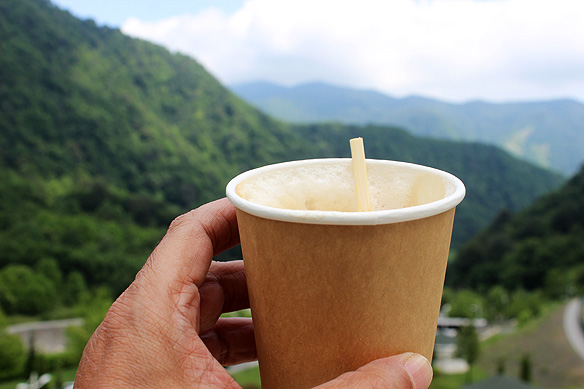
After exploring the Himalayas and Hindu Kush in recent years, I thought I knew it all about mountains. Those soaring peaks on our earth which reach out to the heavens. Could I be further from the truth. I instead learnt, whilst in Azerbaijan, that every mountain range has its own soul. Even if they happen to be geographically right next to each other.

During my 2-week stay, I travelled into the very inner recesses of the Greater Caucasus Mountains in the country’s north, the Lesser Caucasus Mountains in the west, and the Talysh Mountains in its south-east. And was always, both equally charmed and awed.

Though most travellers focus their Azerbaijan travels to the capital Baku, and the much-touted Absheron Peninsula which surrounds it, a mere few hours on impeccable roads takes one to pristine mountain landscapes and towns curled up in the lap of nature.

I thought I would collate some highlights from those days. For posterity’s sake. Continue reading
mud, petroglyphs, oil, and fire: quintessentially azerbaijan

Sandwiched in the Caucasus, between the Caspian and Black Seas, Azerbaijan is a bit of a latecomer to global tourism. But catching up fast.

Unusual on multiple counts, four features and their unique mix set the country even further apart from the ordinary: Mud, petroglyphs, oil, and fire. Where else can one find such a cocktail! To add to its appeal, they come candy-wrapped in picturesque settings at a short distance from the capital Baku in the surrounding Absheron Peninsula.

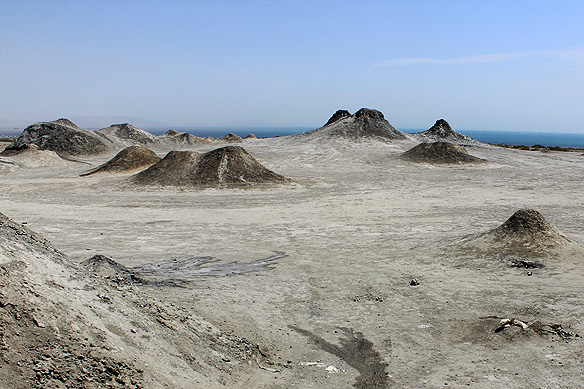
Of the 700 mud volcanoes found around our planet, 40 percent lie in Azerbaijan. They bubble away on barren stretches courtesy of methane gas trapped under the earth’s crust. When the pressurized gas encounters groundwater, and together they find an opening in a fault line, they ooze out in the form of mud, cool to the touch.

Ranging from 1 to 700 metres high, and a few centimetres to a few kilometres wide, they function similarly to regular volcanoes. When they erupt, they can spew flames and mud from the bowels of the earth. Kinezadagh [397 metres high] and Turaghay [400 metres high] are the largest mud volcanoes in the country.

Azerbaijan is also among the oldest inhabited regions in the world, going back to the Stone Age. The Gobustan Rock Art Cultural Landscape Reserve, a UNESCO-listed World Heritage Site, contains an exceptionally large collection of petroglyphs. Etched into rock with sharp stone tools, and with the advent of the Bronze and Iron Ages, with metal, the earliest of the lot is 40,000 years old.

Subjects range from dancing figures, shamans, boats with oarsmen, and battle and hunting scenes; the latter replete with bison, gazelles, horses, and goats. Some of these were ‘drawn’ even before the region’s ancient men and women shifted to farming and husbandry as a source of food. Continue reading