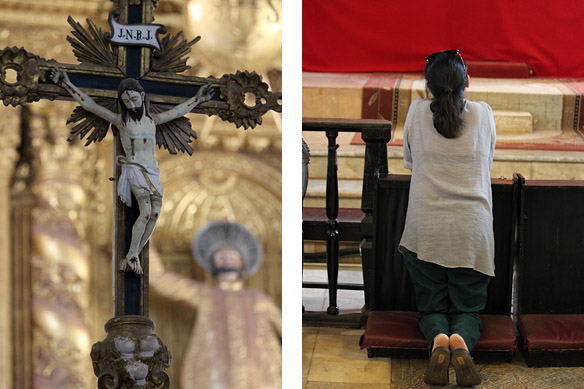
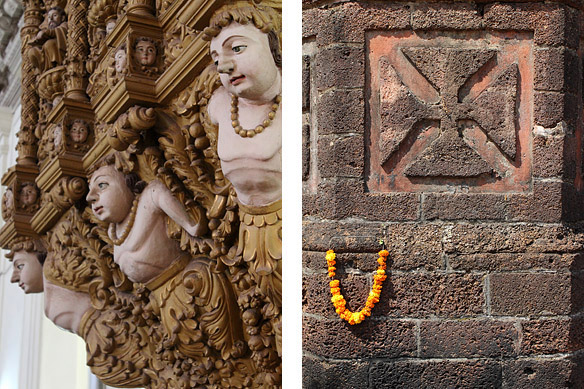
a walk through old goa and fontainhas


The Indo-Portuguese Basilica of Bom Jesus, Old Goa’s most revered church

I am not too sure what I expected when the cab driver dropped me off in Old Goa by the gates of the Jesuit Basilica of Bom Jesus this morning. Jostled by women selling candles and marigold garlands with the cheerful assurance “aapke prayers bhagwaan zaroor sunega (god will definitely listen to your prayers),” how could I say no to their strategic saleswomanship 🙂 Continue reading
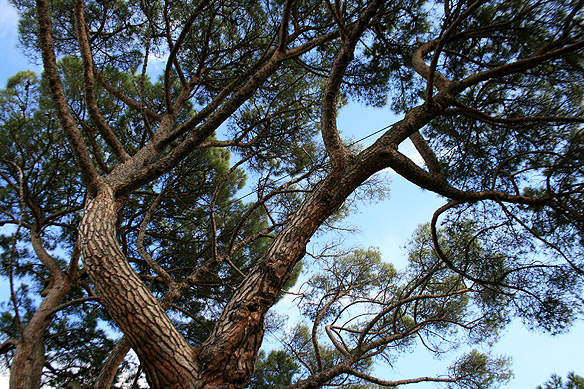
george III and the kew gardens

kewgardens1

Some places turn out to be such a pleasant surprise! I had put down Kew Palace and the Kew Royal Botanical Gardens for today. I’d been starting to feel a bit jaded—you know the “been there, done that” feeling and I, therefore, wanted to do something inconsequential for a change. Botanical gardens and palaces seemed to fit the bill perfectly. 🙂 Not too demanding was what I told myself. Continue reading

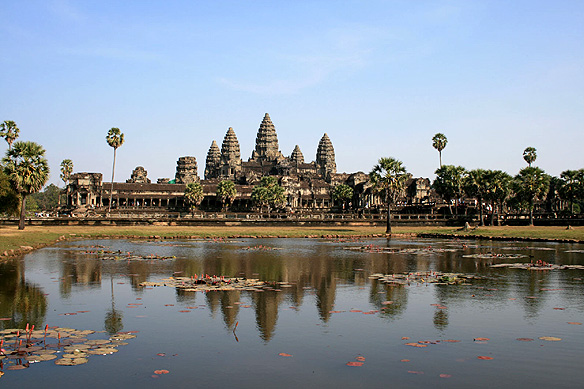
cambodia 1: the splendours of angkor

angkorwat1

I am finally in Cambodia. Every traveller’s utopia. Peace has come to this beautiful yet scarred land after three decades of war and suffering, and a journey to this small kingdom is truly one of Asia’s most genuine adventures.

Present day Cambodia is the successor state to the mighty Khmer empire which during the Angkor Period (9th to 15th Century AD) ruled much of what is now Laos, Thailand and Vietnam. No matter how much you read about Angkor or see pictures of its monuments, the actuality of the place still takes you by surprise. The scale alone of the site is impressive, the detailed stone carvings on its temples only further adding to its incredible beauty. Continue reading

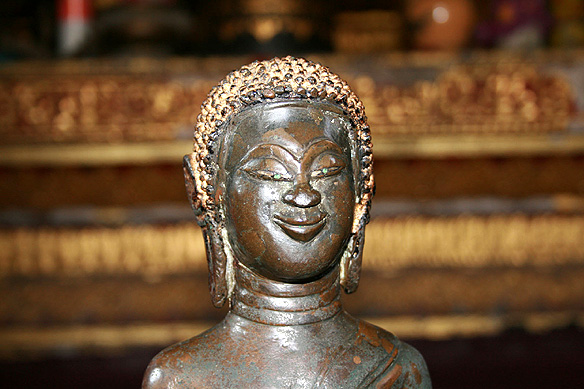
laos 3: sacred chants and harmony in luang prabang

lpbuddha

Luang Prabang resonates with sacred chants and harmony. The various layers of life in this charming, medieval, religious town blend seamlessly into each other to create a complete whole. From the saffron robed monks going about their daily tasks to the local Lao whose lives revolve around the wats; from the night market which sells indigenous handicrafts to the thronging tourists, to the tourists themselves, mature and sensitive to the spirit of Luang Prabang. Nothing jars here. Nothing irks. Every aspect of this palm fringed, sleepy, former royal capital by the Mekong is in peace with itself. Continue reading

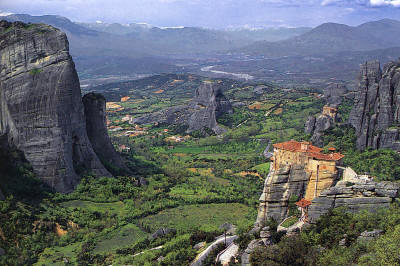
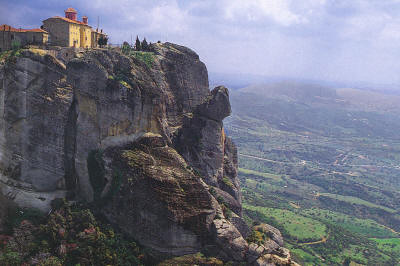
greece 6: post-byzantine monasteries of meteora and thermopylae

Kalabaka—Meteora

meteora1
meteora2
16th Century monasteries perched atop the towering peaks of Meteora

Kalabaka, known in Byzantine times as Stagi, is a small town and starting point for a visit to Meteora, a group of precipitous towering rocks in the centre of the plain of Thessaly. This unique geological phenomenon was created by a series of upheavals in the earth’s crust millions of years ago. The untrodden rocky peaks of the Meteora, totally isolated from the rest of the world, were a refuge for hermits from as early as the 11th Century. Continue reading

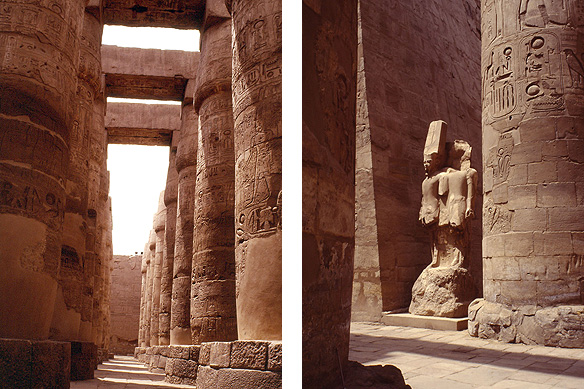
egypt 7: majestic karnak and valley of kings—luxor

luxor_karnak1
The unforgettable ‘stone forest’ at Karnak

Luxor: East Bank

Initially a modest shrine dating back to the 12th Dynasty (1991–1778 BC), Karnak surpasses every other pharaonic temple in scale with over 100 acres dedicated to the Egyptian gods. As the empire expanded and gratitude towards Amon deepened, successive pharaohs right down to the time of the Greeks, added pylons, courts, shrines and statues to the magnificent temple complex. Continue reading

egypt 6: waset, hundred-gated thebes, al-uqsor—luxor

luxor_valley1

“Never did a city receive so many offerings
in gold, silver, ivory, colossal statues,
and in obelisks made of a single stone.”

~ Diodorus Siculus (60 BC)

The ancient Egyptians knew it as Waset, the Greeks named it the hundred-gated Thebes and the Arabs called it Al-Uqsor, the Palaces, a name which has been corrupted to what we know the city as today, Luxor.

Capital of the New Kingdom for 500 glorious years, and spiritual centre for much longer, Luxor contains the crowning achievements of Egyptian civilisation. Its temples and tombs are amongst the most extraordinary monuments ever built through time. The East Bank of the Nile, like elsewhere throughout the valley was the site for temples and prosperity. The West Bank signified death, burial grounds and tombs. Continue reading

egypt 5: temples of philae, kom ombo and edfu on the nile

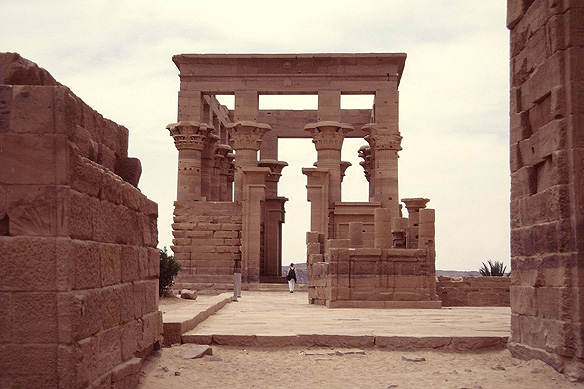
Temple of Isis, Philae

nile_philae2
Trajan’s Kiosk at the Temple of Isis, Philae

Surrounded by the Nile River and granite boulders, the Temple of Isis at Philae was the last functioning temple of the ancient Egyptian religion and closed down in 551 AD. Built over a period of 700 years by Ptolemaic and Roman rulers who wanted to identify themselves with the Osiris and Isis cult, the temple is a magnificent blend of Egyptian and Graeco-Roman architecture. Continue reading

egypt 4: the nile cruise

nile_river1

“Hail to thee, O Nile, that issues from the earth
and comes to keep Egypt alive! …
… O Nile, verdant art thou,
who makes man and cattle to live!”

~ Translated from ‘Hymn to the Nile’ written for an Inundation Festival held at Thebes some 3,600 years ago

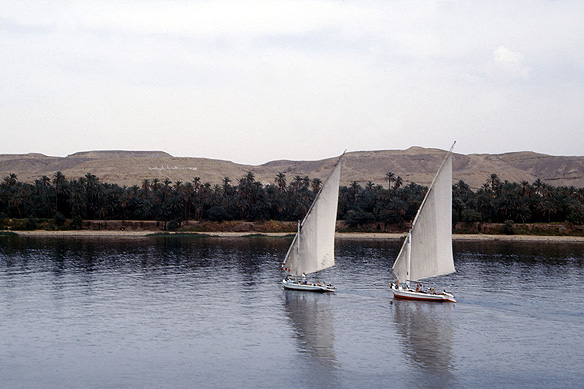
“Egypt is the Gift of the River”, said Herodotus, the Greek Historian in the 5th Century BC. Rightfully so. Kingdoms came and went, dynasties rose and fell. But the Nile continued, steadfastly, year in and year out, with its rise and ebb to irrigate, fertilise and nourish a civilisation that endured 3,000 years of history. Continue reading

egypt 3: ramses II the great’s temples of abu simbel

abusimbel1
Colossal statues of Ramses II flank the facade of the Great Temple of Abu Simbel

“On the sand
Half sunk, a shattered visage lies …
And on the pedestal these words appear:
‘My name is Ozymandias, king of kings
Look on my works, ye Mighty, and despair!’”

~ Extract from the poem ‘Ozymandias’ by Percy Bysshe Shelley, an English Poet in the 19th Century. The poem was inspired by a statue of Ramses II in the Ramesseum, Ramses II’s funerary temple in Luxor

Ancient Egypt had many remarkable pharaohs. However, one stands out above all others. Ramses II the ‘Great’. A king of kings who is still remembered 3,300 years after his death. A man whose mummy lies in the Egyptian Museum, Cairo, a silent smile playing around his lips, somehow aware that he had achieved the sustaining principle of Egyptian civilisation—everlasting life. Continue reading