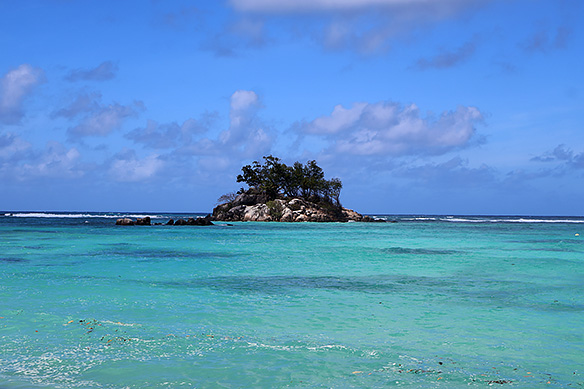
part 2: island-hopping in the indian ocean: seychelles

“You cannot discern that ever any people had been there before us,” wrote John Jourdain in his diary.

It was 19th January, 1609. Jourdain was part of the crew aboard ‘Ascension,’ a British East India Company ship that had blown off course on its way to India. He and his shipmates were marooned on what we now know as North Island, one of Seychelles’ 115 islands.

Things have not changed much over the past 400 years. Walk along any of the islands’ white sands lapped by an ocean that’s a cross between emerald green and turquoise blue, or under lush rainforests, and you may well feel you had chanced upon a remote unchartered paradise.

Welcome to part 2 of my series on island-hopping in the Indian Ocean, and to Seychelles—Africa’s smallest and least populated country with the highest GDP per capita of its 54 nations. Continue reading →
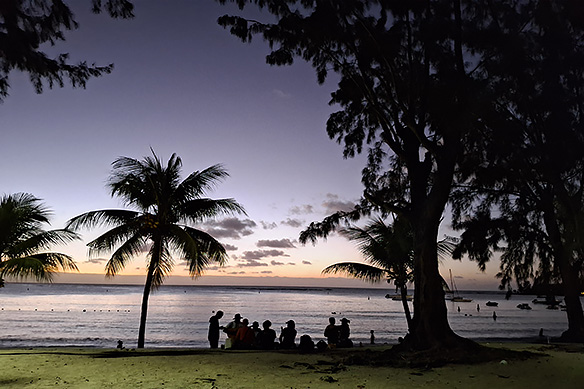
part 1: island-hopping in the indian ocean: mauritius

Welcome to my series on island-hopping in the Indian Ocean. Through 72-hour visual itineraries I hope to take the traveller in you under the islands’ skin. So, why this theme? I asked myself the same question. I live in Goa at walking distance from the beach. And a beach is a beach?

Wrong. 🙂 Every beach is different. And there is a whole world in an island, beyond its beaches. Or so I believe.

I am starting the series with Mauritius and Seychelles which I visited last month, and will be adding to the collection as I travel to more. In August, the temperature and humidity are mild in this corner of the world, and the waters very choppy. Compared to December when the reverse takes place, I figured it was easier for me to handle an odyssey.

A tiny pear-shaped dot in the Indian Ocean, 805 kilometres east of Madagascar, Mauritius owes its existence to volcanic activity eight million years ago. Okay, not exactly tiny. Mauritius spans 1,865 sq. kilometres. Continue reading →

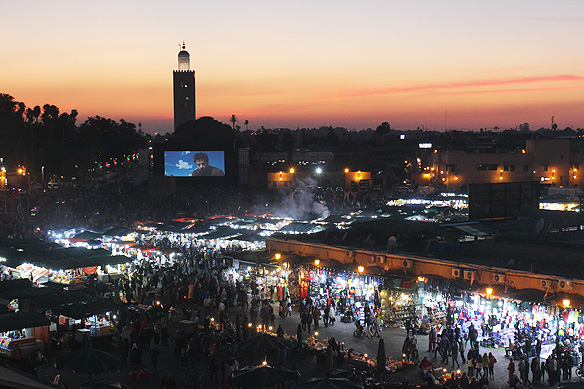
photo essay: marrakech, stories told and untold

Marrakech is my last stop as I travel through Morocco.

What could be a better way as well, to end my Moroccan series, than a blog post on the city after which the whole country was once named.

From medieval times right until its independence, Morocco was known as the Kingdom of Marrakech. Till date, in both Persian and Urdu, the word for Morocco is Marrakech.

Whichever nickname you choose to refer to it by—Red City, the Ochre City, or the Daughter of the Desert—Marrakech brims with stories. But a little more than the usual. Some told and recounted again and again through guide books and travellers’ words. Some a little less obvious. Did you know, even the UNESCO-listed status for its vast medieval square, Djemaa el-Fna, is based on its oral traditions of story-telling. 😊

A tradition which goes back a thousand years. To 1070 AD to be exact. Continue reading →

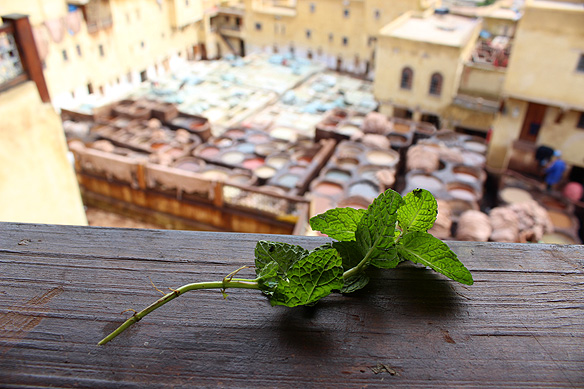
top 15 memorable things to do in fes, morocco’s cultural and spiritual capital

Fes.

It was everything I’d imagined it to be, and more.

When travellers claim no journey to Morocco is truly complete without a halt in the Kingdom’s oldest imperial city, it is no hogwash.

Fiercely spiritual and traditional. A centre for learning with the world’s oldest university. Yet fearless when it comes to voicing contradictory ideas.

Here the arts and crafts thrive, unhindered and unadulterated, as they have for 1,200 years. At the peak of the Almohad empire in the 12th Century AD, Fes had 372 mills, 9,082 shops, 47 soap factories, and 188 pottery workshops. But Fes is also politically voracious.

Its nine thousand alleyways are notorious as a place guaranteed to get lost in. Even locals claim they stick to the lanes they are familiar with.

Enigmatic and mysterious, it has secrets it does not divulge to the casual feet and eye. Continue reading →

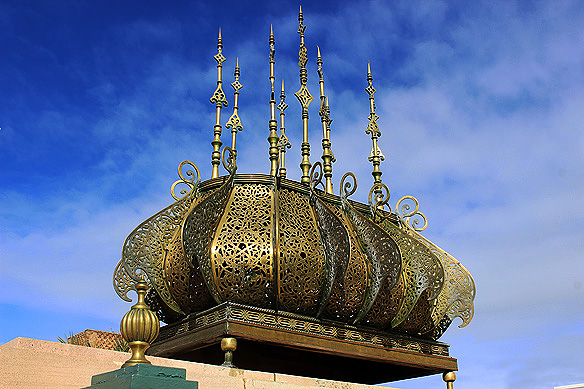
the 5 untold cultural treasures of rabat, morocco’s medieval and modern capital city

I fell in love with Rabat at first sight.

Sophisticated, Mediterranean, with a world-class museum and gallery, Morocco’s capital city is a breath of fresh air in a country otherwise steeped in romantic orientalism. Whitewashed Art Deco buildings vie with an ultramarine blue sky for attention here. Street-side cafes serve delectable tagines and kebabs accompanied with steaming cups of cafe nous nous.

Faced with the exotic wonders of Morocco further ahead, not many travellers break their journey in Rabat. What does a capital city have to offer in comparison to the enigmatic imperial cities of Fez and Marrakesh, and the wild call of the Atlas Mountains and sweeping dunes of the Sahara Desert?

The answer is: A different kind of Moroccan experience. Continue reading →

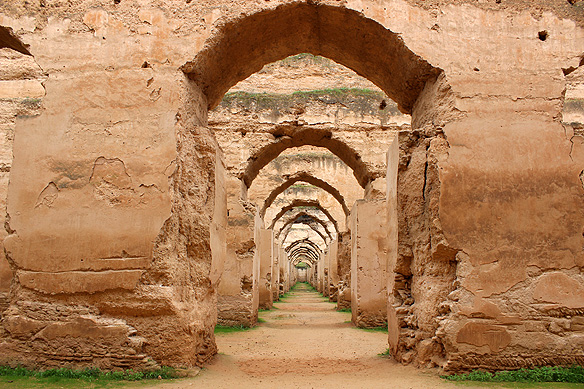
meknes: the story of a bloodthirsty sex-addict sultan and his beloved imperial city

“Green is the sweetest colour; white is a good sign for those appealing to him; but when he is dressed in yellow, all the world trembles and flees his presence, because it is the colour that he chooses on the days of his bloodiest executions.”
~ Dominique Busnot, Histoire Du Regne de Moulay Ismail, Roi de Maroc (1704)

Once upon a time lived a Sultan in Morocco who loved his imperial city called Meknes with every fibre of his being. The 55 years he reigned, the longest by any Moroccan Sultan, were spent building gates, mosques, madrassas, palaces and gardens in it, each more magnificent than the other. When he died, aged 82 in 1727 AD, he had one of the most beautiful mausoleums ever built in the Kingdom made to house his corpse.

A slender man of medium height, a long face and dark skin [his mother was an African slave], he was the 2nd ruler of the Alaouite Kingdom. His name was Moulay Ismail ibn Sharif aka the Warrior King of Morocco.

Apart from Meknes, if there was anything else Moulay Ismail ibn Sharif loved—it was women, and sex. A lot more than the ordinary. Better known as the Sultan who had 10 wives, 500 concubines, and 1,171 children, his 700th son was born just after his death. His 10th wife was an Irishwoman by the name of Mrs. Shaw. He also proposed to his contemporary, Louis XIV’s, daughter. He was quite smitten by her charm and beauty. However, she declined.

The other two things he is still remembered for, nearly three hundred years after his death, are his cruelty and his army of Black Guards. Continue reading →

8 hours in casablanca

Casablanca. The very name transports one back to 1942 and the black and white American romantic drama set in World War II. Starring Humphrey Bogart and Ingrid Bergman, the film was an unprecedented success like no other before. Who has not heard of Casablanca? And Rick’s Café?

But did you know that not a single scene in the movie was actually filmed on location. Casablanca was shot entirely at Warner Bros. Studio in California. There never was any Rick’s Café in Casablanca, back then, either. The one that stands now near Hassan II Mosque is a recreated version of the one in the film, built much later. It doesn’t really matter though, for through the movie Casablanca, Casablanca the city on which the film was based became a household name globally.

Most travellers zip past Casablanca onto the more exotic destinations Morocco has to offer. Compared to the cultural charms of the royal cities of Fes, Marrakesh, Meknes and Rabat, Casablanca comes in as a poor second. When it is rugged nature that tugs your heartstrings, what does a commercial port-city by the Atlantic Ocean have to offer?

Lots. Continue reading →

discover ancient roman volubilis through a self-guided walk

There is a reason I travel solo. I tend to get lost when I travel. No, not physically. That would be impossible in today’s day and age with Google Maps and diligent service providers busy at work with their mobile phone tracking systems to keep you connected. What I mean is I get lost in the experience. I lose track of time. Which is great for me, but, have come to realize, is not so great for others. 😀

This post is about one such lost-in-the-experience day I spent at a place called Volubilis in northern Morocco, in the foothills of Mount Zerhoun. And how you too, if you wish [that is], could lose yourself in its magic!

Volubilis was a large Roman colonial town on the fringes of the Empire. Though dating back to the 3d Century BC and occupied till the 11th Century AD, its hey-day lasted from 44 – 285 AD when it was capital of the Roman province Mauretania Tingitana.

It was a wealthy town—fertile grain and olive oil-producing lands surrounded it—and its 20,000 Romanised Amazigh inhabitants lived in fancy villas lining broad avenues. Today, the archaeological site is a UNESCO World Heritage Site. Continue reading →

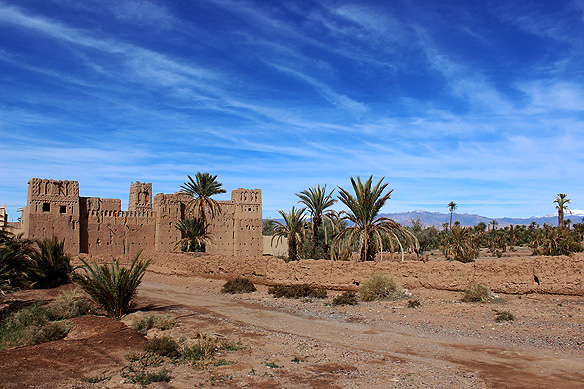
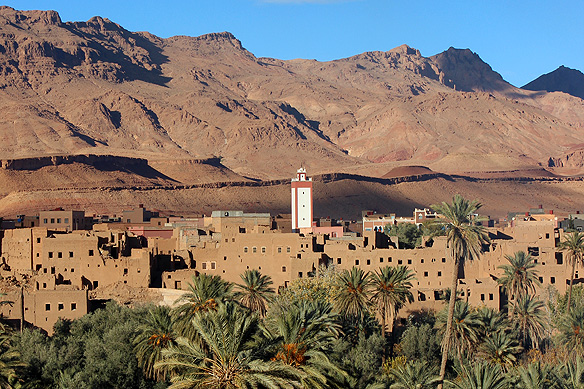
the forgotten kasbahs and ksars of morocco’s high atlas mountains


[Valley of a Thousand Kasbahs]

A high-pitched Amazigh love song is playing on a loop in the car stereo. Abdul, my cab driver decides to give it company with deft dance moves from behind the steering wheel even as he swings the car around hairpin bends. He does not speak English. I don’t speak Arabic, Amazigh or French. We are high up in the High Atlas Mountains in Southern Morocco.

Should we crash down the rock face would anyone be able to trace us, I ask him with hand signs. He signals I should not worry, and grins. These mountains are his home. I tell myself I should be afraid. Instead, I have a huge smile plastered on my face as well.

Oh, how I love these blood-red, barren mountains spread all around us, till as far as the eye can see! Majestic, mysterious, and millions of years old. There is no other sign of life under the ultramarine blue sky, except for our car and glimpses of a green oasis which ribbons its way in the plunging valley below.

I am on my way to Telouet, a crumbling mud-brick Kasbah [palace] 5,900 feet high up in the mountains. I had chanced upon the name when reading up for my Morocco trip and though outside the tourist circuit, I just knew I had to visit it. Continue reading →

travel diaries: hiking through the todra gorge

There are two choices for the hiker at Todra Gorge. You can either go up, scaling the burnt orange limestone crumbling cliffs of the High Atlas Mountains, higher with every step, or carry on along the canyon floor into its bowels, deeper ahead. Both have their own perks. A bit like life itself.

Since most people tend to climb up, and I like to do things a tad differently, I decided to walk on straight. It was a long walk. Some four-and-a-half-hours long.

I started at the most visited and dramatic section, a 10-meter-wide chasm shared by both river and road, and penned in with towering perpendicular cliffs 160 metres tall. Stretched over a length of 600 metres, the tourist crowds usually do their U-turn here and go back.

But should one venture on, the unfolding of the cliffs into craggy piles of rock up to 400 metres high that line a desolate sun-baked concrete road is surreal and unreal rolled into one. The only sound I could here as I trudged on alone under the ultramarine blue sky was the chirping of birds. They seemed almost glad for my company. Continue reading →