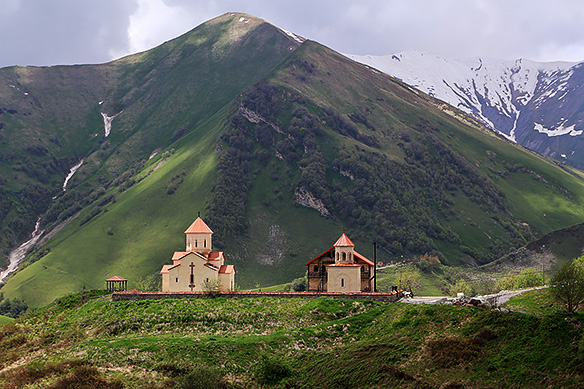
georgia: a story of war and faith

Two stories define Sakartvelo. War and faith.

We know this ancient country as Georgia. But that’s not what Georgians call it. For them, it is Sakartvelo, land of the Kartvelians. Kartvelian means ‘a person of Kartli’—the historical name of the region since the 4th Century BCE.

Caught between powers hungry for regional domination, Georgia has spent millennia keeping itself and its identity intact in the face of attacks.

As the third country in the world to adopt Christianity in 327 CE, religion runs deep in the Georgian veins. It was faith that strengthened their resolve. It was equally imperative to protect that same faith.

Together these two stories are the story of Georgia. And the Georgian. Continue reading →
a cultural buff’s guide to tbilisi

So, you like museums, art, theatre, and live music. Then you are in the right place if you are in Tbilisi. 🙂

I spent 10 days in Georgia’s capital this June before travelling deeper west into the country. Though I would venture out on some days to discover the country’s north, south, and east, coming back to Tbilisi always felt like I was returning home.

The city’s hills hugged both the Kura river and hot sulphur springs; its slopes dotted with medieval stone churches. Strains of music would waft through the air, an accompaniment to the fragrance of freshly baked cheesy pies. A patchy sky overhead seemed perpetually torn between sunshine and rain.

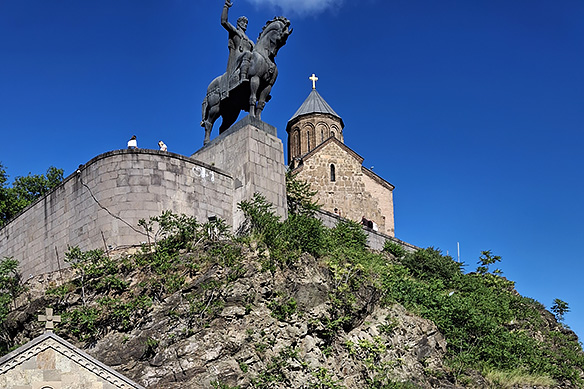
Popular legend credits King Vakhtang I Gorgasali as the city’s founder in 458 CE. An achievement reaffirmed by an equestrian statue of him perched on the riverbank. The story goes somewhat as follows: One day the king and his falcon went hunting. The falcon caught a pheasant, but both birds fell into a nearby hot sulphur spring. Chaffed at his discovery of these scalding hot waters miraculously emerging from the earth, the king decided to build a city at this spot. And so, Tbilisi—meaning the ‘warm place’—was born. Archaeological findings tend to dismiss this tale and place the city’s habitation further back in time to the Palaeolithic age. Continue reading →