babulnath mandir: south bombay’s ancient shiva temple

babulnath_1

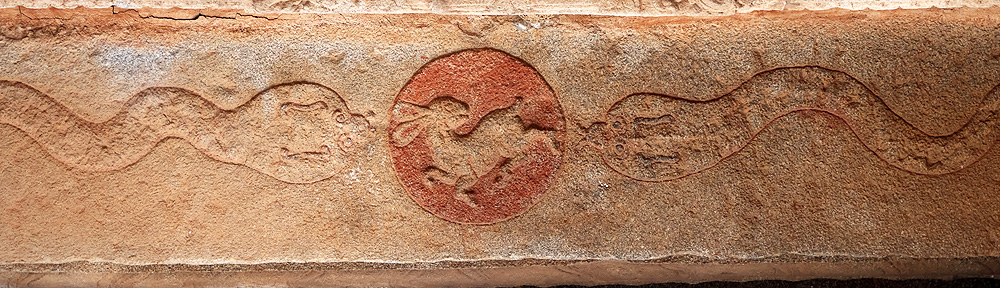
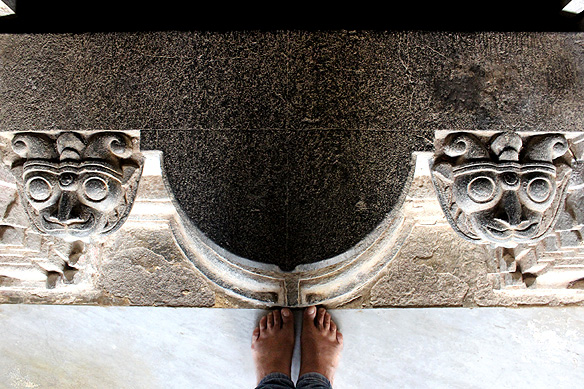
Perched on a hillock in the heart of Bombay, behind a rather inconspicuous entrance is the 200-year-old Babulnath temple dedicated to Lord Shiva.

I hadn’t done much exploring in the city in the last couple of months (as you may have figured from my blog) and was antsy to start digging deeper again. Mention of the Babulnath temple cropped up whilst I was compiling an itinerary on ‘Mumbai in 48 hours’ for my sister’s very first time visit to Mumbai. I wanted to show her the touristy, as well as the local everyday sights. The temple, near Girgaum Chowpatty, I was told had to be in that list. Now was I going to wait till December to see it myself?? Haha. No ways! Continue reading

banganga: lord ram’s stopover in mumbai en-route to lanka

banganga1

“Excuse me, Banganga kahaan hai?” [Where is Banganga?]
This is the umpteenth time I have stopped to ask. There are no sign posts of any kind. Guided by countless shopkeepers, cab drivers and Marathi women with flowers in their hair, I finally find my way off the main road on to a small side lane with stone steps leading down into a valley.

Yes, I am confused. Around me urban Mumbai throbs with concrete high rises and bustling markets. The corner store keeper assures me, “Down the stairs on your right.”

“You sure?”

“Yes, sure.” And smiles.

So down the stairs I go, and at the bottom look to my right. A huge water tank guarded by deepstambhs, pillars to hold diyas, and surrounded by temples and dharamshalas clinging to its walls greets me with old world whimsical charm. Continue reading

nala sopara: mumbai’s ancient buddhist stupa and mythical temples

The historical and artistic magnificence of India never fails to amaze me. Take a step in any direction and one is flooded with the country’s inordinate rich past and culture. Which does not always work in its favour for it lends to the Indian populace a nonchalance towards their own heritage.

Medieval sculptures which audiences lust over in international museums lie covered with petals and incense soot in temple nooks here. Millennia old crumbling edifices stand forgotten, holding on to time in desperation in an attempt to evade being razed down. And because they are in the multitude, one more or one less, sadly become irrelevant.

No part of this country is immune to its own cultural excess. Not even an uber metro like Mumbai. In fact even less so, for I have discovered and experienced sights here across centuries and religions, coexisting in uncanny innate ease. Continue reading

saint ma hajiani dargah: of red and green bangles

“… Spirit of Guidance,
Source of all beauty, and Creator of harmony,
Love, Lover, and Beloved Lord.
Thou art our divine ideal.”
~ Ameen (Rasul)

The above verse is from the third evening prayer in Sufism, Rasul.

Sufism in India goes back a 1,000 years, both as part of Islam and woven into the Bhakti Movement. Today, the country is an epicentre for Sufi culture; its dargahs a devout space for connecting with the divine.

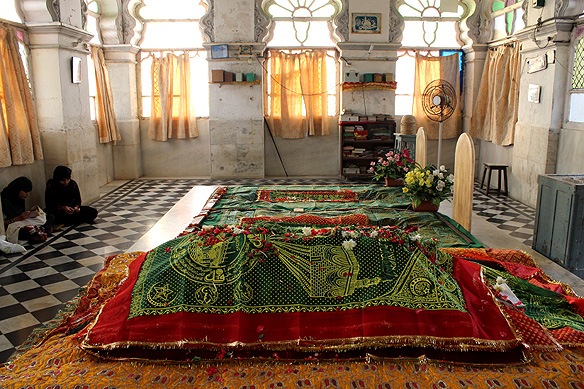
One such dargah stands across the Haji Ali Dargah in Mahalaxmi, on the other side of the coastline hugging the Arabian Sea. Lesser known, but no less revered, the Saint Ma Hajiani Dargah is a place of worship for women and their dreams of finding love and having offspring. Continue reading

mumbai’s csmvs sculpture gallery: where stones speak of art and god

CSMVS_sculpturegallery1

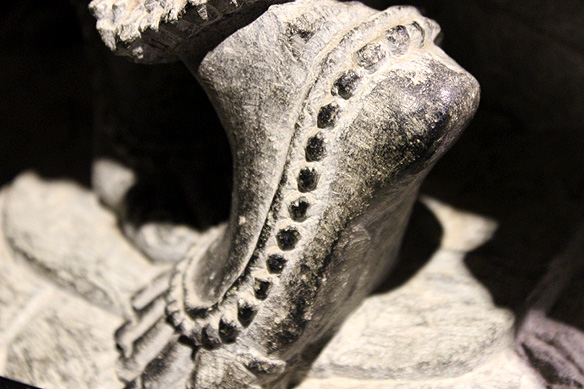
Inspired by Mumbai’s rock-cut cave temples, I set out this afternoon to explore the sculpture gallery at Chhatrapati Shivaji Maharaj Vastu Sangrahalaya. Yup, it’s a mouthful. 🙂 Formerly known as the Prince of Wales Museum of Western India, it is one of the finest museums in the country. The quiet, tasteful sculpture gallery—a crash course in Indian history, religion, and art all rolled into one—is its highlight. Continue reading

the day I changed from an ugly indian to a beautiful indian

Whenever I see litter on streets and public places my heart squirms. I feel sick in the stomach. It’s just the way I am. When I was young(er) I often got into arguments with friends, and at times complete strangers, when they littered. It did not do much for my popularity index as you can imagine. 😛

For someone like me, hence, the move to India meant I had to learn to shut up if I was to have any semblance of civil conversations.

A firm believer of the three R’s— Reduce, Reuse, Recycle—my contribution to protecting the environment has been limited to following these ‘rules’ over the years. How could I do anymore? How can I do anymore? I, thus, excuse myself from the debris around me. It is the easy way out. Not taking responsibility for spaces outside my own personal ones. Continue reading

mumbai’s ancient rock-cut cave temples

“Let’s explore the rock-cut cave temples of Mumbai this Sunday,” a friend suggests excitedly.

“Caves? I have been to Elephanta and Kanheri. Even written about them! Read my post. 🙂 ”

“Hey, there are more, a lot more in the city itself.”

More? I am confused. Where can there possibly be caves in Mumbai. The city is packed with concrete and people, with little space to walk, least of all millennia old caves to have survived. I am wrong.

Hidden within the crevices of Mumbai’s urban jungle is a pulsating vein of its ancient past. A series of rock-cut temples, connected to each other with tunnels and hidden passageways, lace the city’s basalt bed rock. Continue reading

mount poinsur, mumbai’s marian sacromonte

mount_poinsur2

There are advantages to being an insatiable traveller, even when amidst the obvious and familiar. One is always searching for the road less travelled, the site less seen, the experience less had. And rarely have I been disappointed. This day was no different. 🙂

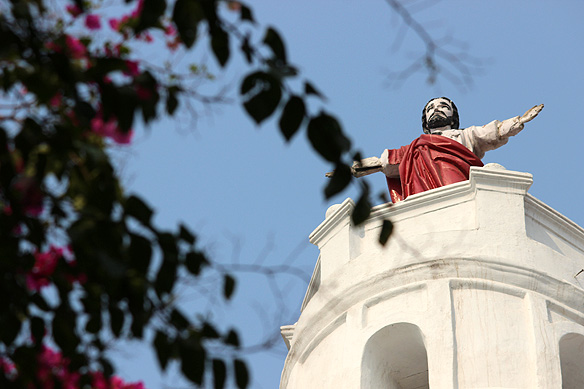
Perched atop a 45 metre high knoll in Mandapeshwar, Borivali is Mumbai’s least known and most delightful slice of eclectic heritage—Mount Poinsur, an ode to the St. Francis of Assisi order in India and Marian devotion, the veneration of Mary in Roman Catholicism. Continue reading

britannia and company : parsi food at its best : south bombay

britannia1

[This post is not a food or restaurant review, and has not been commissioned either. It is a place I have eaten at and fallen in love with, at times for the food, at times for the ambience, and often for both. And like me, countless others have been smitten by it too. Such, that it is today part of the very fabric of Bombay’s history and culture.]

– – –

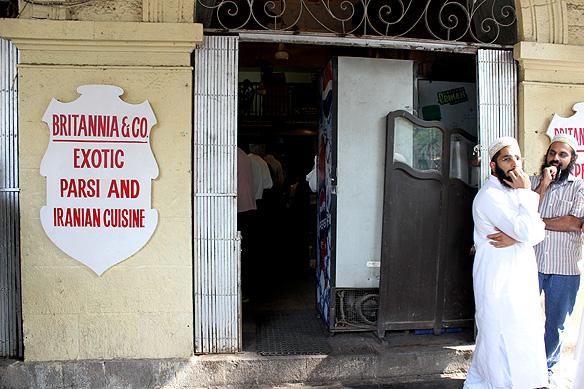
Ninety-three year old Boman Kohinoor comes to our table to take our order. Charming, suave and gentle, he is the owner of Britannia and Company, a Parsi restaurant founded by his father, Rashid Kohinoor, in 1923. His son, Romin, is the chef.

Britannia and Company has remained virtually unchanged from when it was set up 92 years ago. The peeling paint, crystal chandeliers and Polish Bentwood furniture within are evocative of another era; the Iranian flag draped across the side wall a proud acknowledgement of the restaurant’s heritage.

It would be fair to say that the restaurant is driven by emotion rather than profit. The nominally priced meals could easily go for small fortunes apiece, taking the restaurant’s global repute and heritage into consideration, but the Kohinoors are happy selling them for a few hundred Rupees instead.

The family-owned eatery on a quiet street in colonial Ballard Estate opens only for fours every day to a packed house and long queues. If you are not eating you have to leave. Its patrons come from far and wide, from the office crowd in the Fort District to Parsi NRIs on holiday yearning for a taste of home.

I am charmed, to say the least. 🙂 Continue reading

art focus – street art and dharavi

st+art_dharavi1

“Bhaiya, Dharavi chaloge?” (Will you go to Dharavi?)

After being turned down twice, a rickshaw finally agrees to take me on the condition, “I will drop you off at the main road. I won’t get a return passenger from there… You will have to walk to 60 Feet Road by yourself.”

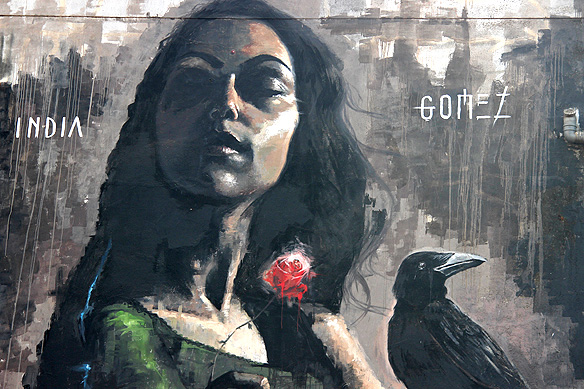
Dharavi is not the usual jaunt or destination for a Mumbaikar, least of all a Hindi speaking woman on her own who quite clearly does not have a clue about the ground realities of the place itself! All I know is some statistics, historical details and that the main road is the 90 Feet Road, and perpendicular to it is the 60 Feet Road which I want to explore for its street art. But more on the art later in the post. 🙂 Continue reading