south africa 4: kaap staad aka cape town, the most beautiful city in the world


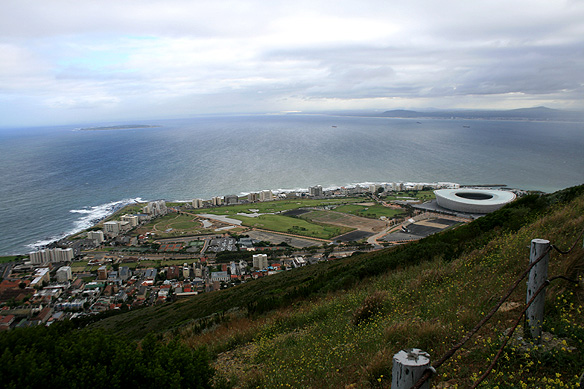
Looking down from Signal Hill: The Green Point Stadium built for FIFA is on the right and on the horizon, towards the left, is Robben Island.

Cape Town: A world travel destination

Ask anyone who has been to Cape Town what they thought of the city and you will receive a smitten response. Even if it is their umpteenth visit, or third as in my case, its stunning scenic setting, glorious beaches, and rich history does not fail to captivate and make one a bit more besotted. 🙂

The “to do” list is simple and straightforward. The cable-car ride up Table Mountain; an afternoon at Kirstenboch, the most beautiful botanical garden in Africa; a ferry ride to Robben Island to see Nelson Mandela’s prison cell where he spent 18 of his 27 sentenced years; and dinner at the V&A Waterfront as dusk falls and the sky turns into a glorious Turner work of art. But there is more. So much more! Continue reading
south africa 3: cape peninsula, the company of nature and wine

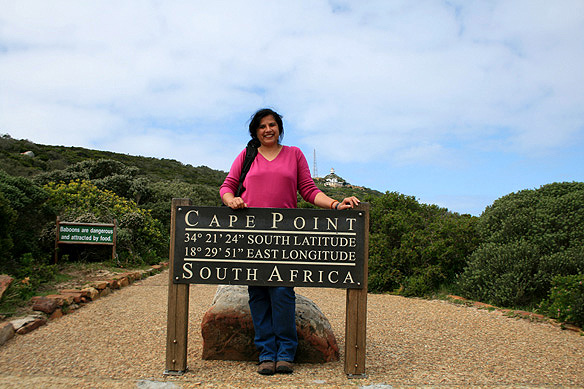
capepoint1

Day 1: The company of nature in Cape Peninsula

There is a rugged poignant beauty to the Cape Peninsula, what with its indigenous fynbos draped over age-old sandstone rocks, colossal crashing waves, and foraging seabirds. I had put aside a whole day to explore the Cape of Good Hope and Boulders, which together with Table Mountain, comprise Table Mountain National Park. A whole day in glorious, unsullied nature! By far, it was one of my best travel decisions in life. Continue reading

south africa 2: the 4-day scenic garden route

plettenbergbay1

Day 1: Tsitsikamma and Plettenberg Bay

To travel through South Africa and not do the Garden Route is blasphemy! Or so would every travel book and site claim and the fact is each one of them is right. Don’t, however, expect pretty little gardens to constitute the route, for that is the last thing you’ll come across. It is nature’s and god’s gardens. Towering mountains, sparkling rivers, tranquil lakes and estuaries, sun-kissed beaches, and indigenous forests line the southern coastline between Port Elizabeth and Cape Town … Continue reading

south africa 1: port elizabeth, victorian england in africa

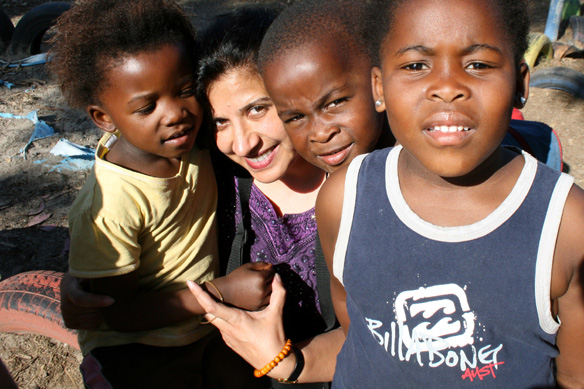
mesouthafrica1

Yay! I’m travelling through South Africa, FINALLY.

For all those who work and live in the Southern African region, South Africa, or the Republic of South Africa (RSA) as it is officially called, is the inevitable pit stop for our international flights, our business partner for professional dealings, venue for our conferences and workshops, the end of the road for shopping, and the place we go to, to chill. But ask us if we have really travelled to it, and you’ll get a big blank “nope.” Which is an absolute pity. People come from far and wide to discover this beautiful country. Every year, I myself pack my bags and travel to some distant exotic locale thousands of miles away. And yet, right in front of my doorstep is a country so familiar, so beautiful, and one I know so little of.

These four weeks are about exploring my own home—of visiting South Africa’s myriad world-famous attractions, as well as its lesser known, off-the-beaten-paths. Sanibonani. 🙂 Continue reading

egypt 10: a guide to islamic cairo

cairo2
Ibn Tulun Mosque, Cairo’s oldest surviving mosque, and the Mosque of Muhammad Ali

Islam was introduced into Egypt by Amr ibn el-As in 639 AD and Egypt changed forever after that. Islam is based on the recitations of the Prophet Muhammad who was born in 570 AD in Mecca, Arabia. At the age of 40 he received the word of God through Gabriel, the archangel and for 22 years, thereafter, he recited his revelations to his followers. Islam rests on the Quran (el-Quran means the recitation). In the quest of spreading this message, the converted Arab armies led by his followers in Baghdad, conquered the Byzantine and Persian empires.

If there is time to see only one mosque in Cairo, it has to be the Ibn Tulun Mosque. Built in the 9th Century by Ahmed ibn Tulun, it is the oldest surviving mosque in Cairo. The edifice is impressive both for its large scale and minimalist classical lines. The vast courtyard is covered with pebbles, the pointed arches made of brickwork and stucco, and the spiral minaret seems to have been borrowed out of a fairytale. A 2-kilometer long wooden frieze inscribed by one-fifteenth of the Quran runs below the ceiling. Continue reading

egypt 9: a guide to the egyptian museum and coptic cairo

cairo1
Cairo, the largest city in Africa and the Middle East since the 13th Century, is the meeting point not only of past and present but East and West. Five thousand years of history blend harmoniously into each other in this large metropolitan, cosmopolitan, historical, yet modern city.

Egyptian Museum

Cairo’s most famous and priceless treasure is the Egyptian Museum in the heart of the city. Founded by the French archaeologist Auguste Mariette in 1858, it contains some of the world’s most extraordinary antiques. At least two days are needed to get a grasp of the masterpieces which range from across the millennia: the Old Kingdom (2686-2160 BC), Middle Kingdom (2040-1640 BC), New Kingdom (1550-1080 BC), the Amarna Period and the subsequent Ptolemaic and Roman periods. Continue reading

egypt 8: alexander the great’s alexandria and coptic wadi-el-natrun

alexandria1
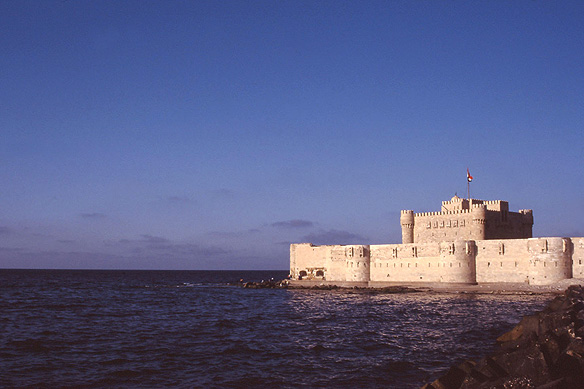
Fairytale Qaytbay Fort, built from the stones of the legendary Pharos Lighthouse

Alexandria, ancient capital of culture and learning

Built by Alexander the Great in 332 BC, Alexandria was intended to be the port which would link the old worlds of Egypt, Babylon, Persia, and Greece. Following Alexander’s death, Alexandria became a world city under the rule of the Ptolemies, the dynasty founded by his Greek General, Ptolemy. The Ptolemies used their resources to develop knowledge, art and culture and establish the city as a centre for science, religious thought and literature. It was within the complex of libraries, parks and halls of the fabled Mouseion that stood in the centre of the city that Euclid wrote his ‘Elements’, Eratosthenes calculated the circumference of the earth, Herophilus pioneered the study of anatomy, and the ‘Julian’ calendar, based on the ancient Egyptian solar calendar, was devised. Continue reading

egypt 7: majestic karnak and valley of kings—luxor

luxor_karnak1
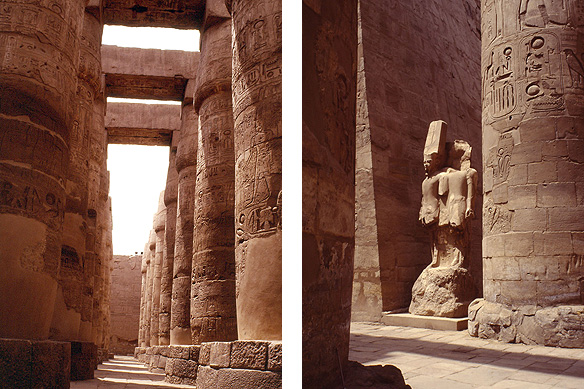
The unforgettable ‘stone forest’ at Karnak

Luxor: East Bank

Initially a modest shrine dating back to the 12th Dynasty (1991–1778 BC), Karnak surpasses every other pharaonic temple in scale with over 100 acres dedicated to the Egyptian gods. As the empire expanded and gratitude towards Amon deepened, successive pharaohs right down to the time of the Greeks, added pylons, courts, shrines and statues to the magnificent temple complex. Continue reading

egypt 6: waset, hundred-gated thebes, al-uqsor—luxor

luxor_valley1

“Never did a city receive so many offerings
in gold, silver, ivory, colossal statues,
and in obelisks made of a single stone.”

~ Diodorus Siculus (60 BC)

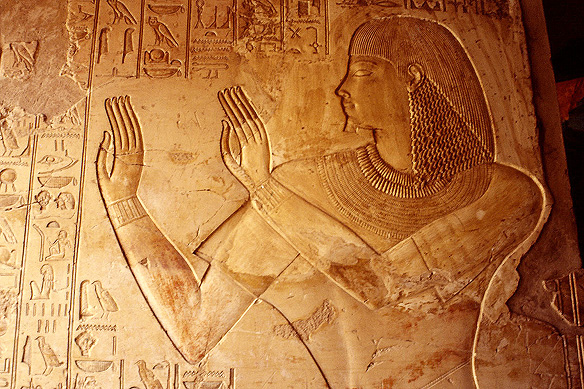
The ancient Egyptians knew it as Waset, the Greeks named it the hundred-gated Thebes and the Arabs called it Al-Uqsor, the Palaces, a name which has been corrupted to what we know the city as today, Luxor.

Capital of the New Kingdom for 500 glorious years, and spiritual centre for much longer, Luxor contains the crowning achievements of Egyptian civilisation. Its temples and tombs are amongst the most extraordinary monuments ever built through time. The East Bank of the Nile, like elsewhere throughout the valley was the site for temples and prosperity. The West Bank signified death, burial grounds and tombs. Continue reading

egypt 5: temples of philae, kom ombo and edfu on the nile

Temple of Isis, Philae

nile_philae2
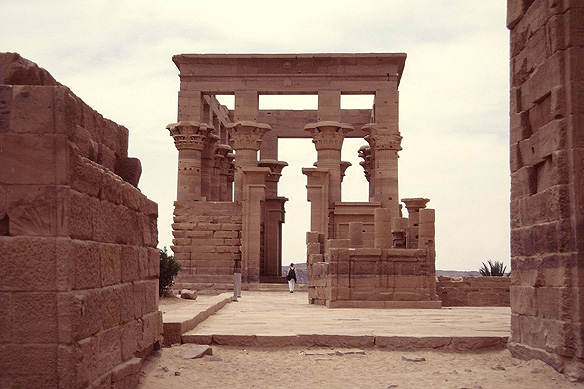
Trajan’s Kiosk at the Temple of Isis, Philae

Surrounded by the Nile River and granite boulders, the Temple of Isis at Philae was the last functioning temple of the ancient Egyptian religion and closed down in 551 AD. Built over a period of 700 years by Ptolemaic and Roman rulers who wanted to identify themselves with the Osiris and Isis cult, the temple is a magnificent blend of Egyptian and Graeco-Roman architecture. Continue reading