the taktsang trek for the non-trekker

taktsang1
That little white speck in the middle—that’s the destination, Taktsang Palphug Monastery, Bhutan. The climb up the ravine—that’s the journey 🙂

I am not a trekker. Don’t get me wrong. I am not lazy. 😛 I can walk miles and miles. But walking on level ground and up boulders, shrubbery, and running streams are two very different things. My excuse is that I spend most of my time in large metropolises. I am aware it is a weak argument. I know many, way more urbane than me, who sip their wines amidst swirls and dress as if they’d just stepped out of a fashion glossy, able to clamber up a mountain with equal ease. How do they do it??? I’d love to be able to. Truly.

But that has not stopped me from attempting climbs and treks which are universally accepted as being spectacular. And doable. Taktsang Trek was one such. Continue reading

punakha dzong: bhutan’s most beautiful dzong

Magical things happen when nature, history and humankind, with a dash of the spiritual come together. More so when it is Bhutan, and even more so in a 1637 Palace of Great Happiness built on the confluence of two rivers, charmingly named Pho Chhu [father] and Mo Chhu [mother].

If there is only one dzong you get to see in the Thunder Dragon Kingdom, let it be the Punakha Dzong, or the Pungtang Dechen Photrang Dzong built by Ngawang Namgyal (1594–1651), 1st Zhabdrung Rinpoche [Great Lama] and founder of the Bhutanese State. Continue reading

bhutan, land of happiness: what it means for the traveller

bhutan_thimpubridge1

[My below post was later published in the Gross National Happiness Centre June 2016 Newsletter.]

– – –

I have a quiet smile playing on my lips. My eyes are content. This is through a daily dosage of countless hours on the road, wake up alarms by wee hour sunrises, and often dodgy plumbing and basic meals. I am in the land of happiness.

Whilst the rest of the world chases gross domestic and national products, the Kingdom of Bhutan has veered towards the road less trodden, in every sense. It chose happiness. And somewhere along the way, this translates to happiness for those who travel through it. This I assure you is no marketing spiel by PR or advertising honchos. It is for real. Continue reading

cambodia: the sacred and ugly of divine rule

cambodia_angkor1

[My below post first appeared as a travelogue in Hindustan Times, one of the largest newspapers in India, on 6 March, 2016 in both its print and online editions. The online edition can be read here]

– – –

From Angkor Wat to the killing fields of the Khmer Rouge, Cambodia reveals that civilisations hold within them, both, the seeds of greatness and those of depravity

Continue reading

cambodia 3: phnom penh, “we don’t need to fight anymore”

royalpalace3

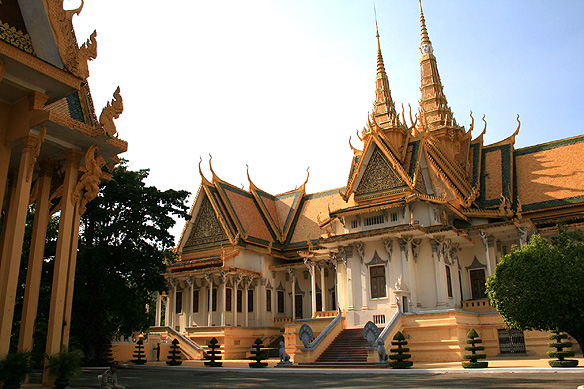
Phnom Penh is where the Cambodians live, work, play and pray. Its attractions are low key, forming part of the fabric of local life. The city sits at the confluence of the three great rivers of Indochina—the Mekong, Tonle Sap and the Bassac—and is the country’s commercial and political capital. It is crowded, chaotic and most importantly necessary in order to understand the everyday real Cambodia.

Like Siem Reap and other towns in Cambodia, Phnom Penh too swarms with child beggars and amputated men and women trying to eek out a living from the country’s thriving tourism industry. After three decades of civil war, the country has only in the last 10 years opened its doors to the outside world with its sliver of calm and peace. All in all 539,000 tonnes of bombs have been dropped over the country and between four and six million land mines still dot the countryside. Huge billboards on the roads read, “Put down your weapons. We don’t need to fight anymore.” Continue reading

cambodia 2: khmer rouge, hell on earth in the 20th century

To fully understand life one needs to understand the good, as well as the bad and the ugly. To fully comprehend the Cambodian psyche, one needs to walk the sacred walkways of Angkor Wat but also understand the Khmer Rouge, and the dent it has made on an entire nation and its people, still stark and painful 28 years after its demise. No Cambodian can be said to be yet entirely free of the madness and brutality of that era. Every single family has had one or more members that died in it. There is a vacantness in the Cambodian spirit which still rattles emptily the echoes of those years, making you doubt humanity itself. Continue reading

cambodia 1: the splendours of angkor

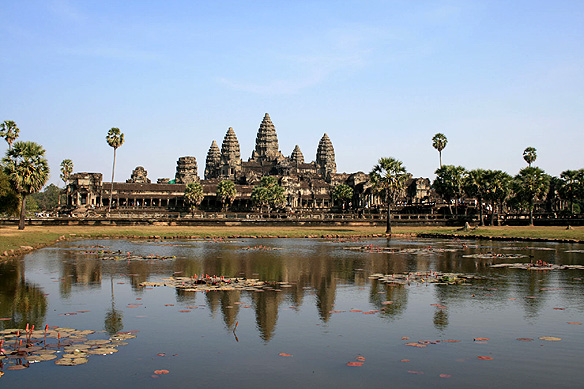
angkorwat1

I am finally in Cambodia. Every traveller’s utopia. Peace has come to this beautiful yet scarred land after three decades of war and suffering, and a journey to this small kingdom is truly one of Asia’s most genuine adventures.

Present day Cambodia is the successor state to the mighty Khmer empire which during the Angkor Period (9th to 15th Century AD) ruled much of what is now Laos, Thailand and Vietnam. No matter how much you read about Angkor or see pictures of its monuments, the actuality of the place still takes you by surprise. The scale alone of the site is impressive, the detailed stone carvings on its temples only further adding to its incredible beauty. Continue reading

laos 4: phonsavan—dead cats, freezing nights and the plain of jars

plainofjars1

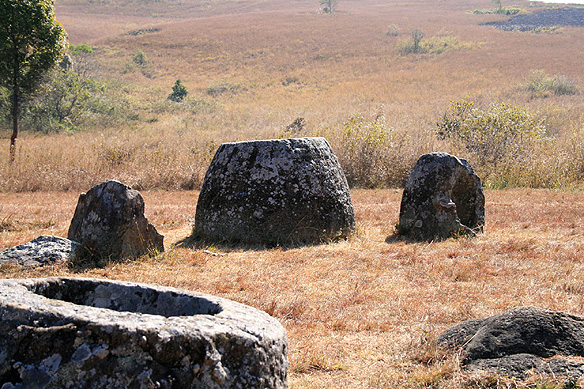
I will never forget Phonsavan. It is a strange town—in the middle of absolutely nowhere an entire congregation of ugly cement and brick buildings flung far away from wide expanses of brown, barren, dusty roads.

It took me nine long gruelling hours to reach this remote outpost, driving endlessly through convoluted winding roads hugging blue-green hills high up in the skies till I could taste my breakfast in my mouth over and over again. Moral of the ride: Never have bacon and egg bagels before driving off to nowhere!

Phonsavan is the main town of Xieng Khouang province, one of the poorest provinces of an already poor country. The town was established in the 1970s and sprawls out from a meaningless centre with no plan or direction. Public transport is limited and sporadic. It is illegal to rent your own vehicle here. None of the streets are named or at least the names are not used. There are no public phones and the weather is bitingly, freezingly, heartlessly cold. Phonsavan is neither friendly nor unfriendly. It just doesn’t care at all. Continue reading

laos 3: sacred chants and harmony in luang prabang

lpbuddha

Luang Prabang resonates with sacred chants and harmony. The various layers of life in this charming, medieval, religious town blend seamlessly into each other to create a complete whole. From the saffron robed monks going about their daily tasks to the local Lao whose lives revolve around the wats; from the night market which sells indigenous handicrafts to the thronging tourists, to the tourists themselves, mature and sensitive to the spirit of Luang Prabang. Nothing jars here. Nothing irks. Every aspect of this palm fringed, sleepy, former royal capital by the Mekong is in peace with itself. Continue reading

laos 2: vang vieng, a backpacker’s and non-backpacker’s paradise

vangvieng1

Room with a view
Vang Vieng’s main claim to fame is the view from my hotel room. It is beautiful. The blue green karst hills towering over the Nam Song river is like a Chinese silk painting; the mountains most dramatic and spectacular at sunrise and sunset when the mist and blackness of the night lift to reveal nature in all its pristine beauty.

Vang Vieng’s other claim to fame is as a backpacker’s paradise. There are thousands of young Americans and Europeans whiling away their days here, floating endlessly in hollow tubes down the river and downing countless bottles of beer along the way. There are so many of them that they form their own little commune, watching reruns of ‘Friends’ at the restaurants, chatting on the internet, and partying late into the night, high on cheap whisky. It is not a pretty sight—a foreign self-absorbed world totally unconnected to Laos or the Lao people. But maybe I am just old fashioned in my ideas of travel … 🙂 Continue reading