iran 7: the desert city of yazd

yazdtowers1

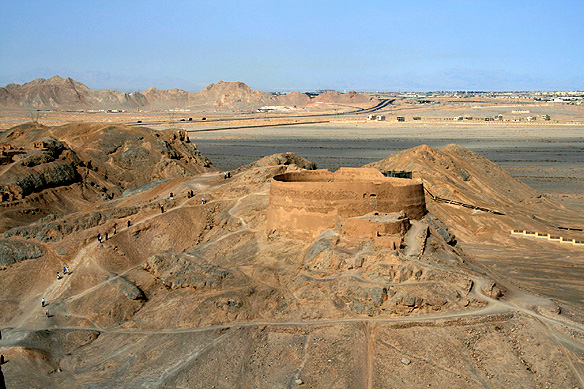
I am nearing Yazd. The landscape is stunning. Towering, barren, sedimentary mountains streaked with iron oxides flank both sides of the road. It has been a long day, driving through hundreds of miles of arid wilderness. As I wind my way through the burgeoning city, millions of street lights twinkle in the darkness in warm welcome.

– – –

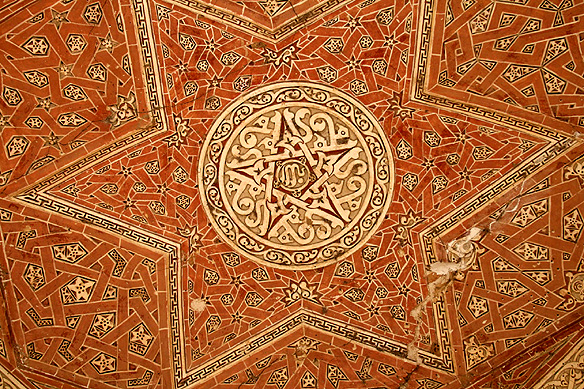
Yazd is one of those not-to-be missed, no-matter-what, highlights of Iran. Wedged between two desolate deserts, it has long been a prosperous staging post on the caravan route between Esfahan and Central Asia. The city was an important center for Iran’s pre-Islamic religion, Zoroastrianism, and still has the largest Zoroastrian population in the country at 12,000. Continue reading

iran 6: shiraz, the heartland of persian culture

shirazpalace1

Drink until the turbans are all unbound,
Drink until the house like the world turns around.
~ Hafez, Sufi poet (14th Century)

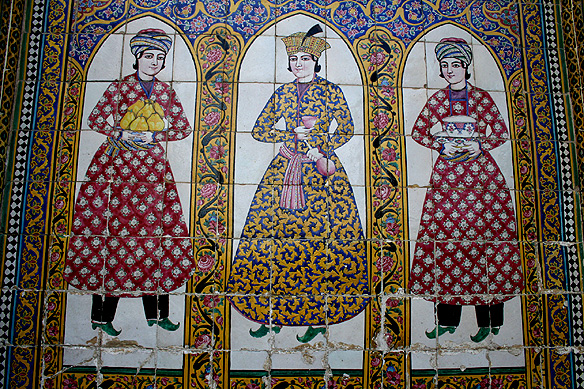
I’m in Shiraz, the heartland of Persian culture. Shiraz was one of the most important cities in the medieval Islamic world and the capital of the Zand Dynasty from 1747 to 1779. Through its many artists and scholars the city earned a reputation for being the “House of Learning” and was synonymous with education, nightingales, poetry, roses. and at one time, red wine. It is home to one of the oldest universities dating to the 7th Century AD. Two of the world’s greatest poets, Hafez and Saadi are buried here. Continue reading

iran 5: the city of darius I, esther and avicenna—hamedan

hamedansquare1

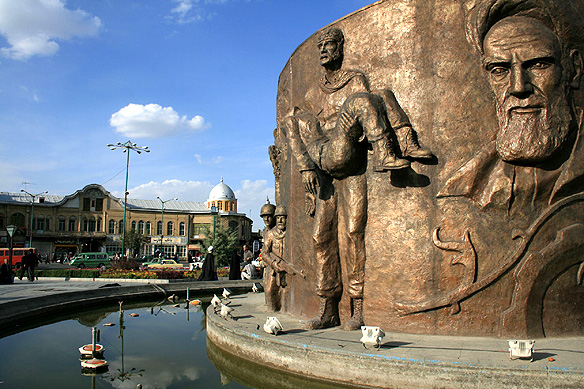
Hamedan (also spelt Hamadan) is one of those cities where you can stroll through 2,500 years of history in a single afternoon. Cuneiform tablets of Darius I and Xerxes I proclaiming their kingship, Esther’s tomb, Avicenna’s 11th Century mausoleum, and a European style street plan with elegant squares designed in 1929 by German engineer Karl Frisch make up the Hamedan of today. And amidst this eclectic mix of history live a people with a traditionally deep-seated respect for knowledge and the sciences. Education is very highly regarded in Iran and literacy is around 80 percent. More than 60 percent of university students are women. Continue reading

iran 4: the story of persepolis

“Passer-by, I am Cyrus the Great, I have given the Persians an empire and I have ruled over Asia. So do not envy me for this tomb.”
~ Inscription on the tomb of Cyrus the Great, Pasargade, 6th Century BC

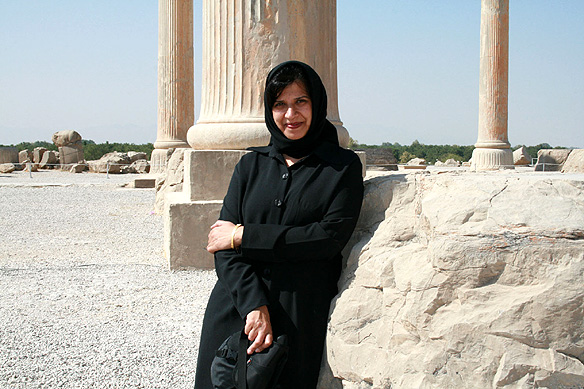
I love rambling through archaeological sites, running my fingers over millennia old ruins, walking down worn out paths where before me countless souls had also passed along. Where history was made and destinies defined. Sites like these are humbling, making us realize how small we are in the bigger picture. And yet such sites also fill us with a deep sense of pride in humanity’s political achievements and artistic endeavors which are a legacy belonging to all mankind.

persepolis_rama Continue reading

iran 3: takht-e soleyman, epicentre of zoroastrianism

kurdishvillage1

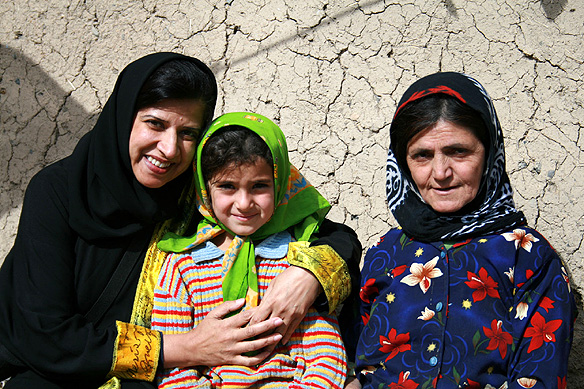
The unspoilt expanse of Western Iran is desolate. Its people simple. Barren red mountains stretch as far as the eye can see, in sharp contrast with the clear blue skies above. Decade-old cars of forgotten makes and models plough highways punctuated with police checkpoints at rapid regularity. I’m on my way to Takht-e Soleyman, the spiritual center of Zoroastrianism, and on to Takab for the night, a minuscule town less than a hundred miles from the Iraqi border. Continue reading

iran 2: soltaniyeh’s mongolian sultans and exotic bazaars in zanjan

soltaniyeh1

The adventure begins. I’m off to north-west Iran. There is something terribly exciting about visiting places away from the beaten path, meeting people who are not part of the global cloned collectivity. There is somehow always a heartwarming uniqueness in isolated individuality.

Western Iran is largely underdeveloped with a mixed history. Whilst it has enjoyed the spin-offs of being part of the famed Silk Road, it has also suffered the most in the Iran-Iraq war.

Soltaniyeh, a Mongol town built in the 14th Century, is my first stop. The mausoleum of the Mongol Sultan Khodabandeh, now a UNESCO World Heritage Site, has the world’s second highest dome at 48 meters high and 25 meters in diameter. Continue reading

iran 1: tehran … museums, palaces, bazaars, and mosques

Note: I travelled to Iran in October 2007 for two weeks. Iran has been one of my most memorable travels to date. I am republishing the series comprising 10 posts till this mid-June. Refreshing my personal memories. This is the first post in the series—on Iran’s capital city Tehran and its museums, palaces, bazaars, and mosques. Hope you enjoy the reads. 🙂

– – –

meiran1“Why are you going to Iran???” “Coz I want to.” “But why? You’ve really gone cuckoo. Just look at the current global political scenario!!!” “I’m going because I want to go that extra mile. Cross that extra river. Go beyond preconceptions and expectations. Learn for myself what really is out there.” “You’ve gone cuckoo, period!”

Salaam. I’m off to Iran. It was not an easy task explaining my choice of holiday for the year. 🙂 But, hey, who cares. I’m going where my heart wants me to go. I want to walk through the ruins of Xerxes’ Persepolis, wonder at the beauty of Esfahan, and smile and play with Kurdish children before it is all too late. Before it all becomes another Baghdad, Kabul or Libya. Come along with me? Continue reading

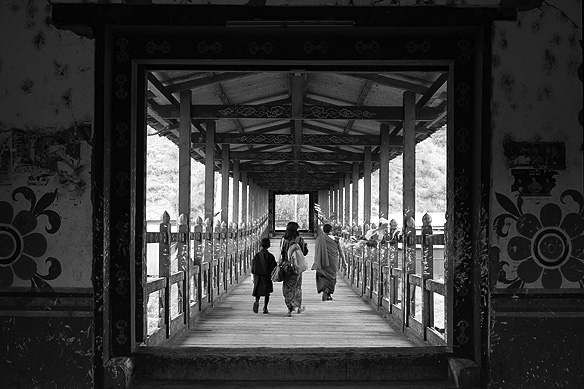
thimphu, the unusual capital city—a photo essay

thimphu_bridge1bw

[My below post was published in the November–December 2016 edition of Druk Air’s in-flight magazine Tashi Delek. All proceeds from my fees went to support the Ability Bhutan Society, a charity supported by Her Majesty the Gyaltsuen in aid of persons living with moderate to severe diverse abilities.]

– – –

Imagine. Imagine a city, a functioning capital city, with all its chores of running a nation perched high up in the Himalayas, bereft of any street lights, and one which made its debut in international tourism and on the “world stage” as recently as 1974. Before that, you and I would not even have been able to cross its borders.

Imagine a city with multinationals and media houses, where architecture, culture and everyday life wear the mantle of Tantric Buddhism. By law, buildings are mandated to be modelled on traditional lines, replete with symbolic paintings. Bhutanese have to dress in local attire.

Imagine a city where there are national tournaments in archery at the national stadium coz, yes, archery is the national sport. Monks are not allowed to take part in archery. They play another sport in its place—daygo which involves throwing flat circular discs.

Till the 1960s schooling was limited to religious studies in monasteries. Bhutan lifted its ban on the Internet in 1999. It was the last country in the world to do so. Mobile telephones were introduced in 2003. The only way to reach Thimphu is by road [it does not have an airport].

For all the above reasons, and many more, Thimphu is worth that extra set of miles. It was, definitely, worth mine. Continue reading

the secret, sacred wonders of paro valley

Paro Valley, Bhutan

[My below post was published in the March–April 2017 edition of Druk Air’s in-flight magazine Tashi Delek. All proceeds from my fees went to support the Ability Bhutan Society, a charity supported by Her Majesty the Gyaltsuen in aid of persons living with moderate to severe diverse abilities.]

– – –

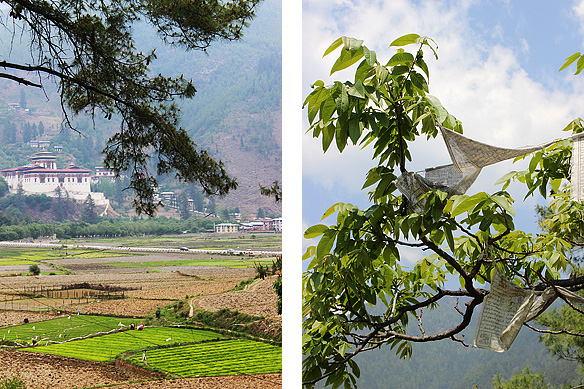
Deep in a valley in Western Bhutan, on the banks of the Paro Chhu river, lies a town suspended in time. The emerald green fields glimmer in the sun, punctuated with scraggy scarecrows. A lone woman in a purple kira tills the soil under an azure blue sky.

Lao Tzu’s words, from way back in the 6th Century BC, echo in my mind:

“Be still,
Stillness reveals the secrets of eternity.”

My reverie is broken by hollers and laughter in the distance. The farmers have started setting up their produce in the local market comprising a string of wooden tables piled high with fresh and sun-dried vegetables. The latter help carry the Bhutanese over the cold dry sterile winters. A line of red-robed monks file past me, a gentle smile on their lips.

It’s the crack of dawn, and I am in Paro. The main street I am walking down is lined with traditional buildings and was paved only recently, in 1985. Continue reading

sacred mountain passes of western bhutan

mountain_passes13

[My below post was published in the September–October 2016 edition of Druk Air’s in-flight magazine Tashi Delek. All proceeds from my fees went to support the Bhutan Nuns Foundation, a charity run by the queen mother in aid of women’s empowerment and education.]

– – –

Sacred
‘seɪkrɪd (Adjective)
Regarded with reverence, awe, or respect

Mountain pass
‘maʊntɪn pɑːs (Noun)
A route through a mountain range

Reading up about Bhutan during my travels, I came across a quote by Jeffrey Rasley, spiritual seeker and adventure traveller that perhaps best sums up the mountain experience: “Chasing angels or fleeing demons, go to the mountains.”

Whether it is angels or demons in your case [in mine it is usually both], mountains have often enough been associated with the sacred, and none more so than the Himalayas, and like all other mountain realms in the region—Bhutan. Perhaps because mountains are closer to the heavens and impregnable to traverse, the routes through them lets us ordinary folks get up close and personal to the sacrosanct in them. And everything feels OK. 🙂 Continue reading