pune heritage walk: lal mahal and shaniwar wada

shaniwarwada_lalmahal1

Aah, those wondrous figures who live on in the dusty worn out pages of time—the larger than life legends who changed the course of history! I am talking about Chhattrapati [Sovereign] Shivaji Maharaj [top left image] and Peshwa Bajirao I [top right image] of the Maratha Empire.

Though India’s Mughal-centric history has pushed the Maratha Empire to its periphery, it lives on, passionately and firmly embedded in Maharashtra, its founder’s state, and in Pune, the empire’s political seat. Continue reading

secrets of south bombay’s parel queensway

parel_queensway1

The stories and secrets Bombay holds in its folds behind its crumbling Victorian edifices and chaotic traffic spans centuries. Of all the streets which cover the city in a tangled web, Queensway, a road that leads through Parel in South Bombay, is perhaps the richest in terms of history and also the least to have divulged its mysteries.

A two and a half kilometre stretch, the wide boulevard lined with towering trees contains 19th Century temple courtyards, odes to the Indian Independence Movement, stories of magnanimous philanthropy, and an open air museum of Indian sculpture traversing 1,600 years. And if you did not know, you would not even come close to guessing they exist. Continue reading

global travel shot: the unknown 5th century shiva saptamurti in parel

Image

parel_5thCentury_sculpture_1

You may well say, Aah, I have seen this sculpture before. That is, if you are a museum buff. Wrong.

Allow me to make a confession. I often find myself torn between awe at the cultural treasures with which India bursts at its seams with, and angry at the apathy, neglect and state of degradation in which many lie. I know I am not alone in this conflict.

Exactly a year ago I visited the sculpture gallery at Chhatrapati Shivaji Maharaj Vastu Sangrahalaya, Mumbai, formerly known as the Prince of Wales Museum of Western India. Like very many others, I fell in love with one piece. Continue reading

nala sopara: mumbai’s ancient buddhist stupa and mythical temples

The historical and artistic magnificence of India never fails to amaze me. Take a step in any direction and one is flooded with the country’s inordinate rich past and culture. Which does not always work in its favour for it lends to the Indian populace a nonchalance towards their own heritage.

Medieval sculptures which audiences lust over in international museums lie covered with petals and incense soot in temple nooks here. Millennia old crumbling edifices stand forgotten, holding on to time in desperation in an attempt to evade being razed down. And because they are in the multitude, one more or one less, sadly become irrelevant.

No part of this country is immune to its own cultural excess. Not even an uber metro like Mumbai. In fact even less so, for I have discovered and experienced sights here across centuries and religions, coexisting in uncanny innate ease. Continue reading

mumbai’s ancient rock-cut cave temples

“Let’s explore the rock-cut cave temples of Mumbai this Sunday,” a friend suggests excitedly.

“Caves? I have been to Elephanta and Kanheri. Even written about them! Read my post. 🙂 ”

“Hey, there are more, a lot more in the city itself.”

More? I am confused. Where can there possibly be caves in Mumbai. The city is packed with concrete and people, with little space to walk, least of all millennia old caves to have survived. I am wrong.

Hidden within the crevices of Mumbai’s urban jungle is a pulsating vein of its ancient past. A series of rock-cut temples, connected to each other with tunnels and hidden passageways, lace the city’s basalt bed rock. Continue reading

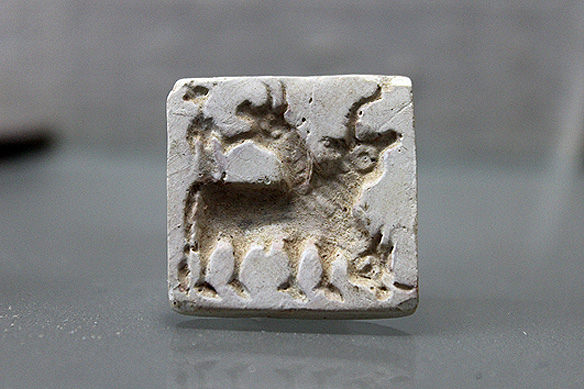
the 4,500 year old harappan site of dholavira, kutch

dholavira1

“At the height of our civilization, our technological development, our social and material complexity, all signs point to progress, we often think. And yet, all is not as it seems and once in a while it occurs to us to look into the past to discover our future.”

The above lines, read in the adjoining museum, accompany me as I walk into the majestic and isolated ruins of the 4,500 year old Harappan city of Dholavira. There is a hushed stillness all around. The only sounds I can hear are the birds chirping in some distance, and my guide’s quiet voice pointing to some detail or the other. The sun beats down on both me and the dusty stones strewn over the site, the latter telling me stories long forgotten and now valiantly being attempted to be reread and understood. I am in the north-east corner of Kutch, on the island of Khadir surrounded by the Great Rann. Continue reading