11 memorable experiences only to be had in turkmenistan

Tourist number: 1933.

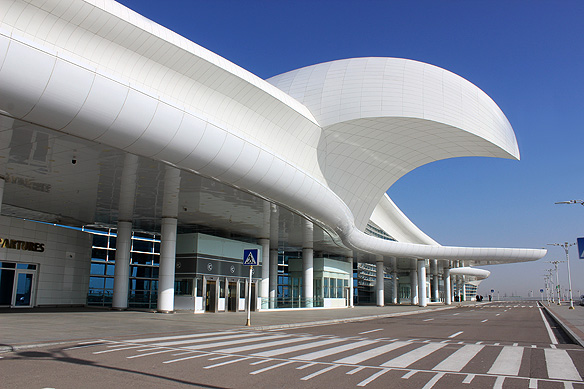
It is the early hours in the morning of 1 October, and I am at the gleaming falcon-shaped marble-encased airport in Ashgabat, capital of Turkmenistan. I ask the official at the visa counter what does this line on my entry stamp mean. He explains that 1,932 tourist visas had been issued in 2023 before mine. I am 1,933rd. This does not include the 3-to-7-day transit visas, by-the-way.

With a silly grin plastered on my face, I tell him he has no idea how much it means to have that sticker on my passport. Many months of planning and three back-to-back flights, from Goa to Muscat to Dubai to Ashgabat, and I am finally, finally here.

I guess my enthusiasm is contagious. The otherwise poker-faced official gives a little smile and wishes me a happy stay. I respond with a beaming grin.

Outside, shifting lights on the airportโ€™s facade recreate a falconโ€™s flapping wings. Continue reading

time-travel and dinosaur plateaus in remote north-east turkmenistan

Lebap Province in north-east Turkmenistan is as remote as it gets in this least visited country. Filled with moonscapes, a dinosaur plateau scalloped with around a couple of hundred, 150-million-year-old footprints of Megalosaurians during the Jurassic Period, deep canyons, and grottoes dedicated to saints and wishes, it is untouched by tourism. No-one speaks English here either.

To put things in context, Turkmenistan does not allow tourists to travel independently through the country. Neither can one simply travel to any random part of the country that tickles one’s fancy. There are designated places one is allowed to explore, and when out of Ashgabat, one must be accompanied with a licensed local guide.

Not many people visit Turkmenistan. The average number is less than 10,000 annually excluding the 3-to-7-day transit visas. Even fewer make it to its remote north-east. One of those rare ones was me. ๐Ÿ˜€

Here is my photo diary on this part of the world. I hope it inspires you to take the road less travelled, in this case time-travel to Lebap Province!

Continue reading

travel shorts: kyrk giz grotto, if ribbons and mud could stick

This slideshow requires JavaScript.

Take a long piece of cloth or ribbon, add a blob of mud to it, and hurl it high onto the ceiling of the grotto. If it sticks, your wishes will come true. If the ribbon falls flat on the ground, well you can either give up, or try again. ๐Ÿ™‚

It is a ritual which people from across Turkmenistan carry out at the 50-metre-high grotto in Lebap Province, in remote north-east Turkmenistan. Starting a new job, getting married, or want a babyโ€”it would not be amiss to make a pilgrimage here first. Continue reading

at turkmenistan’s darvaza: the gates of hell

Wouldnโ€™t you agree that some sites are synonymous with the country in which they are? Especially the iconic, larger-than-life epic ones. For instance, think of India, and the Taj Mahal leaps to mind. Likewise, think of South Africa, and it is Table Mountain. The list goes on.

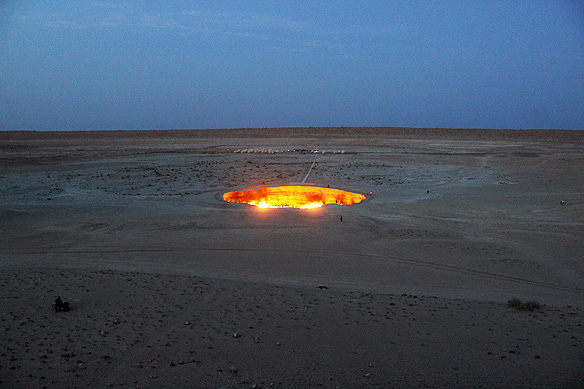
For Turkmenistan, it is Darvaza, the โ€˜Door to Hellโ€™ or โ€˜Gates of Hell,โ€™ a burning inferno in a massive pit, deep in the Karakum Desert.

And yes, it is an appropriate synonym. No, not the Hell part. That is the touristy moniker.

Darvaza encapsulates the country’s recent history, geography, and economy all rolled into a bizarre visual spectacle, befitting a country that is different from any other. In Turkmenistanโ€™s official documentation, the site is called โ€˜Shining of Karakum.โ€™ ๐Ÿ˜Š

Two-hundred-and-sixty kilometres north of its capital Ashgabat, the 70-metre-wide, 30-metre-deep methane gas crater has been burning non-stop since 1971. Its raging flames whip into the air, becoming more menacing, yet beautiful, as the desert is engulfed in total darkness at night.

Neither a natural wonder nor of any particular historical significance, Darvaza is the result of, simply put, an oil exploration gone astray. Continue reading

travel diaries: from bamyan to herat via the minaret of jam

Be still, dear wild dancing heart! I chide it that it’s being ridiculous. I am no novice traveller. I have travelled all my life, been to countless countries, places many have not even heard of.

“But this is the first time to the Minaret of Jam,” it whispers gleefully.

Yes, true. And I let it dance away, and smile at it fondly. If it were not for this crazy heart of mine, I would be leading a pretty dull life.

Dear reader, I am about to start a 7-day road trip across Afghanistan’s remote heartland to see its most glorious treasures, including the 12th Century Minaret of Jam. The latter, the very reason why I had travelled all the way to Afghanistan in the first place.

It will take me one-and-a-half days through nothingness to reach the minaret, and then another one-and-a-half days off-road driving to reach civilization, namely Herat.

Here’s to once-in-a-lifetime journeys! โค Continue reading

persian herat and its hidden wonders

Right at the very end of the battered and bruised road, cutting across the country from east to west, is the Persian historical city of Herat. Not many travellers come this far. It is way too out, perched near Afghanistanโ€™s western border with Iran. Yet, it has always been of great importance, as is revealed by its architectural and cultural treasures to those who take the trouble to reach it.

Herat’s been around for a long time; 6th Century BC records describe it as a Persian city which went by the name Aria. Yes, the same pronunciation as my surname. ๐Ÿ™‚

Its strategic location on the Great Silk Road and the banks of the Hari River made it particularly appealing to conquerors and rulers. Alexander the Great defeated Heratโ€™s Persian Achaemenids in 330 BC and put up a majestic citadel to celebrate his victory. He was followed by the Abbasid Caliphs in the 8th Century, Ghurids in 1175, the Mongol Genghis Khan who destroyed everything in 1221, the Kartids who then rebuilt it, and the Timurid Tamerlane who destroyed it once again in 1380.

When Tamerlane’s favourite son Shahrukh Mirza decided to move his capital from Samarkand to Herat, he was determined to make Herat the grandest city in the region. A vision shared by his wife Gawhar Shad and later descendent Husayn Bayqara.

The result was a city of much beauty and grace whose praise was extolled far and wide. Of its many buildings, 830 ‘cultural sites’ are still believed to survive today, warranting it a place in UNESCO’s tentative list in 2004.

It is a difficult combination. War and conservation. However, despite all the odds, both UNESCO and the Aga Khan Trust for Culture have consistently worked on Herat, ensuring its treasures, hidden from the world at large, manage to survive.

Come along with me on a virtual tour of Timurid Herat, the city on the Hari River, to see why it was called the โ€˜Pearl of the Khorasanโ€™ for the longest time! Continue reading

ghazni and its indomitable sultans

โ€œThe blood of the infidels flowed so copiously that the stream was discoloured, and people were unable to drink it.โ€

~ Al-Utbi, Tarikh Yamini [Mahmud of Ghazniโ€™s court historian]

Al-Utbiโ€™s lines describe the carnage Sultan Mahmud of Ghazni, a city in eastern Afghanistan, inflicted on the wealthy temple cities of medieval India. From 1001 to 1026, Mahmud attacked northwest India 17 times, revelling in the destruction of the Hindu idols, and stripping the cities of its gold, silver, and wealth.

Mahmud was not interested in permanently owning the sub-continent. The resistance by the likes of Rajput King Vidyadhara Chandela was at times way too stiff, so alliances were made instead when required. His strategy was simple: attack, loot, return. Every year. It was a vow he had made to himself.

Bereft of any other major source of income, the Indian booty helped finance Mahmudโ€™s empire, its capital Ghazni, and army. Under Mahmudโ€™s rule [998 โ€“ 1030], the Ghaznavid empire founded by his father, reached its zenith stretching from Iran to Punjab in northwest India. Continue reading

a guide to solo travel in afghanistan for the indian traveller

At the 12th Century Minaret of Jam with my driver Sher Aga [middle] and fixer-cum-translator Obaid [extreme left].

At the 12th Century Minaret of Jam with my driver Sher Aga [middle] and fixer-cum-translator Obaid [extreme left].

“Why are you in this western tour group? Why are you with them?”

I faced this question at almost every checkpoint during the few days I travelled in Afghanistan as part of a group. [For the rest of my 18 day travels in the country, I travelled alone and on my own.] A Taliban soldier on the 5th day was more explicit. “This is your country! You don’t need to be with them to see Afghanistan.”

– – –

This travel guide to Afghanistan is specifically meant for Indians. Like Indians in colour and passport. It does not, and cannot, apply to people of other colours and nations or an Indian with a western passport. ๐Ÿ™‚

Let me put it in context first.

According to Indian textbooks, Afghanistan was once a part of India. According to Afghan textbooks, India was once a part of Afghanistan. Sorry, not India, but ‘Hindustan.’ Afghans, like the rest in Central Asia, still refer to India by its Silk Road-era name given to the sub-continent by the Persians.

Afghan fine-dining restaurant menus have Hyderabadi Biryani and Aloo Gobi listed under ‘Afghan Dishes,’ while Afghan women wear nose rings and bindis and are adamant it is an Afghan thing. We Indians, of course, believe it is all intrinsically ours, and just smile about it in smug complacency. You get the drift.

Both countries have shared personalities and dynasties across a millennium. For one thousand years it was the likes of Mahmud of Ghazni, Muhammad Ghori, the Khilji Dynasty, Lodi Dynasty, Mughal Emperor Babur, and Sher Shah Sur. Today, it is a chunk of Bollywood. Yes, Salman Khan, Shah Rukh Khan, Aamir Khan and Celina Jaitley, yesteryear heroes Feroz Khan and Sanjay Khan, and bad guy Kader Khan all have Afghan blood in them. And these are just a few in a long list. Continue reading

photo essay: in search of kandahar, the taliban’s former capital

Right up to 15 August, 2021, it was impossible for foreign tourists to visit Kandahar, least of all by road. The city, a Taliban stronghold in southern Afghanistan, was labelled the ‘kidnapping capital’ and lethal land mines infested the road to it every few metres. You had a far greater chance of being blown alive en-route than getting in. And if perchance you did make it in, the odds of staying alive were slim. But a lot has changed since then. I went by car to Kandahar this year in October and spent two nights in the city. And I live to write this post. ๐Ÿ™‚

Kandahar, founded by Alexander the Great in 330 BC, has been the spiritual headquarters of the Taliban since its inception in 1994. From 1996 to 2001, when the Taliban were first in control, it served as the capital of Afghanistan. Though Kabul is now the seat of government, the Taliban’s senior-most officials, including its supreme leader Hibatullah Akhundzada and his spiritual advisors, are based in Kandahar. All decisions that affect the lives of Afghans are made right here.

So, what’s Kandahar really like now? Let me take you on a visual journey of this much touted city as I went in search of it. Continue reading

travel shorts: hazrat-e mazar, afghanistan’s most sacred site

Image

This slideshow requires JavaScript.

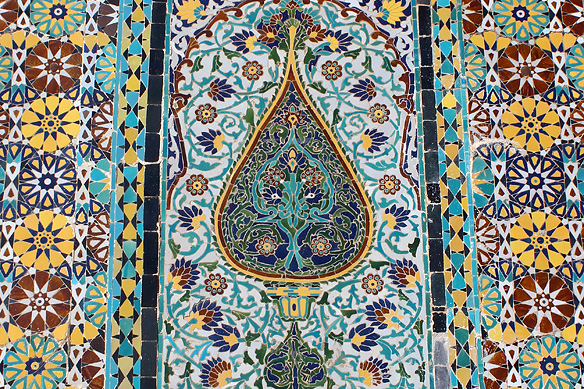
One of Islam’s most sacred sites lies in northern Afghanistan, a mere 55 kilometres from the Uzbekistan border. It is a blue-tiled mosque which glistens like a jewel, changing colour through the day, and home to countless pristine white pigeons.

Whilst the Shiโ€™a sect of Islam believe that Ali, Prophet Muhammad’s cousin and son-in-law, is buried in Najaf, Iraq, the Sunni sect regard Hazrat-e Mazar in Mazar-e Sharif as Ali’s actual tomb.

Both, the city Mazar-e Sharif and its spiritual centrepiece Hazrat-e Mazar, date back to the 12th Century.

There is an interesting Afghan legend as to how the tomb came to be here. Continue reading