travel diaries: a tale of two capitals—nizwa and muscat

Nizwa, Oman’s 17th Century capital

I found myself blinking hard. And then blinking again. A little dazed. Bewildered is perhaps a better word. Was this for real? Was it indeed the 20th of December, 2024, or had I by some unexplained miracle time-travelled a good few centuries back?

Around me was a scene pulled right out of a medieval Arabian livestock souq. Sellers in pastel dishdashas were running around a ring. First with their goats, and then their cows, in tow. On either side of this parade were buyers in crisper, whiter dishdashas calling out if a particular animal caught their interest.

What followed next was a thorough examination of the selected livestock’s teeth, gums and hooves, and some hard-core bargaining. At times the seller won, at times the buyer, and the mute creature swapped masters. Often nothing materialised till another early Friday morning, when a display would again be put on show.

There were a handful of foreigners in the periphery, looking on, as amazed as me. Just like maybe a Marco Polo or Ibn Battuta did when witnessing a similar scene.

The business on hand was, however, completely unaffected by the cameras or gasps. There were more important things to focus on for these gentlemen. Would that goat be an asset? Would he be able to resell that cow for a profit? It’s a stock market in its most basic form wherein livestock are sold and resold every week.

In a couple of hours, the hullabaloo simmered down. The sellers and buyers dispersed. Showtime was over.

Did the end of the spectacle bring me back to the present? Not exactly. For next to the Friday traditional livestock souq were the 17th Century Nizwa Fort and Castle, the latter predating the fort by a few decades. Both built by the Ya’rubid dynasty, rulers of Oman from 1624 to 1742 who had made Nizwa, a historical city built over a stream and trade crossroads, their capital.

Nizwa Fort dates to the middle of the 17th Century. Built on the orders of Imam Sultan bin Saif Al Ya'rubi, the enormous earth-filled stone tower took 12 years to complete.

Nizwa Fort dates to the middle of the 17th Century. Built on the orders of Imam Sultan bin Saif Al Ya’rubi, the enormous earth-filled stone tower took 12 years to complete.
Continue reading

travel diaries: the caucasus and talysh mountains

Mountains come in all shapes, sizes, and colours in Azerbaijan. 🙂

Dear Diary,

After exploring the Himalayas and Hindu Kush in recent years, I thought I knew it all about mountains. Those soaring peaks on our earth which reach out to the heavens. Could I be further from the truth. I instead learnt, whilst in Azerbaijan, that every mountain range has its own soul. Even if they happen to be geographically right next to each other.

During my 2-week stay, I travelled into the very inner recesses of the Greater Caucasus Mountains in the country’s north, the Lesser Caucasus Mountains in the west, and the Talysh Mountains in its south-east. And was always, both equally charmed and awed.

Though most travellers focus their Azerbaijan travels to the capital Baku, and the much-touted Absheron Peninsula which surrounds it, a mere few hours on impeccable roads takes one to pristine mountain landscapes and towns curled up in the lap of nature.

I thought I would collate some highlights from those days. For posterity’s sake. Continue reading

part 3: the spiti trilogy: lahaul, the mystical side of life and himachal

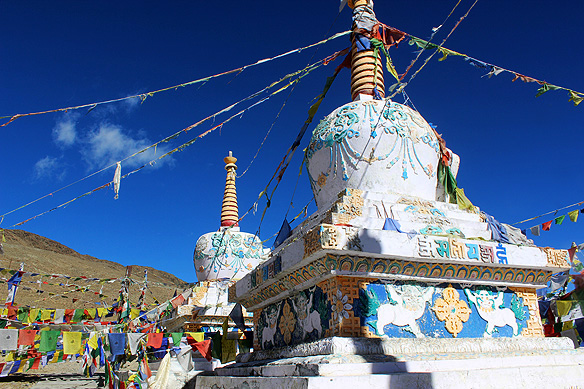
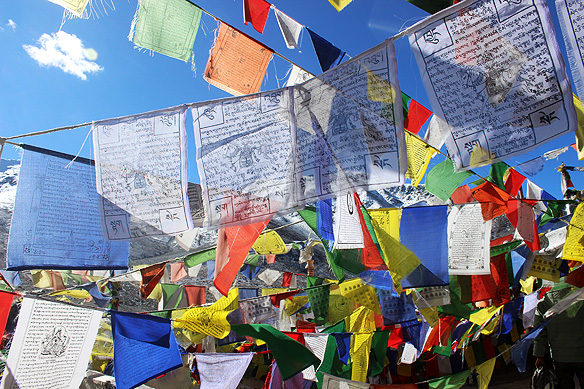
Prayer flags at Kunzum Pass. Because the gods live in the mountains.

Prayer flags at Kunzum Pass. Because the gods live in the mountains.

Welcome to part 3 of my photo diary trilogy on Kinnaur, Spiti, and Lahaul, high up in the Himalayas in India’s Himachal Pradesh.

If Kinnaur is all about the lush flourishing side of living, and Spiti the very opposite—about its barrenness, then Lahaul is the natural outcome of going through both sides of life. It is of tuning in with one’s inner self. I guess you could simply also describe it as meeting one’s Maker.

Here in Lahaul, Buddhist chants echo from monasteries perched atop peaks. Lakes contain deities and so do mountain passes. There is the sacred everywhere, and it is celebrated with much joy.

I would like to share my journey through Lahaul valley with you here. Maybe its magic captures your heart and soul too. 🙂

Continue reading

part 2: the spiti trilogy: spiti, the barren side of life and himachal

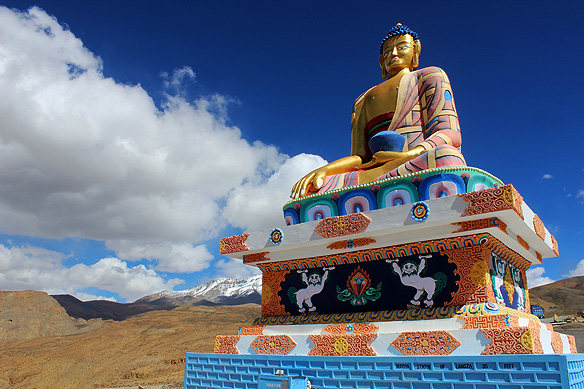
Buddha statue in Langza Village. Because the gods live in the mountains.

Buddha statue in Langza Village. Because the gods live in the mountains.

Welcome to part 2 of my photo diary trilogy on Kinnaur, Spiti, and Lahaul.

This week’s post is about Spiti, a cold desert biosphere in the rain shadow area of the Himalayas bordering Tibet. India’s monsoons do not reach here. Even if they do manage to squeeze their way past the soaring peaks, all they are able to muster is a drizzle. The summers are always dry. The winters are covered in thick snow and ice.

None of which is conducive to agriculture except if carried out on the banks of the Spiti river. The land is otherwise brown and barren, its moonscapes strewn with sand and boulders. Nestled in this arid bleakness are countless ancient monasteries, bedecked and bejewelled with Tibetan Tantric Buddhist iconography. These pockets of sanctity serve as places of refuge, giving strength and meaning beyond a difficult life.

Come along with me to Spiti.

Continue reading

part 1: the spiti trilogy: kinnaur, the verdant side of life and himachal

Sangla valley—Sangla means 'Pass of Light' in Tibetan language. Because the gods live in the mountains.

Sangla valley—Sangla means ‘Pass of Light’ in Tibetan language. Because the gods live in the mountains.

I have always seen myself as an ocean person. I love the rhythm of crashing waves, the smell of salt in the sea air, the white foam breaking into froth around my feet, and tugging me along as it leaves.

And then I went to the Lahaul and Spiti valleys and everything changed inside of me. I became a mountain soul. Those who have been there will understand what I mean.

The Lahaul and Spiti district in India’s northern state of Himachal Pradesh is one of the most beautiful places I have travelled to. Remote and untouched, its offroad route is accessed through neighbouring Kinnaur district if coming in from the Shimla side. When exiting, it continues to Manali to form a loop. Kinnaur and Lahaul are both verdant and green. Sandwiched between them, Spiti, in stark contrast, is a high mountain barren desert perched on the soaring Himalayan range, wild and windswept.

Starting with today, I will be posting a photo diary trilogy of Kinnaur, Spiti, and Lahaul over the coming three weeks. Care to join me and let your soul fall in love with the mountains too? ❤

Note: Lahaul and Spiti used to be two separate districts and were merged into one in 1960. For the purpose of this trilogy, they are treated separately because of their geographic distinctiveness.

Continue reading

travel diaries: hiking through the horton plains

There is a deafening silence as I enter the Horton Plains in the wee hours of the morning. Above me, the silver sun is still trying to find its way back into the sky. It is not an easy task.

A thick blanket of mist and cloud engulf me, the golden blades of montane grass, and the sand-spattered 3.5-billion-year-old Precambrian-era boulders. Every now and then a slight drizzle kisses my upturned face. I peer through the mist, strain my ears for another human sound. A footstep, laugh, threads of a conversation. All I can hear is my own breath. I look at my phone. There is no signal. Continue reading

time-travel and dinosaur plateaus in remote north-east turkmenistan

Lebap Province in north-east Turkmenistan is as remote as it gets in this least visited country. Filled with moonscapes, a dinosaur plateau scalloped with around a couple of hundred, 150-million-year-old footprints of Megalosaurians during the Jurassic Period, deep canyons, and grottoes dedicated to saints and wishes, it is untouched by tourism. No-one speaks English here either.

To put things in context, Turkmenistan does not allow tourists to travel independently through the country. Neither can one simply travel to any random part of the country that tickles one’s fancy. There are designated places one is allowed to explore, and when out of Ashgabat, one must be accompanied with a licensed local guide.

Not many people visit Turkmenistan. The average number is less than 10,000 annually excluding the 3-to-7-day transit visas. Even fewer make it to its remote north-east. One of those rare ones was me. 😀

Here is my photo diary on this part of the world. I hope it inspires you to take the road less travelled, in this case time-travel to Lebap Province!

Continue reading

travel diaries: from bamyan to herat via the minaret of jam

Be still, dear wild dancing heart! I chide it that it’s being ridiculous. I am no novice traveller. I have travelled all my life, been to countless countries, places many have not even heard of.

“But this is the first time to the Minaret of Jam,” it whispers gleefully.

Yes, true. And I let it dance away, and smile at it fondly. If it were not for this crazy heart of mine, I would be leading a pretty dull life.

Dear reader, I am about to start a 7-day road trip across Afghanistan’s remote heartland to see its most glorious treasures, including the 12th Century Minaret of Jam. The latter, the very reason why I had travelled all the way to Afghanistan in the first place.

It will take me one-and-a-half days through nothingness to reach the minaret, and then another one-and-a-half days off-road driving to reach civilization, namely Herat.

Here’s to once-in-a-lifetime journeys! ❤ Continue reading

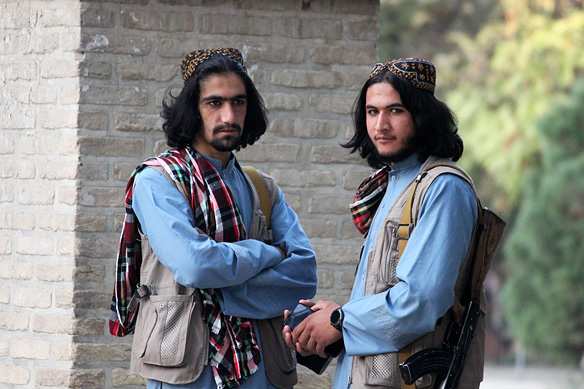
taliban afghanistan, a solo indian woman traveller, and help from unexpected quarters

An Australian tour company versus the Taliban. Who would you trust?

If I am not mistaken nearly everyone would choose the tour company. I did too.

After all, it is ‘white-owned’, from a ‘developed country,’ and the default conclusion is that ‘I would be safe with them’ in an otherwise unsafe country—in this case, Afghanistan under the Taliban.

Instead, as the only person of colour in a group of 10 led by two white Australian tour leaders, I was subjected to a barrage of India-bashing from the group. By the time one of the group, a Welshman living in Poland, crossed the lines on the seventh day of the tour, I’d had enough. I told them to stop. What happened next is what travel nightmares are made of. Continue reading

travel diaries: jaigarh and nahargarh: 2 forts and 1 traveller

The tuk-tuk rattled and heaved as we drove higher up the jungle-clad deserted hill. We were just a few kilometres north of Jaipur, yet there was not a soul around. Or any sound. Except for the chirping of the birds and my noisy mode of transport.

In the distance I could make out the Jaipur State’s flag—the famous panchranga representative of the five Afghan tribes Mirza Raja Man Singh I, the Kachhwaha Rajput ruler, defeated in 1585 on behalf of the Mughals. A gentle reminder that the fort on which it was hoisted, Jaigarh Fort, still belonged to the Jaipur royal family.

Unlike the Amer Fort, Jaigarh Fort built by Maharaja Sawai Jai Singh II in 1720 served as a military fort and a hideout for the royal family in the event of war. It’s a stark and functional piece of military architecture. But with such stories inside its walls! Continue reading