persian herat and its hidden wonders

Right at the very end of the battered and bruised road, cutting across the country from east to west, is the Persian historical city of Herat. Not many travellers come this far. It is way too out, perched near Afghanistan’s western border with Iran. Yet, it has always been of great importance, as is revealed by its architectural and cultural treasures to those who take the trouble to reach it.

Herat’s been around for a long time; 6th Century BC records describe it as a Persian city which went by the name Aria. Yes, the same pronunciation as my surname. 🙂

Its strategic location on the Great Silk Road and the banks of the Hari River made it particularly appealing to conquerors and rulers. Alexander the Great defeated Herat’s Persian Achaemenids in 330 BC and put up a majestic citadel to celebrate his victory. He was followed by the Abbasid Caliphs in the 8th Century, Ghurids in 1175, the Mongol Genghis Khan who destroyed everything in 1221, the Kartids who then rebuilt it, and the Timurid Tamerlane who destroyed it once again in 1380.

When Tamerlane’s favourite son Shahrukh Mirza decided to move his capital from Samarkand to Herat, he was determined to make Herat the grandest city in the region. A vision shared by his wife Gawhar Shad and later descendent Husayn Bayqara.

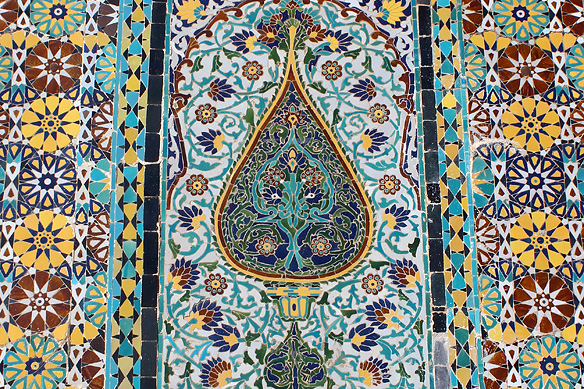
The result was a city of much beauty and grace whose praise was extolled far and wide. Of its many buildings, 830 ‘cultural sites’ are still believed to survive today, warranting it a place in UNESCO’s tentative list in 2004.

It is a difficult combination. War and conservation. However, despite all the odds, both UNESCO and the Aga Khan Trust for Culture have consistently worked on Herat, ensuring its treasures, hidden from the world at large, manage to survive.

Come along with me on a virtual tour of Timurid Herat, the city on the Hari River, to see why it was called the ‘Pearl of the Khorasan’ for the longest time! Continue reading
iran 4: the story of persepolis

“Passer-by, I am Cyrus the Great, I have given the Persians an empire and I have ruled over Asia. So do not envy me for this tomb.”
~ Inscription on the tomb of Cyrus the Great, Pasargade, 6th Century BC

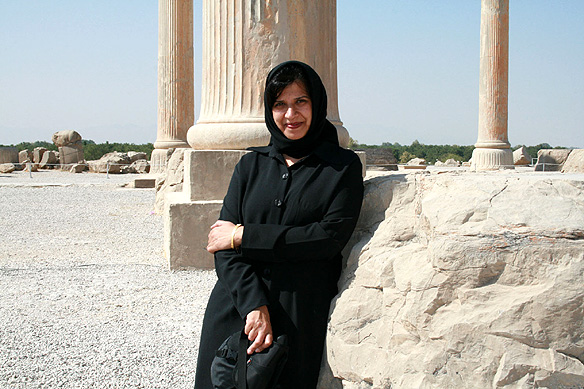
I love rambling through archaeological sites, running my fingers over millennia old ruins, walking down worn out paths where before me countless souls had also passed along. Where history was made and destinies defined. Sites like these are humbling, making us realize how small we are in the bigger picture. And yet such sites also fill us with a deep sense of pride in humanity’s political achievements and artistic endeavors which are a legacy belonging to all mankind.

persepolis_rama Continue reading

egypt 8: alexander the great’s alexandria and coptic wadi-el-natrun

alexandria1
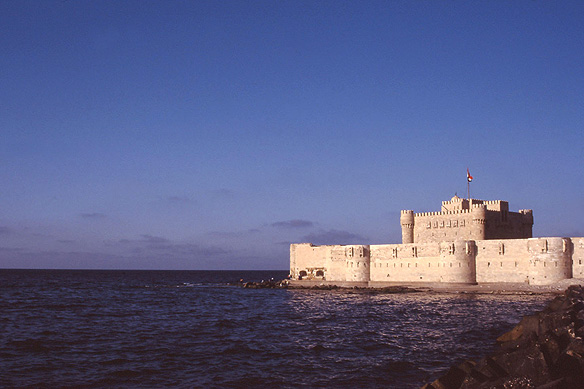
Fairytale Qaytbay Fort, built from the stones of the legendary Pharos Lighthouse

Alexandria, ancient capital of culture and learning

Built by Alexander the Great in 332 BC, Alexandria was intended to be the port which would link the old worlds of Egypt, Babylon, Persia, and Greece. Following Alexander’s death, Alexandria became a world city under the rule of the Ptolemies, the dynasty founded by his Greek General, Ptolemy. The Ptolemies used their resources to develop knowledge, art and culture and establish the city as a centre for science, religious thought and literature. It was within the complex of libraries, parks and halls of the fabled Mouseion that stood in the centre of the city that Euclid wrote his ‘Elements’, Eratosthenes calculated the circumference of the earth, Herophilus pioneered the study of anatomy, and the ‘Julian’ calendar, based on the ancient Egyptian solar calendar, was devised. Continue reading

egypt 4: the nile cruise

nile_river1

“Hail to thee, O Nile, that issues from the earth
and comes to keep Egypt alive! …
… O Nile, verdant art thou,
who makes man and cattle to live!”

~ Translated from ‘Hymn to the Nile’ written for an Inundation Festival held at Thebes some 3,600 years ago

“Egypt is the Gift of the River”, said Herodotus, the Greek Historian in the 5th Century BC. Rightfully so. Kingdoms came and went, dynasties rose and fell. But the Nile continued, steadfastly, year in and year out, with its rise and ebb to irrigate, fertilise and nourish a civilisation that endured 3,000 years of history. Continue reading