travel guide: the six untold treasures of kazakhstan’s silk road heritage

Tucked away in the remote wind-swept folds of southern Kazakhstan are the ruins of a string of medieval Silk Road cities. A thousand years ago, these crumbling remains with their grand Sufi shrines were flourishing centres of trade, attracting merchants from far and wide; their glories held in awe across the golden steppes.

Welcome to Kazakhstan’s Silk Road heritage and its evocative treasures: The lost cities of Otrar and Sauran, and the cities of Turkestan, Taraz, and Shymkent which resolutely stood their ground.

The Silk Road, parts of which are UNESCO World Heritage Sites, was a trade route that operated from 114 BC to 1450 AD. Named after the primary product traded, the route comprised of a network of trails which cut across Central Asia, connecting the Far East with the Mediterranean. During its 1,600 years of existence, Chinese silk, along with spices, porcelain, and tea from the East were exchanged for horses, honey, and wine from the West.

It was a harsh terrain. Relentless. Fortified cities sprung up throughout the 6400-kilometre-long stretch to counter the bandits and uncertainty. Inside them, the traded goods changed hands, many times over, before reaching their destinations.

These cities were not just centres of trade, but also hubs of cultural exchange. A melting pot of ideas, philosophies, language, and faith. It is through the gatherings within their walls that Buddhism travelled from India to make a permanent home for itself in the Far East and Islamic science and knowledge fed into the western Renaissance.

Come along with me as I take you on a visual tour of this less visited, medieval side of Kazakhstan. On a journey back into time. 🙂

1. Mausoleum of Khoja Ahmed Yasawi, the jewel in Medieval Kazakhstan’s crown

Mausoleum of the 12th Century Sufi saint Khoja Ahmed Yasawi is Tamerlane's labour of love and the prototype for Timurid architecture.

Mausoleum of the 12th Century Sufi saint Khoja Ahmed Yasawi is Tamerlane’s labour of love and the prototype for Timurid architecture.
Continue reading

top 15 memorable things to do in bahrain, pearl of the persian gulf

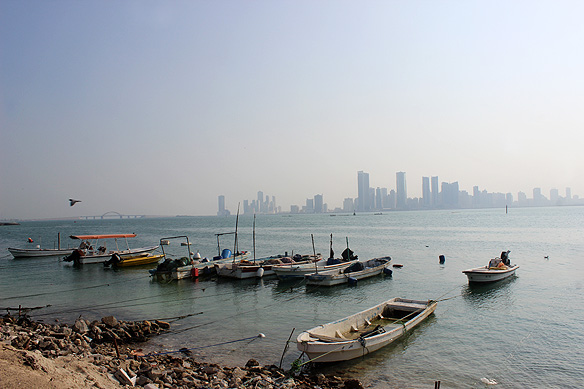
Fishing boats in historical Al-Muharraq overlooking modern Manama.

Fishing boats in historical Al-Muharraq overlooking modern Manama.

Bahrain, meaning ‘Two Seas’ in Arabic, is one of those delicious treats one encounters as a traveller. I do not mean that from a food perspective. Do not get me wrong. The food is fantastic here. What I mean is that it is a visual and historical treat. Layered, nuanced, and whole.

Middle East’s smallest country, the Kingdom of Bahrain is located a mere 25 kilometres off the north-east coast of Saudi Arabia. Ruled by the Al-Khalifa family, it is an archipelago of 33 islands with Bahrain Island the largest [51 kilometres long and 18 kilometres wide] and Manama as its capital. Though mainly barren desert, its freshwater underground springs and marine waters have given the country a remarkable gift: the finest Pinctada radiata oyster beds in the world, of which one in every 20 contains an iridescent natural pearl.

Since their discovery over four thousand years ago by the Dilmun civilization, these oyster beds have sustained empires who made Bahrain their home, and provided them with immense wealth. Pearl-diving, however, was no mean feat across these millennia. It was dangerous and physically demanding.

The divers, known as ghawwas, would plunge some 30 metres into the depths of the sea, armed with rudimentary nose clips and finger protectors, to collect the oysters. After gathering as many as they could with their breaths held tight, they would rush back to the surface, gasping for air. The oysters would be slit open, the pearls graded, and the wheeling and dealing begun with buyers from Europe and India. Once the prices were fixed, these little gems of nature left Bahrain’s shores to grace a crown, a robe, or a neck.

Everyone in the island was directly or indirectly involved in the business of pearls which peaked from 1810 to 1923 in Al-Muharraq, the second largest island in Bahrain. The result was a single product economy which made it to the UNESCO World Heritage list in 2012.

Any surprises then that Bahrain is often referred to by its moniker ‘Pearl of the Gulf?’

But what starts, ends. And though the oyster beds are still there, the pearling trade collapsed with the advent of the Japanese cultured pearl in the 1920s—a simpler, cheaper, and easier alternative—and the discovery of oil in Bahrain in 1932.

An Islamic nation based on Sharia Law, Bahrain’s maritime trade and exposure to multiple cultures for over four millennia has made it forward-thinking and tolerant. It is hard to distinguish between the Bahraini and 55 percent expatriate community at times. There is an easy comradery that cuts across race, class, and creed, peppered with some of the warmest, friendliest smiles around.

Here are 15 memorable things to do in Bahrain. Because, this little island kingdom is, well, different. ❤

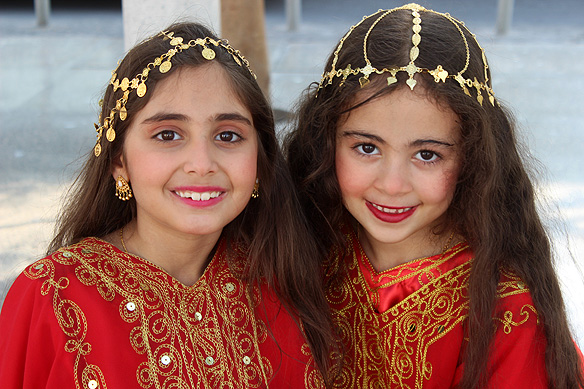
Children dressed up for Bahrain's national day, 16th December, which celebrates the late Emir Isa bin Salman Al-Kalifa's ascension to power in 1961.

Children dressed up for Bahrain’s national day, 16th December, which celebrates the late Emir Isa bin Salman Al-Kalifa’s ascension to power in 1961.

Continue reading

travel diaries: a tale of two capitals—nizwa and muscat

Nizwa, Oman’s 17th Century capital

I found myself blinking hard. And then blinking again. A little dazed. Bewildered is perhaps a better word. Was this for real? Was it indeed the 20th of December, 2024, or had I by some unexplained miracle time-travelled a good few centuries back?

Around me was a scene pulled right out of a medieval Arabian livestock souq. Sellers in pastel dishdashas were running around a ring. First with their goats, and then their cows, in tow. On either side of this parade were buyers in crisper, whiter dishdashas calling out if a particular animal caught their interest.

What followed next was a thorough examination of the selected livestock’s teeth, gums and hooves, and some hard-core bargaining. At times the seller won, at times the buyer, and the mute creature swapped masters. Often nothing materialised till another early Friday morning, when a display would again be put on show.

There were a handful of foreigners in the periphery, looking on, as amazed as me. Just like maybe a Marco Polo or Ibn Battuta did when witnessing a similar scene.

The business on hand was, however, completely unaffected by the cameras or gasps. There were more important things to focus on for these gentlemen. Would that goat be an asset? Would he be able to resell that cow for a profit? It’s a stock market in its most basic form wherein livestock are sold and resold every week.

In a couple of hours, the hullabaloo simmered down. The sellers and buyers dispersed. Showtime was over.

Did the end of the spectacle bring me back to the present? Not exactly. For next to the Friday traditional livestock souq were the 17th Century Nizwa Fort and Castle, the latter predating the fort by a few decades. Both built by the Ya’rubid dynasty, rulers of Oman from 1624 to 1742 who had made Nizwa, a historical city built over a stream and trade crossroads, their capital.

Nizwa Fort dates to the middle of the 17th Century. Built on the orders of Imam Sultan bin Saif Al Ya'rubi, the enormous earth-filled stone tower took 12 years to complete.

Nizwa Fort dates to the middle of the 17th Century. Built on the orders of Imam Sultan bin Saif Al Ya’rubi, the enormous earth-filled stone tower took 12 years to complete.

Continue reading

travel shorts: kazakhstan’s bronze age gallery with 5,000 petroglyphs

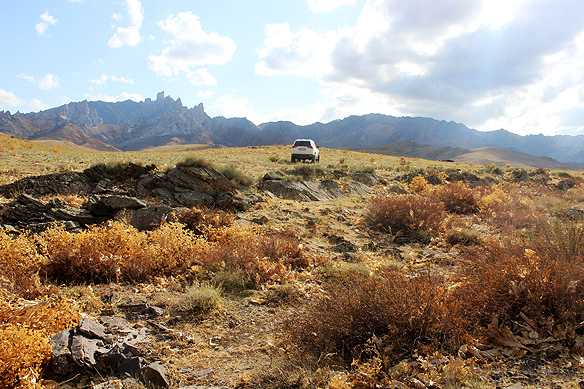
In search of the Arpauzen petroglyphs in southern Kazakhstan.

In search of the Arpauzen petroglyphs in southern Kazakhstan.

I wish I had some form of 360-degree vision and could see nature’s entire spread around me at the same go. On one side, the Prisyrdarya Karatau Mountains‘ dark craggy peaks encircled the isolated silent valley swathed in wild tulips and golden heather. On the other, colossal black chunks of rock glistening in the afternoon sun cascaded down the slopes. Pinch me, I whispered to myself. Is this really for real!

But this was all just half its magic …

“Come, look here. There are etchings of two double-humped Bactrian camels and a hunter with a bow and arrow.” My guide, Islam’s excited voice broke into my reverie, and the otherwise pin drop silence punctuated with the sound of our footsteps on crackling sun-dried tangled gorse, and neighing of wild horses grazing a mere stone’s throw away. Continue reading

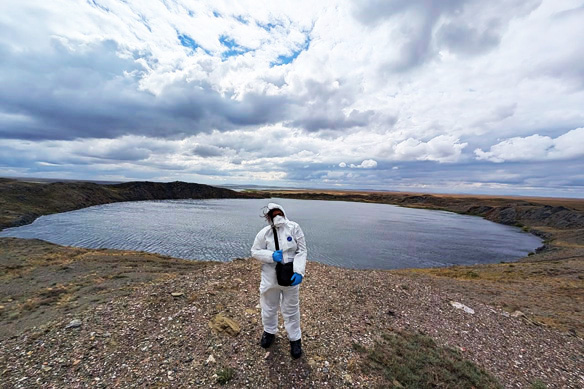
secrets of ussr’s polygon nuclear test site

Coast, Hope, Moscow 400, Semipalatinsk-21, Station Terminal.

No, these are not names of multiple places. Instead, they are the multiple names of one single place, now known as Kurchatov, which for over four decades was not to be found on any public map. Located in present-day north-east Kazakhstan, the names were a trap to maintain its secret whereabouts and mislead potential spies at a time when the region was still part of the USSR.

As if this were not enough, those brought here through stringent checkpoints were routed via Moscow. The city’s residents, mainly nuclear scientists, truly believed they were still somewhere near the Soviet Union capital, even though their new homes lay 3,400 kilometres away. Continue reading

the road less travelled: azerbaijan’s unusual villages

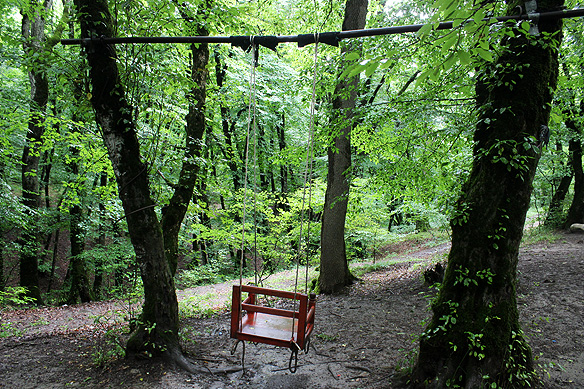
In just five to six hours, one can traverse across Azerbaijan’s length or breadth, crossing nine of the world’s 11 climatic zones along the way. And whilst at it, you would most likely not pass another soul.

Of Azerbaijan’s population amounting to just over 10 million, almost half of these live and work in the capital city Baku and the surrounding Absheron peninsula. The rest of the country is deserted. A tiny village tucked away in a forest-canopied valley or perched on a mist-wrapped mountain is as busy as it gets, apart from a handful of administrative and historical towns.

Nature is at its most magnificent on these stretches, free of exploitation for commercial gains and plastic waste. It is a setting which has also created some of the world’s most unique villages.

Take for instance Lahij, a thousand-year-old Persian village on the southern slopes of the Greater Caucasus Mountains. Unable to find suitable building material, the villagers created an entire settlement of homes and roads with river boulders. Over the centuries they also developed copper handicrafts of exquisite workmanship. It is a craft that is still practiced by its residents and has been listed in UNESCO’s Intangible Cultural Heritage of Humanity.

Then there are the villages in Lerik district in the foothills of the Talysh Mountains in south-east Azerbaijan where centenarians are the norm. Home to some of the oldest people that have ever lived on earth, the Talysh people, also of Persian descent, can be seen working on their fields and grinning cheerfully way into their hundredth birthday. At 90, they would be quick to exclaim that they still felt incredibly young!

If Lerik is about villagers renowned for their longevity, Khinalig high up in the Greater Caucasus range is the oldest inhabited village in the world—historians place it at 5,000 years. Its semi-nomadic villagers travelling between pastures have their own language, possess a distinct genetic make-up, and till recently had no contact with the rest of the world. Together with the mountains encircling it, the village and its inhabitants are a UNESCO-listed World Heritage Site.

Fascinating, isn’t it? Here are some more insights into these villages and their incredible secrets on the road less travelled, this time in the mountains of Azerbaijan.

Oh, and when on that road, don’t forget to have a qutab and chai from one of the many eateries nestled deep in dark lush forests. 😊 Continue reading

the road less travelled: delft island

Forty kilometres off the northern coast of Sri Lanka, is its farthest island—Delft.

It is an unusual name to come across for a tropical island in the Indian Ocean. After all, there is not much in common between the bleached island and the picture postcard region in Netherlands where white glazed pottery with blue decorations have been historically made. The 18th Century Dutch colonial rulers obviously felt differently; for them it was a perfect fit for their new home. Perhaps a gentle reminder of their roots in faraway lands.

Remote and sparsely populated, Delft is the largest island in the Palk Strait which separates Sri Lanka from the Indian subcontinent. Eight kilometres wide and 5.5 kilometres long, it is not just its name which is out of the ordinary. Delft Island used to be a coral reef in the distant past as revealed by the petrified coral chunks strewn on its emerald green beaches. Sans any streams, potable water is limited to catchment areas for surface water and a few pockets of ground water.

Despite these challenges, 1,300 Tamil Christian and Hindu families call the island their home today; their houses clustered around compounds in the north. Empty, windswept scrublands meanwhile stretch out in the south, right up to the rugged charred coastline. Continue reading

jaffna: the unexplored north of sri lanka

Twenty-six years of civil war is a long time. A whole generation grows up exposed to the horrors of war, stripped of their right to education, health-care, and utilities. It is hard for one living in a ‘secure’ country to even fathom such dreadfulness day in and day out, year in and year out.

Sri Lanka’s LTTE-Sinhalese civil war started on 23 July, 1983 and ended on 19 May, 2009, during which an estimated 40,000 civilians died according to a UN Experts Report. Those who could leave, left the country. Root causes of the civil war were a series of anti-Tamil riots following independence in 1948 and the 1956 Government Act which recognized Sinhalese as the only official language.

Fuelled further by the government’s citizenship and education policies, it led to the creation of the LTTE or Tamil Tigers, as they were known, and their demand for a separate Tamil state ‘Tamil Eelam.’

Suicide bombers were a trademark of the Tamil insurgency. Even India, Sri Lanka’s neighbour, could not be immune to it. India’s ex-Prime Minister Rajiv Gandhi was assassinated in 1991 by a 22-year-old female LTTE suicide bomber.

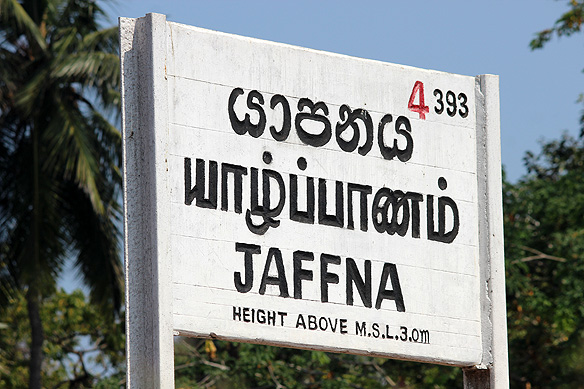
Jaffna [Yalpanam in Tamil] on the northern tip of Sri Lanka, was the epicentre of this civil war which spread across the island’s northern and eastern coastlines. Mutilated factories, bombed homes, and walls pock-marked with gunshots are still scattered throughout the city and its surrounds. An echo of its turbulent past.

Three things, by some miracle, have survived from the nearly three decades of fighting: One, the region’s places of worship—magnificent colourful Hindu temples, poignant grand churches, and sacred Buddhist sites—two, its bygone colonial ruins, and three, a bunch of remote sleepy isles on the Palk Strait in the Indian Ocean. Continue reading

self-portrait: happy in spiti

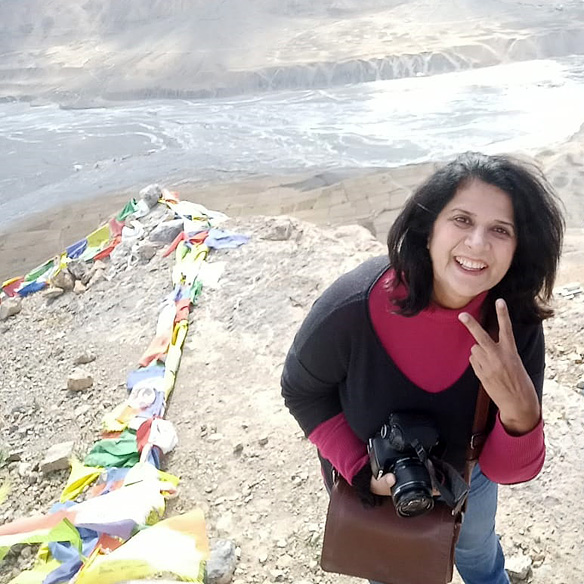
Those of you who have been following my blog would be well aware that I rarely, if ever, post pictures of myself in my blog posts. The closest I get to is the inclusion of a photograph of my hand holding something I’d picked up at the site or that of my feet. There is neither a deep philosophical reason, nor an effort to create a sense of enigma, behind this. It is simply because I usually travel alone, and I am lousy at taking selfies.

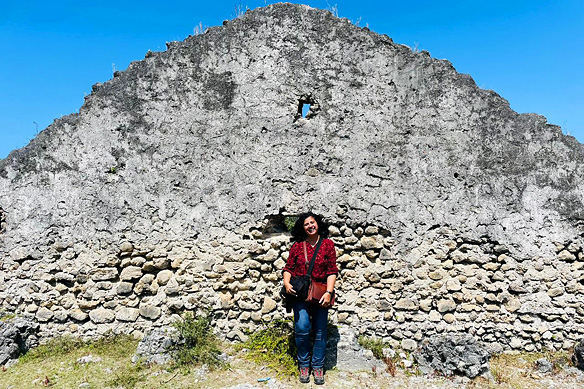
So, when my driver offered to take a picture of me during a recent 15-day solo road trip though Kinnaur, Spiti and Lahaul, deep in the remote northern reaches of Himachal Pradesh, amongst the towering Himalayas, I jumped at it. It was a precious opportunity to make my joy whilst travelling to this part of the world achieve posterity. 🙂 Continue reading

the treasures of farrukhnagar and jhajjar no guidebook tells you about

Farrukhnagar. Jhajjar.

The inevitable response should one mention these two places is, “where are they?”

As for the few who do know about their whereabouts [near Delhi’s satellite city Gurgaon in the neighbouring State of Haryana] the rejoinder is, “is there really anything to see there?”

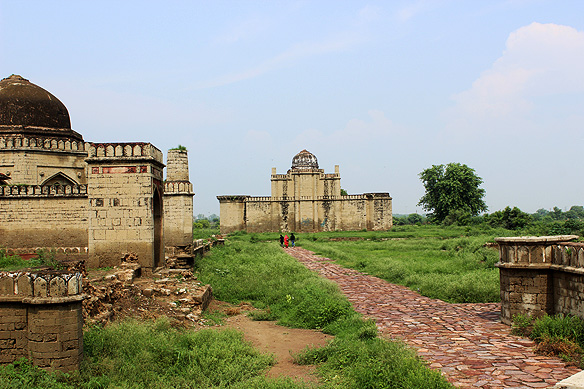
Oh, yes, plenty! But despite having some of the loveliest monuments in Delhi’s vicinity, both towns lie in complete oblivion. There is no mention of them in guidebooks. Zilch. They are not even included in Delhi’s countless regular heritage tours. It is as if they simply did not exist.

Imagine my joy when I got a chance to explore the two. Not that I had ever heard of them before. I belonged to the first category. Then after some digging around, I was smitten. Completely. Continue reading