georgia: a story of war and faith

Two stories define Sakartvelo. War and faith.

We know this ancient country as Georgia. But that’s not what Georgians call it. For them, it is Sakartvelo, land of the Kartvelians. Kartvelian means ‘a person of Kartli’—the historical name of the region since the 4th Century BCE.

Caught between powers hungry for regional domination, Georgia has spent millennia keeping itself and its identity intact in the face of attacks.

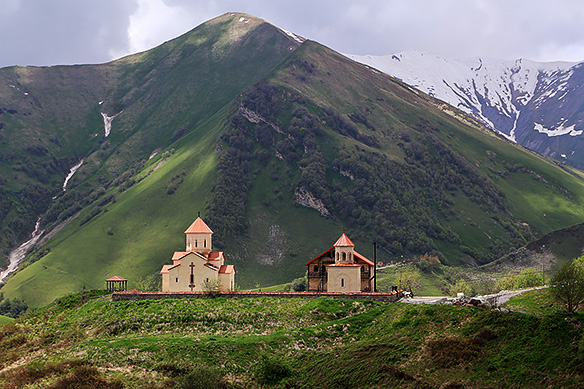
As the third country in the world to adopt Christianity in 327 CE, religion runs deep in the Georgian veins. It was faith that strengthened their resolve. It was equally imperative to protect that same faith.

Together these two stories are the story of Georgia. And the Georgian. Continue reading
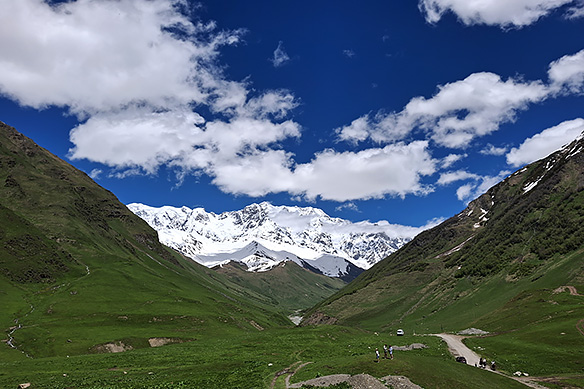
towering peaks and gold jewellery: georgia, land of the golden fleece

This is the story of Colchis. A contemporary of the Sumerians and Ancient Egyptians, with references in Classical Greek mythology, this pre-Christian kingdom today lies somewhat in obscurity.

But three-and-a-half thousand years ago, Colchis was not some figment of literary imagination. It was Jason and the Argonauts actual gold-encased quest. Its peaks that touched the heavens, where narrative saga decided Zeus would chain Prometheus.

Deep inside the isthmus joining Europe and Asia, in valleys tightly sandwiched between the soaring peaks of the Greater and Lesser Caucasus Mountains were a people of immense wealth. Gold dust speckled its 25,000 rivers which when caught using sheepskin with shaggy hair, turned them into ‘golden fleece.’ The people there then transformed this gold into exquisite jewellery, typified by fine granulation, inlaid gems, and animal motifs.

Headdress with four deer, two lions and a pair of birds, made with cutting out portions of metal, Vani, Burial 24, end-4th Century BCE.

Headdress with four deer, two lions and a pair of birds, made with cutting out portions of metal, Vani, Burial 24, end-4th Century BCE.

Continue reading

batumi: stories told and untold

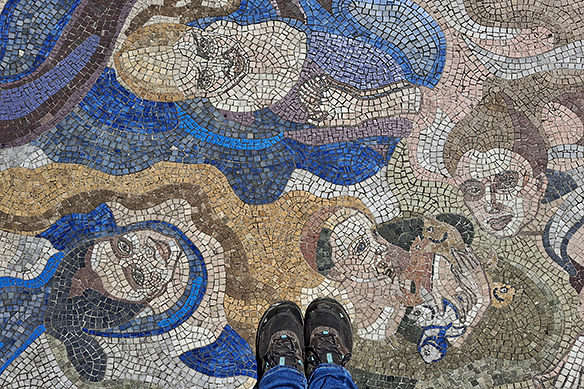
Mosaic in Batumi Piazza by Georgian-Swiss designer Natalia De Pita-Amirejibi comprises 88,244,735 cut and treated tiles of 1 sq. cm each. The marble for the tiles was sourced from 15 different countries.

Mosaic in Batumi Piazza by Georgian-Swiss designer Natalia De Pita-Amirejibi comprises 88,244,735 cut and treated tiles of 1 sq. cm each. The marble for the tiles was sourced from 15 different countries.

Batumi sits on the far western frontier of Georgia, on a pebble-strewn Black Sea coast a mere 20 kilometres away from neighbouring Türkiye. Not many travellers to Georgia make it this far. Which is a pity. The chalk to the rest of Georgia’s cheese, Batumi is an over-the-top Las Vegas-styled sea-side resort in a country known otherwise for its soaring mountains, Soviet remains, Georgian Orthodox history, and earthy wine.

Brazen, brash, and straight out of Disneyland, Batumi is generous to the curious traveller. It tosses in a Byzantine fortress and a world-famous botanical garden into a quirky mix of fantastical skyscrapers, restored Russian Imperial-era edifices, fabulous outdoor art, mega events, and global cuisine.

Much like it did with me. Continue reading

travel diaries: in search of king tamar’s svaneti

Mepeta Mepe, King of Kings Tamar was only 18 when she was crowned co-ruler of the Kingdom of Georgia in 1178. Six years later, when her father King Giorgi III died, she became its sole ruler. Here, I’d like to add some context regarding the word ‘Mepe’ before I write further. Georgian is a gender-neutral language, and Mepe means king or sovereign ruler, immaterial of whether the person is male or female.

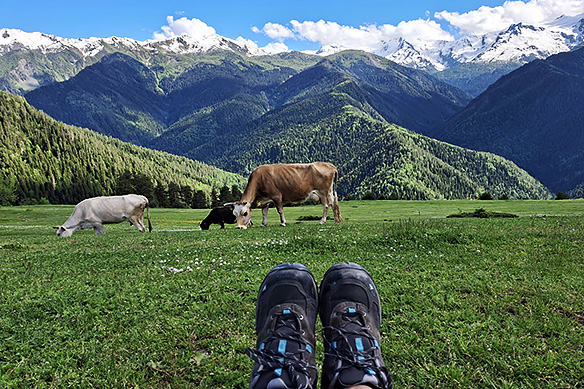
Coming back to Tamar, her title was not the only unusual part of her story. Georgia, under her rule, reached its political and cultural zenith. Its borders spread from the Black Sea in the west to the Caspian Sea in the east, and the Greater Caucasus Mountains in the north all the way to eastern Türkiye and northern Iran in the south. She founded multiple cultural academies, and the arts and literature flourished with masterpieces such as the epic poem Knight in the Panther’s Skin by Shota Rustaveli written as an ode to her extraordinariness. Continue reading

photo essay: remnants of soviet georgia

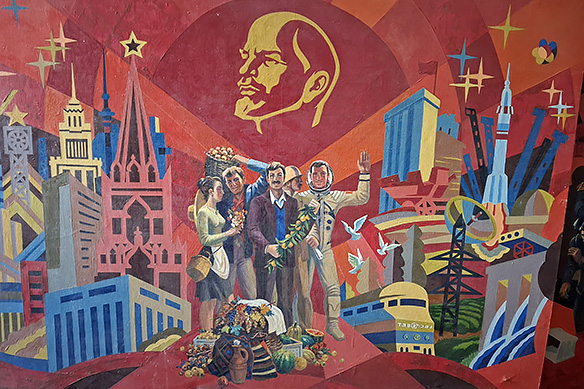
The relationship between Georgia and Russia is, well—complicated. Irrevocably woven, yet defiantly independent, Georgia’s past avatar as the Georgian Soviet Socialist Republic still peeps through across the country. You only need to look. A brutalist masterpiece. A colossal deserted mine with cable cars still frozen mid-air in space and time. Poker-faced apartment blocks sliced with horizontal walkways and plunging lifts. Magnificent abandoned sanatoriums built over healing springs that have given way to tall overgrown trees, moss, and wildflowers.

An urbex paradise. A lesson that nothing lasts forever. Continue reading