aihole, cradle of indian temple architecture

Indian temple design did not arrive at in a day. Surprised? 🙂

More surprising is where its evolution took place.

The floor-plans and superstructures one takes so much for granted today took shape in a tiny village in north Karnataka over a period of two hundred years of vigorous, yet brazen experimentation.

Known as the ‘cradle of Hindu temple architecture,’ Aihole, the first capital of the Early Chalukya Kingdom [6th to 8th Century] served as a laboratory for the construction of sacred sites.

From rock-cut cave temples to apsidal-shaped monumental structures to one akin to a cozy homely hut. From the ‘northern’ high curved Nagara-style and ‘southern’ pyramidal stepped Dravida-style superstructures to the hybrid ornate Vesara model typical of the Deccan. They all came into being here.

There are 15 prototypes of sandstone standalone and rock-cut cave temples in Aihole’s over 125. Each a masterpiece built by architects 1,500 years ago who designed fearlessly and were ready to break stereotypes.

It was a feat made possible by the prevailing rulers’ openness and willingness to experiment as they reigned over the Deccan, a region sandwiched between the north and south of the Indian subcontinent.

Currently on the UNESCO World Heritage Tentative List for its role in temple architecture evolution, many of Aihole’s edifices owe their names to a more recent and lax naming ceremony. Durga Temple is not dedicated to the goddess, but refers to a later Durg or watchtower built on its roof. Lad Khan temple, Aihole’s oldest temple, is so named because when discovered by the Archaeological Survey of India, it was known as where a Mr. Lad Khan once lived. A gentle reminder of Indian plurality. 🙂 And the Ravana Phadi rock-cut cave temple has less to do with Ravana and more to do with Shiva.

Next time you walk into a Hindu temple, surrounded by a familiar standardized floor-plan and superstructure, just remind yourself it is a design which won the lottery and got pushed into the future. There were many others in the original basket where these came from. And if you are curious about them, here are some of the candidates.

Continue reading

travel diaries: four caves, a lake, a seeker and badami

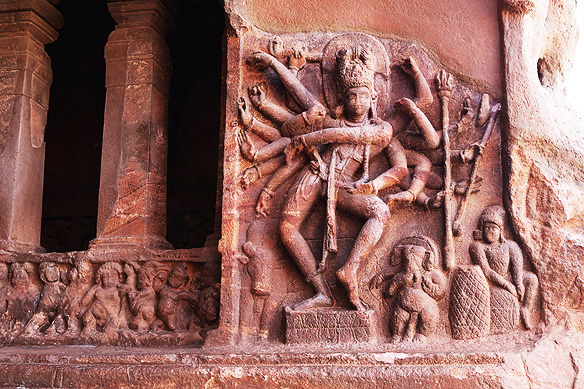
One of Badami Cave Temples' most impressive sculptures: Shiva as the 18-armed Nataraja doing the Tandava Nritya—the cosmic dance of creation, preservation, and destruction.

One of Badami Cave Temples’ most impressive sculptures: Shiva as the 18-armed Nataraja doing the Tandava Nritya—the cosmic dance of creation, preservation, and destruction.

One is never far from the gods in India. They are everywhere. Carved out of living rock. Carved into living rock. As far back as even 578 CE.

It is just after lunchtime, and I am at the foot of a gigantic red sandstone escarpment. Hundreds of school-children are racing down the steep uneven steps hewn into the cliff’s face. Their teachers shout behind them to slow down. Not that their wards pay any attention to the ominous warnings. Dressed in shiny tracksuits, they run in and out of the cavernous halls, doubled over in unstoppable giggles.

Slicing their way through this human avalanche are staid family groups. Their elderly matriarchs stomping ahead, undeterred by limps or wobbly canes.

Aaj bahut bheed hai [It is very crowded today],” I observe to the security guard at the gate. “Roz aisa hai. Season hai na aaj kal [It is like this every day. It is the season nowadays],” he smiles back happily.

In a few months these cliffs will be deserted again, first under the scorching summer sun and then because of the monsoons which would make the stone steps a veritable death trap.

Yet such ominous weathers rarely affected pilgrims in the distant past. 1,400 years ago.

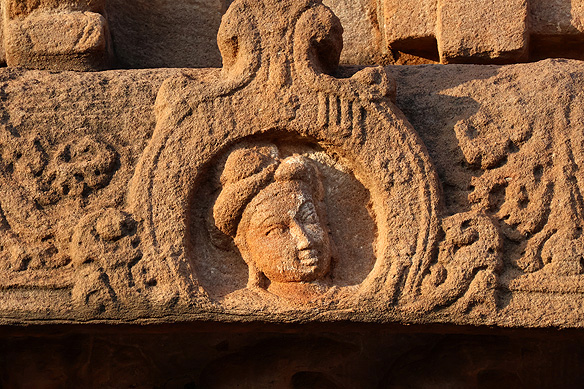
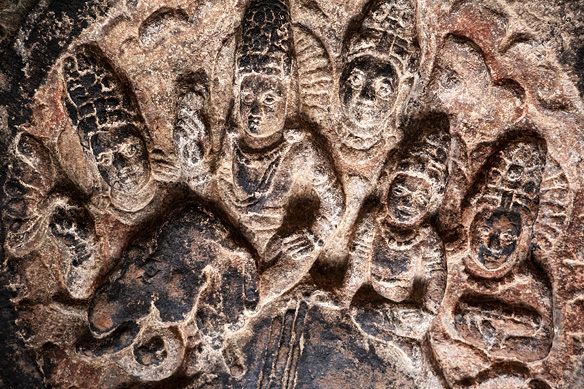
Portrait of a man in Ancient India. Ancient Hindu temples, by virtue of their depiction of both the sacred and secular, offer a fascinating insight into the then prevailing norms and societies.

Portrait of a man in Ancient India. Ancient Hindu temples, by virtue of their depiction of both the sacred and secular, offer a fascinating insight into the then prevailing norms and societies.

Continue reading

the glories of mewar: impregnable kumbhalgarh and exquisite ranakpur

There was an invincible grandeur associated with the Kingdom of Mewar in Rajasthan, of which Udaipur was the capital. Traits which reflected in not just the larger-than-life personas of its rulers but its impregnable forts and exquisite places of faith too.

Deep in the wooded Aravalli Hills are two such places: Kumbhalgarh and Ranakpur. Whilst one is a fort of a king remembered to this day for his valour and indomitable spirit, the other is a temple carved out of marble to give shape to a divine dream, with the blessings of the same king.

The route leading to them is treacherous in parts, cutting through the dark, unlit, uninhabited jungle in the form of a rather worn-out pot-holed narrow road. At others, it rises and falls in tune with the hills, passing tiny hamlets and endless herds of livestock. But the rewards for this journey are priceless.

Come, let me show you Maharana Kumbha’s Mewar. ❤ Continue reading

off the travel radar: the secret treasures of historic nagaur

Some 145 kilometres north-east of Jodhpur, translated to a three-hour car ride away, is Nagaur. Tourists are few and far between here. The most you may come across are a handful in a whole day. They are the ones who decide to do a pit-stop in Nagaur en-route from Jaipur or Pushkar to Bikaner.

Yet, its treasures are no less majestic and larger than life than any other city in Rajasthan. And maybe, because of it being off the tourist radar, it is that much more appealing.

Nagaur, the sleepy, quiet town on the ancient trade routes linking Gujarat, Sindh and Multan, is named after the Nagavanshi kings who ruled this area from the 4th to 7th centuries. Nagavanshis claimed descent from Nagas, a semi-divine race of part-serpent part-human beings who resided in the underworld.

It was crucial for Nagaur’s rulers to defend their trading hub since the town was surrounded by miles of flat ground. The Nagavanshis, followed by the Chauhans, Muslims, and from the 18th Century onward, the Rathore Rajputs all built and rebuilt the city’s most impressive and prominent landmark: the Nagaur Fort or Ahhichatragarh meaning the Fort of the Hooded Cobra. Continue reading

8 hours in eclectic ajmer, rajasthan’s centre for sufism

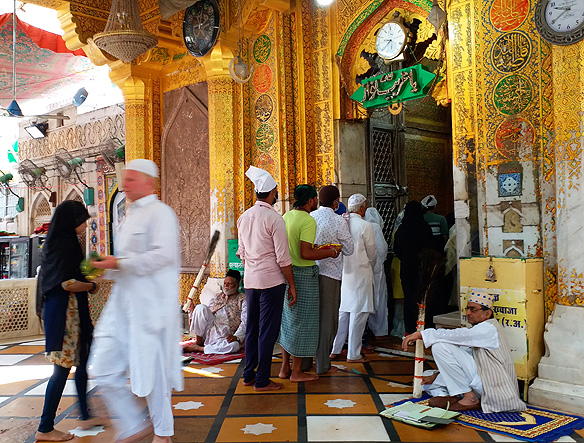
Rose essence from Hinduism’s holy city of Pushkar fills the air of Sufi Islam’s sacred dargah in Ajmer. The courtyard reverberates with qawwalis in praise of the 13th Century saint from Iran, as the faithful shuffle past his grave in deep reverence, heads bowed, eyes lowered, a prayer or two on their lips.

It is 9ish in the morning and I am at the Khwaja Moinuddin Chishti Dargah deep in the heart of Ajmer’s Muslim quarter. As far back as I can remember, I had wanted to visit the tomb-shrine. Now actually standing here, it feels unreal. Surreal.

– – –

Just 15 kilometres from Pushkar, separated by Nag Pahar an ancient hill in the Aravalli range, is Ajmer—Pushkar’s antithesis. Continue reading

travel diaries: in search of shravanabelagola’s bahubali

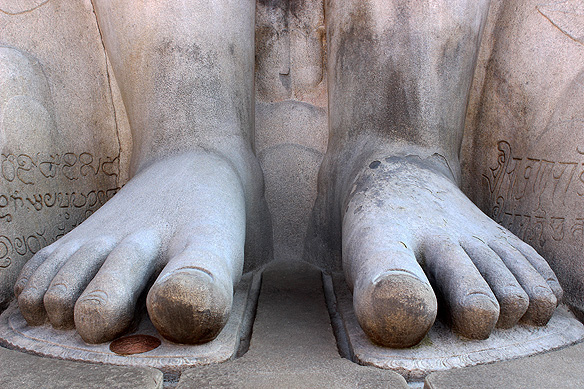
The entire 615 steps carved into the rock’s gleaming surface rose straight above me. No left or right turns. Just straight up, with a rudimentary metal rod for support along its length. Some of the steps were shallow, others steep. All equally worn out under the bare feet of countless pilgrims and travellers over a thousand years. The steps themselves were just as bare under the scorching sun, minus any shade whatsoever.

Only one spiritually legitimate way exists to reach the 58-feet-8-inch-high naked granite monolith of Bahubali Gommateshwara, the inimitable deity-hero in Jainism perched on top of the sacred Vindhyagiri Hill in Shravanabelagola. It is by climbing up these steps.

Though another flight of steps winds its way up on the western side of the 470-feet-high hill, this is the original path cut into the rock by Chavundaraya, a Ganga dynasty minister and commander way back in 981 AD. And by now you know me. It had to be the original path for me. 😀

It was 1 in the afternoon when I reached the minuscule town of Shravanabelagola after exploring the Hoysala temple at Somanathapur. My plan was to use one of the palanquins I had read about to reach the top. But do plans ever go as planned? Continue reading

mumbai’s csmvs sculpture gallery: where stones speak of art and god

CSMVS_sculpturegallery1

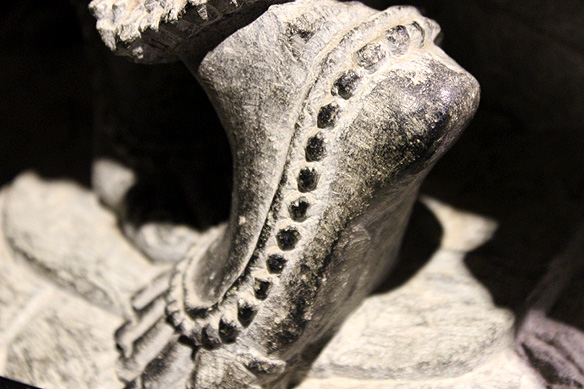
Inspired by Mumbai’s rock-cut cave temples, I set out this afternoon to explore the sculpture gallery at Chhatrapati Shivaji Maharaj Vastu Sangrahalaya. Yup, it’s a mouthful. 🙂 Formerly known as the Prince of Wales Museum of Western India, it is one of the finest museums in the country. The quiet, tasteful sculpture gallery—a crash course in Indian history, religion, and art all rolled into one—is its highlight. Continue reading