pushkar: where the gods and seekers meet

Pushkar.

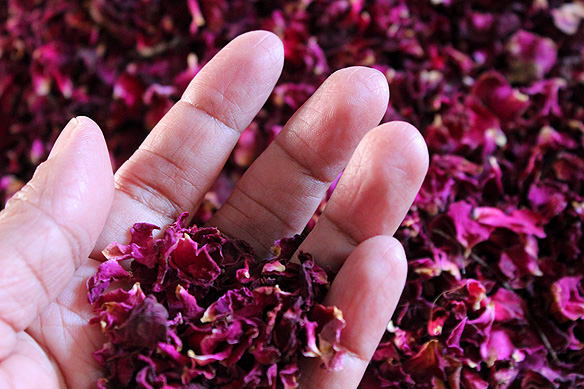
No Hindu pilgrimage is believed to be complete without a stop at Pushkar, Rajasthan’s rose garden. A polestar for the seeker within since ancient times, it is apt that the little town’s rose essences have been exported far and wide through the centuries.

Not that Pushkar’s spirituality washes over one like a massive tumultuous wave, creating an instant transformation. Nope. Nothing like that at all. It is instead subtle and gentle, with a consistent, tangible peace hanging around the 52 ghats and 500 or so temples which line its very soul—Pushkar Sarovar, Sarovar meaning ‘Lake’.

Yet, this devout peaceful haven, a mere two-and-a-half-hour drive from Jaipur, is inexorably tied to an eclectic mix of myths and traditions which range from a first wife’s wrath to being the seat of the Hindu god of creation. Continue reading
15 memorable experiences only to be had in the world heritage city of jaipur

18 November, 1727.

Maharaja Sawai Jai Singh II, the Kachhwaha Rajput ruler at the helm of the Amer Kingdom for the past 28 years, knew he had to make a crucial decision.

Amer Fort, his administrative seat and residence, was becoming too small to meet the needs of his growing kingdom. Water was scarce, and because of it, other resources were being affected.

He needed a new city. A city that reflected his ideas, values, and plans for his kingdom. Continue reading

photo essay: amer, the unesco-listed fort and beyond

“This heaven like place was completed in the Hijri year 1008 [1599 AD], being built in a period of 25 years, having been most meticulously designed and expertly decorated. Just as the heavens should always be laden with rain, so also this stately building, the foundation of the Maharaj’s longevity and wealth, be preserved from any kind of damage.”
~ Excerpt from the English translation of a Persian plaque inside the Zenana, Amer Fort.

Part of the six ‘Hill Forts of Rajasthan’ UNESCO World Heritage Site, Amer Fort rises high above the placid waters of Maota Lake. Its magnificent Rajput-Mughal edifices reminiscent of the power of the Kachhwaha Rajputs and their strategic ties with the Mughal empire. For 128 years, Mirza Raja Man Singh I’s labour of love served as the administrative base and royal residence of the Amber kingdom. That is, until 1727 when Maharaja Sawai Jai Singh II decided to move the capital to Jaipur some 15 kilometres away.

Most travellers simply visit the fort, gush in wonder, and leave. But there is more to Amer than just this glorious marvel. Much more, beyond the fort. Continue reading

royal splendour in jaipur’s city palace

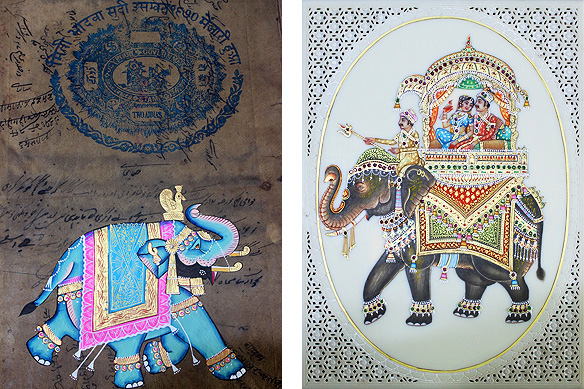
“When you have good luck [pointing towards the elephant in a painting], you find love. When you get love, you feel powerful. When powerful, you are happy. When happy, you are brave. And when brave, you are kind.”

With a broad smile and a tiny squirrel-hair brush held gently in his fingers, he pointed towards one of his favourite works, even as, with a mere few strokes, he also put together a miniature-styled portrait for me replete with a nose ring and odhni.

Hemant is one of the four award-winning Ramdev brothers patronised by Jaipur’s royal family; their studio perched on the fourth floor of Chandra Mahal which houses the royal residential apartments. His ancestors, Jaipur City Palace’s court painters, had spent their entire lives decorating the walls and ceilings of this royal abode and crafting flawless miniature landscapes and portraits since the city’s inception in 1727.

If you’ve been to Jaipur, the City Palace would, without a doubt, have been on your to-do, not-to-miss list. Did you notice the cream coloured, 7-storeyed building topped with a one-and-a-quarter flag which seemed to always loom in the background? Not many take the trouble of exploring this edifice. Yet it contains the palace’s most exquisite, most resplendent rooms. Continue reading

the epic solo rajasthan road trip: because travel heals pain

This slideshow requires JavaScript.

[Updated on 30 November 2021]

My mother passed away on 19 July this year from old age. She was 84. It is now almost four months since she’s been gone, yet the pain is still raw. She went too fast. I knew she was going to go to the other side one day. One day. Just that one day was some distant occurrence which I naively believed was not going to happen in my lifetime. We all believe our parents will live forever.

If you are a follower of my blog, you would have noticed the change in the title. I have added ‘Toshi’ in it. Toshi was my mother’s maiden pet name. By adding it to my blog it keeps her alive for me.

We were chalk and cheese. Fought and hugged. She was the most loving human being I had ever come across. And through all of life’s trials and tribulations, she was my constant best friend.

More than anyone else, she also knew my need to travel. To wander. To explore. She understood travel was my one source of inspiration, as well as escape. A source of pragmatic knowledge and elusive wisdom.

It is no surprise then that as I struggled, and still struggle, to cope with my loss, my sister, as if in serendipity, suggested I turn to travel. Continue reading

5 best kept secrets of bundi, india’s best kept secret

Bundi. The very name is evocative. Translated literally it means sweetened, fried chickpea flour—a snack indigenous to Rajasthan. When applied to a small, sleepy, powder-blue painted town nestled in a deep gorge surrounded on three sides by the Aravalli hills with a spectacular fort and palace looming over it, it becomes synonymous with one of India’s best kept secrets. A secret with myriad secrets within its folds.

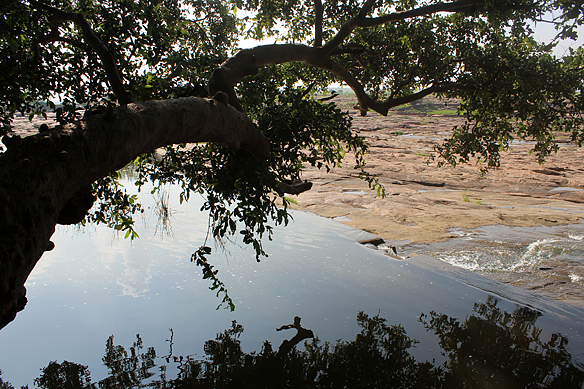
Founded by a gentleman of the Meena tribe who went by the name Bunda, it was annexed by Rao Deva Hada in 1342, founder of Bundi [the princely state] and Hadoti [land of the great Hada Rajputs]. Friends with the Mughals and thereafter, the British Raj, it retained its princely status till 1947. Not many venture into Bundi; neither today nor in the past.

Here are five secrets I discovered in Bundi which make it the treasure trove that it is. If you know of more, please do share in the comments section. 😊 Continue reading

the bundi-kotah school of miniature painting in kotah’s garh palace

Me: Kotah Palace jaanaa hai. [I want to go to Kotah Palace.]

Auto rickshaw driver: Palace hotel?

Me: Nahin. Sirf palace. Jahaan rajah maharajah rehtey they. [No. Just palace. Where the kings used to live.]

Auto rickshaw driver (confused): Par vahaan toh koi Indian nahin jaataa! Sirf gorey log jaatey hai! [But Indians don’t go there! Only white people do.]

Me: Haan, vahin jaana hai, jahaan gorey log jaatey hai. [My deep gratitude to Caucasians at this point for appreciating the treasures hidden in India’s midst.]

Auto rickshaw driver (laughing): Chalo, aaj yeh bhi dekh letey hai. [Sure, let me see this place too, today.]

It’s chaotic and crowded. I had just got off a rickety bus from Bundi. My train to Delhi, deep into the night, was a good few hours away. The plan was to spend the time in-between devouring the miniature painting frescoes of the Kotah Garh Palace. Continue reading

the painted palaces of bundi

This slideshow requires JavaScript.

A woman looks brazenly across the room. Her perfect profile decorated with jewels is tilted in anticipation. On the wall opposite, a royal damsel is being dressed by her lady-in-waiting whilst a Rajput prince slyly peeps from behind the curtains in blatant lust. Two women on a side wall make erotic love to each other.

The gods and goddesses are no less immune to the dynamics of the room. A series of frescoes have Krishna dancing in gay abandon with Radha and her sakhis in the raas leela. In another, he is perched atop a tree with the stolen garments of the gopikas.

Painted using a palette of turquoise green, black, and white, the colonnaded open-sided hall with private rooms leading out of it, was once the maharaja’s pleasure room. It is befittingly called Chitrashala—chitra meaning picture, shala meaning house or abode. The abode of pictures.

What makes these paintings, and those in Bundi’s other royal palaces unparalleled, is they comprise some of the finest examples of the Bundi School of Miniature Painting. A style normally associated with paint on paper, the Bundi school found its way in its parent city to the walls of the ruling family’s private rooms to create visual extravaganzas of colour and storytelling tipped with gold. Continue reading

why bundi’s stepwells will take your breath away

If like me, you were brought up on a travel diet of London and Paris, with Persepolis thrown in for effect, you would wonder what all the hullabaloo about India’s stepwells was for. That is, until you saw them in person.

Since moving back to India, I have time and again read that the stepwells or baoris [as they are known in the local dialect] of Gujarat and Rajasthan were stunning. I was told there was even one in Connaught Place, the heart of New Delhi, which was a complete beauty. I, thus, conjured them in my mind as architectural marvels to be found in the historically grand cities of India. Read—grand.

And as always, India took me by surprise. Continue reading

photo essay: in search of bundi’s prehistoric rock paintings

Destination, or the journey? In travel, it is often hard put to distinguish between the two.

When I went to Bundi in Rajasthan a fortnight ago, I had no clue that merely 30 kilometres south of the town were 101 sites of prehistoric rock art painted 15,000 years ago. They were discovered by a one Mr. Kukkiji in 1997, who was to take me to the sites himself. What I knew less of was the charms of the paintings’ backdrop—the caves lined tranquil wide rivers, on whose lush shores the Bhil, an Indian Adivasi tribal had made their homes. Continue reading