the complete travel guide to the treasures of sri lanka’s cultural triangle

Welcome to my travel guide on Sri Lanka’s Cultural Triangle told a bit differently—through short photo-essay chapters on the country’s ancient and medieval history.

Of the six UNESCO-listed cultural world heritage sites in Sri Lanka, five lie within the Cultural Triangle in the heart of the country. It is a region rooted in 2,500 years of history and heritage, both sacred and secular, from timeless Theravada Buddhist sites to splendid Sinhalese royal capitals. All surrounded in lush tropical jungles.

Before I write any further, I would like to briefly explain two terms used in this guide which are part of the warp and woof of the country. Theravada Buddhism and ‘Sinhalese.’ Theravada Buddhism is the oldest school of Buddhism and a direct offshoot of Buddha’s teachings. There are five countries in the world which have Theravada Buddhism as their official religion, and Sri Lanka is one of them. Sinhalese refers to the Indo-Aryan ethnic race native to Sri Lanka.

Whilst this guide covers the five UNESCO-listed sites, it also includes some gems scattered in-between. I hope you find it useful and it helps put the country’s Cultural Triangle as a seamless whole with all the dots connected. ❤

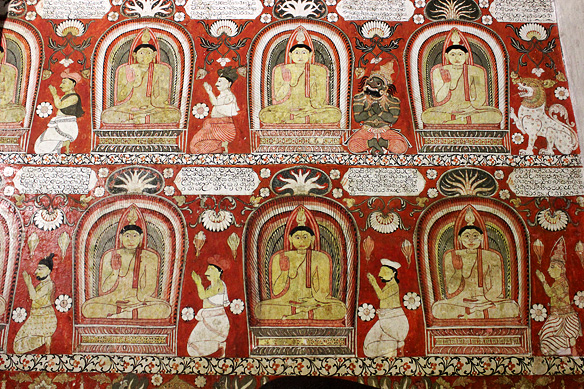
[Title photo: 18th Century Mural at Lankatilaka Vihara, Kandy.]

Table of Contents:

Continue reading

exploring sri lanka’s coastal towns: from galle to trincomalee

Indian Ocean from the Galle Fort ramparts just after sunset.

Indian Ocean from the Galle Fort ramparts just after sunset.

For a country whose length and width are merely 435 kilometres and 240 kilometres respectively, Sri Lanka, the tear-drop-shaped Buddhist island in the Indian Ocean has a remarkable variety of coastal towns.

Starting at windswept Galle with its Dutch colonial vibes in the south-west, next in line is the cosmopolitan financial capital Colombo. Then on to Negombo, the sunny Catholic fishing town in the west, to Jaffna in the north which till recently was completely out of bounds to all and sundry. And finally, Trincomalee in the north-east steeped in ancient Tamil culture against the backdrop of surf-worthy waves.

Come along and explore with me Sri Lanka’s five coastal gems, their unique heritages, and what not to miss. ❤

Table of Contents:

Continue reading

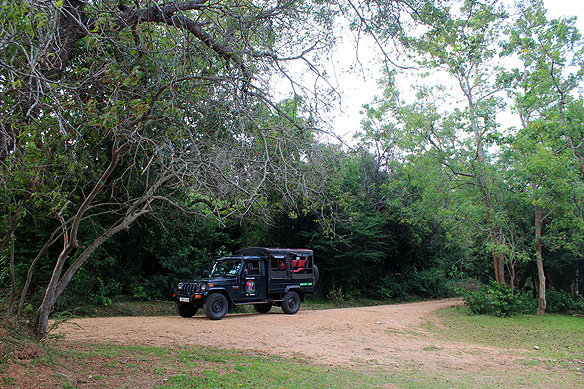
4 sri lankan game reserves for 4 authentic safaris

What’s a visit to Sri Lanka without a safari in its iconic game reserves? Blessed with a rich heritage and oodles of natural beauty, the tropical island’s game reserves offer a peek into its third charm: a teeming wildlife. But which one should you go to? Here is a rundown of Sri Lanka’s four most famous ones, and what to expect from each, in no specific order. For not all game reserves are ever the same. 🙂

1. Udawalawe National Park

If elephants are what you are seeking, and that too in plenty, then head straight to the Udawalawe National Park. With a head count of around 500 and herds of 50-or-so roaming the grasslands, sighting of the wild Asian elephant is guaranteed in all its glory, all year round. In fact, be prepared to have multiple close encounters with the gigantic mammals who will oftentimes come right up to your safari vehicle. Smaller than their African counterparts, the Sri Lankan subspecies of the Asian Elephant you see is characterised by patches of depigmentation on its ears, face, trunk, and belly. Continue reading

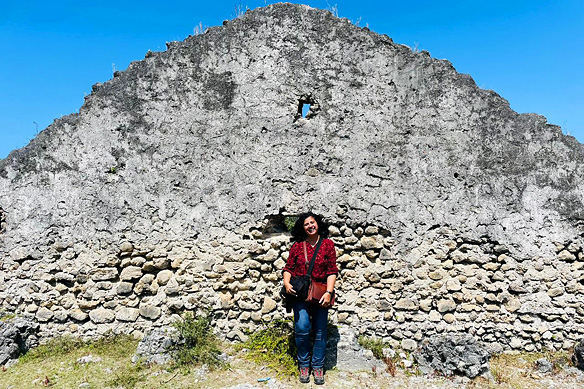
the road less travelled: delft island

Forty kilometres off the northern coast of Sri Lanka, is its farthest island—Delft.

It is an unusual name to come across for a tropical island in the Indian Ocean. After all, there is not much in common between the bleached island and the picture postcard region in Netherlands where white glazed pottery with blue decorations have been historically made. The 18th Century Dutch colonial rulers obviously felt differently; for them it was a perfect fit for their new home. Perhaps a gentle reminder of their roots in faraway lands.

Remote and sparsely populated, Delft is the largest island in the Palk Strait which separates Sri Lanka from the Indian subcontinent. Eight kilometres wide and 5.5 kilometres long, it is not just its name which is out of the ordinary. Delft Island used to be a coral reef in the distant past as revealed by the petrified coral chunks strewn on its emerald green beaches. Sans any streams, potable water is limited to catchment areas for surface water and a few pockets of ground water.

Despite these challenges, 1,300 Tamil Christian and Hindu families call the island their home today; their houses clustered around compounds in the north. Empty, windswept scrublands meanwhile stretch out in the south, right up to the rugged charred coastline. Continue reading

travel diaries: hiking through the horton plains

There is a deafening silence as I enter the Horton Plains in the wee hours of the morning. Above me, the silver sun is still trying to find its way back into the sky. It is not an easy task.

A thick blanket of mist and cloud engulf me, the golden blades of montane grass, and the sand-spattered 3.5-billion-year-old Precambrian-era boulders. Every now and then a slight drizzle kisses my upturned face. I peer through the mist, strain my ears for another human sound. A footstep, laugh, threads of a conversation. All I can hear is my own breath. I look at my phone. There is no signal. Continue reading

travel shorts: hill country—nuwara eliya to ella by train

This slideshow requires JavaScript.

Most travellers are of the opinion that the only real way to see Sri Lanka is by train. And that of all the rail journeys through the sparkling tropical island, the most beautiful is the one from Nanu Oya [near Nuwara Eliya] to Demodara [near Ella] in the heart of ‘hill country.’ They are not wrong. 🙂

Built in the mid-19th Century by the British colonizers, the train’s primary purpose for the longest time was to transport crates of tea leaves and coffee from the mist-wrapped estates to Colombo Port. The segment from Nuwara Eliya, a colonial town, to Ella, a village steeped in Hindu mythology, is a tourism institution of sorts today. Continue reading

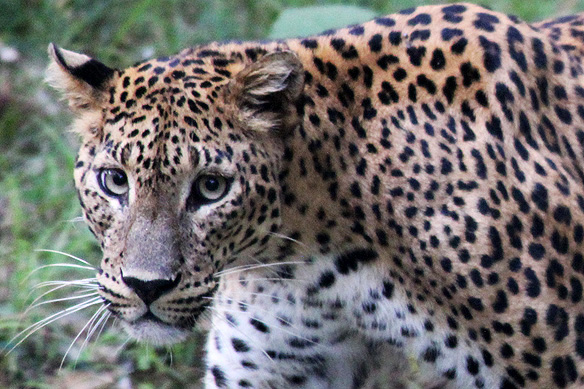
global travel shot: seeing eye-to-eye with the sri lankan leopard at wilpattu

Image

It was a bit hard for me to decide which to be more in awe of. The surreal deep red earth covered in lush jungle and sparkling pools [villu as they are locally called]. Or the Sri Lankan Leopard that sauntered past me, a mere hour into the game drive. Both, the leopard and I stared at each other. At some level, I guess, we saw eye-to-eye. He was the actual star of the show.

Wilpattu National Park on Sri Lanka’s north-west coast is not the country’s most popular game reserve. But, hands down, it provides the most authentic experience.

At 2 percent of the country’s land mass, it is Sri Lanka’s largest reserve. It is also one of the oldest—established in 1938 with around 40 Sri Lankan Leopards prowling through the heart of the national park. There are also Sri Lankan elephants, sloth bears, and a prolific bird-life, who I, however, think, fall a little short in comparison to the graceful feline. None of them stare back as piercingly as the latter.

– – –

[Note: This blog post is part of a series from my solo independent travels to Sri Lanka. To read more posts in my Sri Lanka series, click here.]

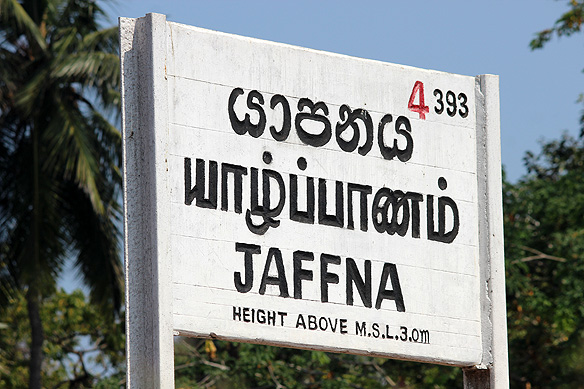
jaffna: the unexplored north of sri lanka

Twenty-six years of civil war is a long time. A whole generation grows up exposed to the horrors of war, stripped of their right to education, health-care, and utilities. It is hard for one living in a ‘secure’ country to even fathom such dreadfulness day in and day out, year in and year out.

Sri Lanka’s LTTE-Sinhalese civil war started on 23 July, 1983 and ended on 19 May, 2009, during which an estimated 40,000 civilians died according to a UN Experts Report. Those who could leave, left the country. Root causes of the civil war were a series of anti-Tamil riots following independence in 1948 and the 1956 Government Act which recognized Sinhalese as the only official language.

Fuelled further by the government’s citizenship and education policies, it led to the creation of the LTTE or Tamil Tigers, as they were known, and their demand for a separate Tamil state ‘Tamil Eelam.’

Suicide bombers were a trademark of the Tamil insurgency. Even India, Sri Lanka’s neighbour, could not be immune to it. India’s ex-Prime Minister Rajiv Gandhi was assassinated in 1991 by a 22-year-old female LTTE suicide bomber.

Jaffna [Yalpanam in Tamil] on the northern tip of Sri Lanka, was the epicentre of this civil war which spread across the island’s northern and eastern coastlines. Mutilated factories, bombed homes, and walls pock-marked with gunshots are still scattered throughout the city and its surrounds. An echo of its turbulent past.

Three things, by some miracle, have survived from the nearly three decades of fighting: One, the region’s places of worship—magnificent colourful Hindu temples, poignant grand churches, and sacred Buddhist sites—two, its bygone colonial ruins, and three, a bunch of remote sleepy isles on the Palk Strait in the Indian Ocean. Continue reading

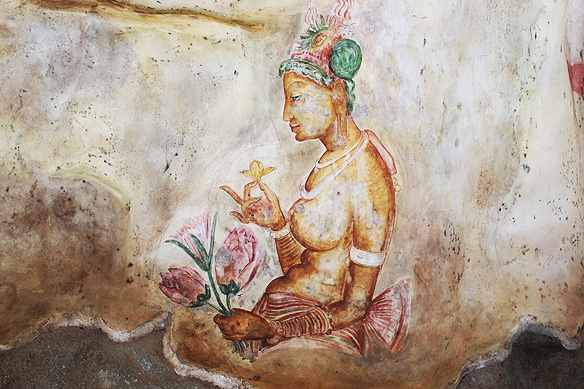
the sigiriya frescoes: king kassapa I and his 500 damsels

477 AD. Anuradhapura, Sri Lanka.

29-year-old Prince Kassapa I was filled with a deep burning desire to be king. So deep, it seemed to completely engulf him. To be the ruler of Anuradhapura, Sri Lanka’s ancient historical spiritual heart. How wondrous would that be!

And he would have been. Could have been. Except for one problem. His mother was the non-royal wife of Moriya King Dhatusena. The rightful heir to the coveted throne was his young half-brother Moggallana, offspring of his father’s chief consort.

Not to be deterred, Kassapa I, also known as Kashyapa I, decided to lead a palace coup with the help of Migara, the army commander who had a personal grudge of his own against the king. Young Moggallana, meanwhile, managed to escape, and took refuge in South India.

When Kassapa demanded to know the location of his father’s treasury, his imprisoned father responded saying Anuradhapura’s water tank was his one-and-only treasure. Miffed on hearing this, Kassapa had his father entombed alive.

For the rest of his life, Kassapa’s subjects and rivals, as well as the local Buddhist monks, would call him Pithru Ghathaka Kashyapa meaning Kashyapa the Patricide. It was a label he would not be able to shake off even after death.

In a bid to start afresh, away from public disgrace and the threat of a possible future retaliation by Moggallana, Kassapa moved his capital 75 kilometres south. Here, deep in Sri Lanka’s tropical plains stood a 180-metre-high monolith volcanic rock pillar with unhindered 360-degree views for miles on end. Continue reading