temple-hopping in bodh gaya: from tibet to japan

Auto-rickshaw driver: Which temple would you like to see? Tibet or Japan? Or Thai? [All the rickshaw drivers in Bodh Gaya, I realise by now, speak impeccable English.]

Me: All of them. Oh, and yeah, Sujata temple too. 😀

I see his eyes light up. I can almost read his mind: This woman will pay me well. She is the wandering types.

Auto-rickshaw driver: It will be Rs. 1,000!

I bargain my way down to Rs. 500 plus a hundred-rupee tip. We shake hands and embark on a six-hour camaraderie which survives through the rattling by-lanes to Bodh Gaya’s far corners, in search of Buddhist temples and monasteries from Tibet to Japan. I say “search” because some of our stops I had merely wisps of information of, and he was completely clueless about. Continue reading
buddha’s bodh gaya: the sacred hidden treasures of mahabodhi temple complex

“Is there some festival or special event taking place here today?” I whisper to the Buddhist monk seated next to me.

I am confused, and overwhelmed.

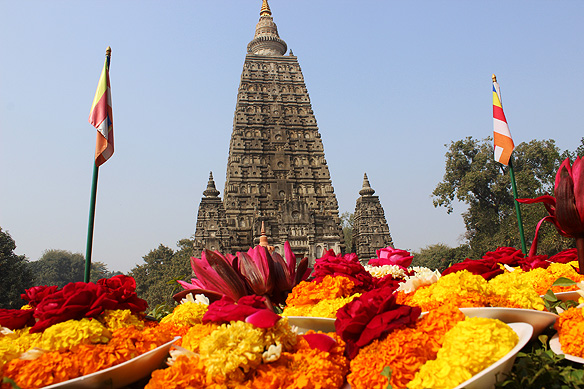
The entire Mahabodhi Temple Complex in Bodh Gaya, in the Indian State of Bihar, is draped with marigolds, lotuses, and roses. Hundreds of ochre and red-robed shaven-headed Buddhist monks and nuns prostrate in prayer in the grounds, and around the main temple. A handful of tourists quietly join the circumambulations around the main temple. I see pilgrims from Bhutan, Burma, Cambodia, China, Japan, Korea, Thailand, Tibet, and Sri Lanka in deep prayer. Most are dressed in their traditional attires. I see a few pilgrims from the West as well, no less in the purity of their faith. Groups chant with micro precision around me, not one voice out of sync, their mantras punctuated with the crescendo beats of rattle drums.

“No. Nothing special. It is like this every day all winter.” And he goes back to his meditation.

Nothing special. Just the extraordinary experience of being part of, and witnessing Buddhists from all corners of the world come and pay homage to the place where Buddha received enlightenment. 🙂 Continue reading

global travel shot: nalanda, the world’s first residential international university

Image

When writing the title of this post, I found myself in a bit of a quandary. Should I call it a global travel shot or an Indian travel shot? The former won.

The above image is of the red brick ruins of the world’s first residential international university—Nalanda Mahavihara—built in the Indian state of Bihar in the 5th Century AD. To be more specific, it is an image of the stupa marking the nirvana of Sariputra, Buddha’s famed disciple, within the university. A Sanskrit name, Nalanda means giver of lotus stalks; mahavihara translates to great monastery.

For 800 years, Nalanda, now a UNESCO World Heritage Site, attracted the brightest brains from all over the ancient world, from as far afield as Central Asia, China, and Korea. Hungry for knowledge, these scholars flocked to Nalanda’s doors to be met by a rigorous oral examination by its gatekeepers. Only those who passed were allowed to study inside the coveted walls. Many were turned away. Continue reading

36 hours in essaouira, where europe meets africa

The year is 1765. The place: A windy bay in Western Morocco. Sidi Mohamed Ben Abdallah, Morocco’s Sultan, has come up with the idea of building a fortified port-city by the sea to strengthen trade ties with Europe and the New World.

But with a difference. He decides to commission a Frenchman, Theodore Cornut to build it, using French military architectural elements. The city is populated with Africans, Amazighs, Arabs, and Europeans. A colony of Moroccan Jews are especially brought in to carry out the trade. And, thus, Essaouira meaning “the beautifully designed” is born. Continue reading

8 reasons why hassan II mosque tops the casablanca travel bucket list

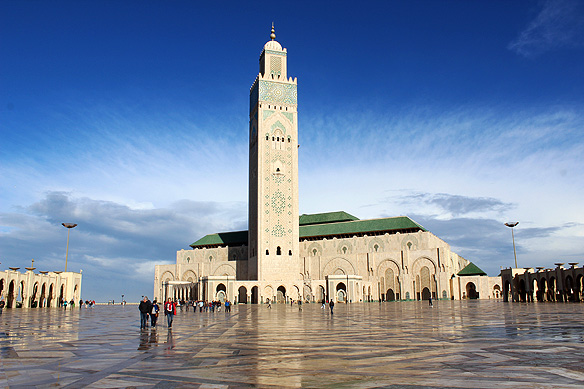
This is what the Hassan II Mosque on the shores of the ice-blue Atlantic Ocean in Morocco’s northern coast looked like when I landed up at its doorstep one wintry morning in November. ❤

Can you blame me if my camera and I went a little berserk with joy!

It had rained the previous day. With the sun now out, it was as if the world had been painted afresh and the sky and the sea truly met at “god’s throne.” Wonder what I am talking about? Do read on. Continue reading

the story behind chefchaouen, the blue pearl of the rif mountains

Me to Google in Marrakech: “How to get from Marrakech to Chefchaouen.”

Google’s response: “3-hour train journey to Casablanca and then a 6-and-a-half-hour bus ride to Chefchaouen.” No airport. No train. Just one daily CTM bus. I knew Chefchaouen was kind of remote. But this sounded over the top. If I missed the bus, shucks, I also missed a travel day.

But being in Morocco and not exploring Chefchaouen would be blasphemy. Originally called Chaouen meaning “peaks,” the town was renamed Chefchaouen in 1975 which means “look at the peaks.” And well, I wanted to look at the peaks.

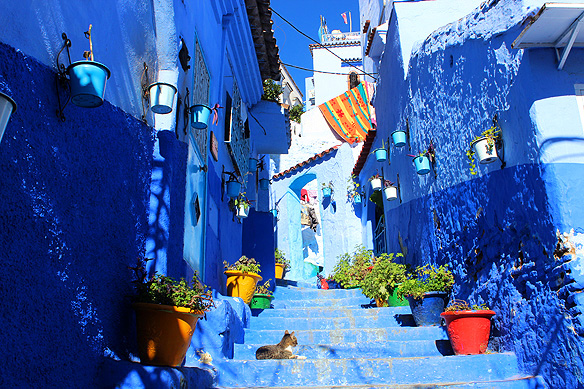
If neither of the names strike a bell, do have a look at the post’s title picture. In all likelihood you would have come across this scene at least once online. It is the most Instagrammed backstreet in Chefchaouen. Along with it, pictures of igloo-blue homes and lanes would also have sprung out to you from travellers’ social media accounts.

Seems unreal to you? In fact, the real thing is bluer, prettier, and even more magical! Continue reading

global travel shot: uninterrupted storytelling in djemaa el-fna

Image

Welcome to my blog post series on Morocco. 🙂

I was travelling through Morocco these past three weeks. Exploring its four Imperial cities, camping under the stars in the Sahara Desert, hiking through the Todra Gorge, soaking in the sun, sand and sea in Essaouira, and falling in love with pearl-blue Chefchaouen.

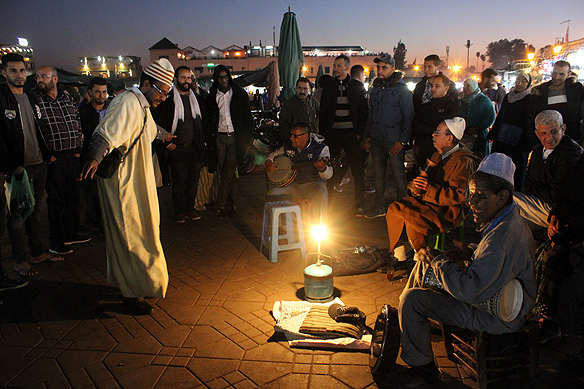
What better way could there be to kick-start my series than by writing a post on Morocco’s most popular city’s most famous site: Djemaa el-Fna. Continue reading

south africa: travel resources—where, what, why, how

emdoneni1

When putting together my travel plans for South Africa I was unable to find any package that truly covered what I was looking for. They either catered for the passive traveller or did the usual Cape Town/ Kruger combination and nothing else. A bit of a waste, I felt, since there was much more to South Africa. So I ended up travelling solo and independently through the country, doing all the things I really wanted to do, and pleasantly finding it one of the safest and friendliest countries for a woman to travel alone through.

I did some homework and luckily also found great guides whilst travelling. I’ve put together a list of the travel services I used. All of these are still valid as of now. I checked. Continue reading

south africa 10: kruger and the big 5

kruger1

Kruger National Park is nearly every South African’s favourite place in the world. It is also part of every tourist’s mandatory itinerary to the country. Covering an area of two million hectares, the game reserve is a realm in itself where wildlife reigns supreme and we humans are the outsiders, satiated with being mere audiences to a world that is complete.

No matter how many times one has been to Kruger, one can just never get enough of it. It is too big. It changes colours and moods with every passing day. Established in 1898 to protect the wildlife of the lowveld in the country, the park contains a mind-boggling number of animal and plant species together with centuries old cultural treasures such as rock paintings and archaeological sites.

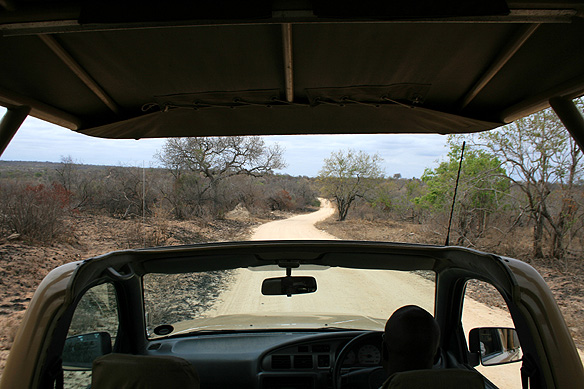
I stayed for three days and two nights and, yes, saw all the Big 5. 🙂 Which boiled down to herds of buffaloes and elephants, a leopard smacking away its lips after an impala kill, rhinos marking their territories with trails of urine and dung, and seven lions and a herd of buffaloes battling away on the banks of a stream after the lions had attacked one of the buffaloes. Continue reading

south africa 9: the ‘panorama’ journey

panorama1

Guess you’ve heard the old adage—the journey is as important as the destination. My destination is Kruger National Park. The journey is appropriately the Panorama Route. 🙂

I had always wanted to do South Africa’s Panorama Route. One of those ‘have to do’ things in life. Why, you might well ask? It is scenic, on a majestic scale, cutting through the northern Drakensberg Mountains and Great Escarpment to abruptly give way to the plains of the lowveld.

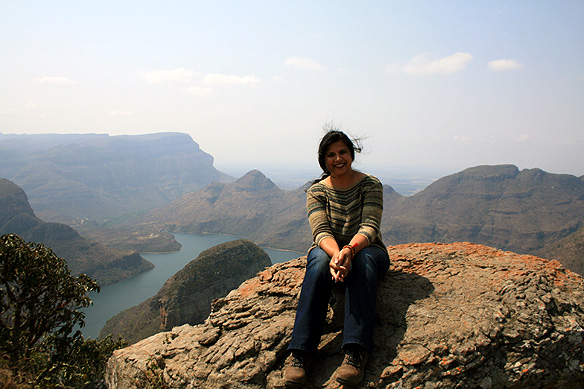
Nature in South Africa is rather grand. Everything a little larger than life, a little more verdant, a little more unique and unduplicated by god. The Panorama Route’s first highlight is the Blyde River Canyon with the Three Rondavels standing sentry on the side; the latter evocative of the huts of the country’s indigenous people. Continue reading