travel diaries: moscow to vladivostok, sleepless on the trans-siberian railway

Siberia. View from my train window.

Siberia. View from my train window.

PROLOGUE

The Trans-Siberian Railway. From Moscow to Vladivostok. 9,289 kilometres across the vast expanse of Russia, and eight time zones. The longest railway line in the world. Now, how can one resist a journey of such epic proportions!

I had first heard about the railway service laid out between 1891 and 1916 by two Tsars—Alexander III and his son Nicholas II—when I just started working. Something inside me then and there decided I had to undertake this voyage. No, not because I am a train buff. Hardly. But because then, and today, a few decades later when the dream is being realized, it is the epitome of travel.

Dear Diary, here’s my 14 days of travel on the Trans-Siberian Railway with stops at the historical cities en-route. A journey that turns out to be one of my most authentic travel experiences to date. ❤ Continue reading

part 3: the spiti trilogy: lahaul, the mystical side of life and himachal

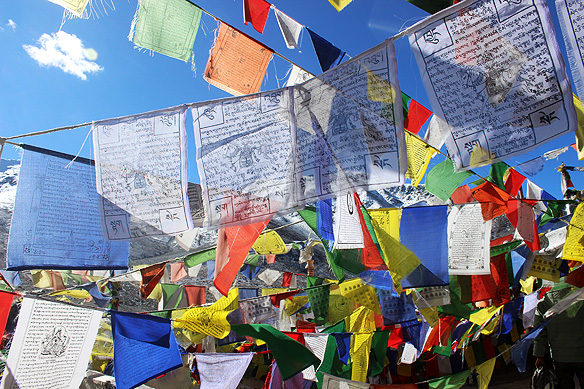
Prayer flags at Kunzum Pass. Because the gods live in the mountains.

Prayer flags at Kunzum Pass. Because the gods live in the mountains.

Welcome to part 3 of my photo diary trilogy on Kinnaur, Spiti, and Lahaul, high up in the Himalayas in India’s Himachal Pradesh.

If Kinnaur is all about the lush flourishing side of living, and Spiti the very opposite—about its barrenness, then Lahaul is the natural outcome of going through both sides of life. It is of tuning in with one’s inner self. I guess you could simply also describe it as meeting one’s Maker.

Here in Lahaul, Buddhist chants echo from monasteries perched atop peaks. Lakes contain deities and so do mountain passes. There is the sacred everywhere, and it is celebrated with much joy.

I would like to share my journey through Lahaul valley with you here. Maybe its magic captures your heart and soul too. 🙂

Continue reading

part 2: the spiti trilogy: spiti, the barren side of life and himachal

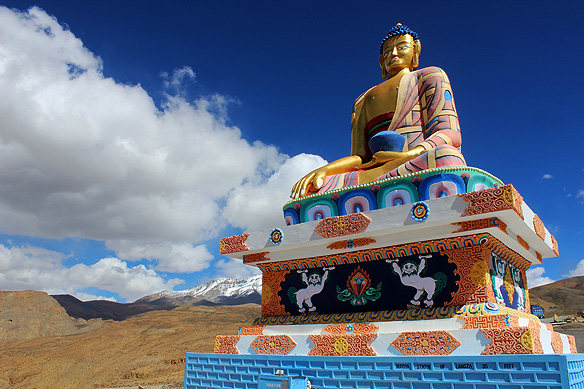
Buddha statue in Langza Village. Because the gods live in the mountains.

Buddha statue in Langza Village. Because the gods live in the mountains.

Welcome to part 2 of my photo diary trilogy on Kinnaur, Spiti, and Lahaul.

This week’s post is about Spiti, a cold desert biosphere in the rain shadow area of the Himalayas bordering Tibet. India’s monsoons do not reach here. Even if they do manage to squeeze their way past the soaring peaks, all they are able to muster is a drizzle. The summers are always dry. The winters are covered in thick snow and ice.

None of which is conducive to agriculture except if carried out on the banks of the Spiti river. The land is otherwise brown and barren, its moonscapes strewn with sand and boulders. Nestled in this arid bleakness are countless ancient monasteries, bedecked and bejewelled with Tibetan Tantric Buddhist iconography. These pockets of sanctity serve as places of refuge, giving strength and meaning beyond a difficult life.

Come along with me to Spiti.

Continue reading

part 1: the spiti trilogy: kinnaur, the verdant side of life and himachal

Sangla valley—Sangla means 'Pass of Light' in Tibetan language. Because the gods live in the mountains.

Sangla valley—Sangla means ‘Pass of Light’ in Tibetan language. Because the gods live in the mountains.

I have always seen myself as an ocean person. I love the rhythm of crashing waves, the smell of salt in the sea air, the white foam breaking into froth around my feet, and tugging me along as it leaves.

And then I went to the Lahaul and Spiti valleys and everything changed inside of me. I became a mountain soul. Those who have been there will understand what I mean.

The Lahaul and Spiti district in India’s northern state of Himachal Pradesh is one of the most beautiful places I have travelled to. Remote and untouched, its offroad route is accessed through neighbouring Kinnaur district if coming in from the Shimla side. When exiting, it continues to Manali to form a loop. Kinnaur and Lahaul are both verdant and green. Sandwiched between them, Spiti, in stark contrast, is a high mountain barren desert perched on the soaring Himalayan range, wild and windswept.

Starting with today, I will be posting a photo diary trilogy of Kinnaur, Spiti, and Lahaul over the coming three weeks. Care to join me and let your soul fall in love with the mountains too? ❤

Note: Lahaul and Spiti used to be two separate districts and were merged into one in 1960. For the purpose of this trilogy, they are treated separately because of their geographic distinctiveness.

Continue reading

travel diaries: from bamyan to herat via the minaret of jam

Be still, dear wild dancing heart! I chide it that it’s being ridiculous. I am no novice traveller. I have travelled all my life, been to countless countries, places many have not even heard of.

“But this is the first time to the Minaret of Jam,” it whispers gleefully.

Yes, true. And I let it dance away, and smile at it fondly. If it were not for this crazy heart of mine, I would be leading a pretty dull life.

Dear reader, I am about to start a 7-day road trip across Afghanistan’s remote heartland to see its most glorious treasures, including the 12th Century Minaret of Jam. The latter, the very reason why I had travelled all the way to Afghanistan in the first place.

It will take me one-and-a-half days through nothingness to reach the minaret, and then another one-and-a-half days off-road driving to reach civilization, namely Herat.

Here’s to once-in-a-lifetime journeys! ❤ Continue reading

a guide to solo travel in afghanistan for the indian traveller

At the 12th Century Minaret of Jam with my driver Sher Aga [middle] and fixer-cum-translator Obaid [extreme left].

At the 12th Century Minaret of Jam with my driver Sher Aga [middle] and fixer-cum-translator Obaid [extreme left].

“Why are you in this western tour group? Why are you with them?”

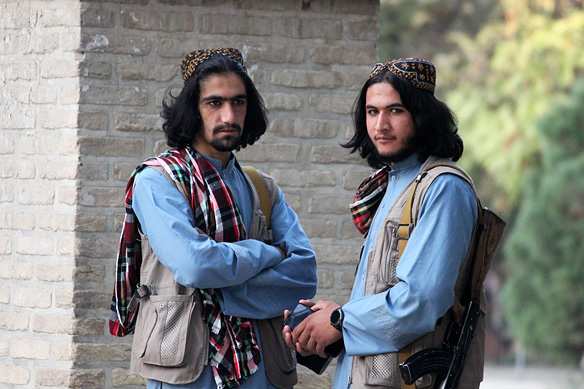
I faced this question at almost every checkpoint during the few days I travelled in Afghanistan as part of a group. [For the rest of my 18 day travels in the country, I travelled alone and on my own.] A Taliban soldier on the 5th day was more explicit. “This is your country! You don’t need to be with them to see Afghanistan.”

– – –

This travel guide to Afghanistan is specifically meant for Indians. Like Indians in colour and passport. It does not, and cannot, apply to people of other colours and nations or an Indian with a western passport. 🙂

Let me put it in context first.

According to Indian textbooks, Afghanistan was once a part of India. According to Afghan textbooks, India was once a part of Afghanistan. Sorry, not India, but ‘Hindustan.’ Afghans, like the rest in Central Asia, still refer to India by its Silk Road-era name given to the sub-continent by the Persians.

Afghan fine-dining restaurant menus have Hyderabadi Biryani and Aloo Gobi listed under ‘Afghan Dishes,’ while Afghan women wear nose rings and bindis and are adamant it is an Afghan thing. We Indians, of course, believe it is all intrinsically ours, and just smile about it in smug complacency. You get the drift.

Both countries have shared personalities and dynasties across a millennium. For one thousand years it was the likes of Mahmud of Ghazni, Muhammad Ghori, the Khilji Dynasty, Lodi Dynasty, Mughal Emperor Babur, and Sher Shah Sur. Today, it is a chunk of Bollywood. Yes, Salman Khan, Shah Rukh Khan, Aamir Khan and Celina Jaitley, yesteryear heroes Feroz Khan and Sanjay Khan, and bad guy Kader Khan all have Afghan blood in them. And these are just a few in a long list. Continue reading

taliban afghanistan, a solo indian woman traveller, and help from unexpected quarters

An Australian tour company versus the Taliban. Who would you trust?

If I am not mistaken nearly everyone would choose the tour company. I did too.

After all, it is ‘white-owned’, from a ‘developed country,’ and the default conclusion is that ‘I would be safe with them’ in an otherwise unsafe country—in this case, Afghanistan under the Taliban.

Instead, as the only person of colour in a group of 10 led by two white Australian tour leaders, I was subjected to a barrage of India-bashing from the group. By the time one of the group, a Welshman living in Poland, crossed the lines on the seventh day of the tour, I’d had enough. I told them to stop. What happened next is what travel nightmares are made of. Continue reading

self-portrait: happy in spiti

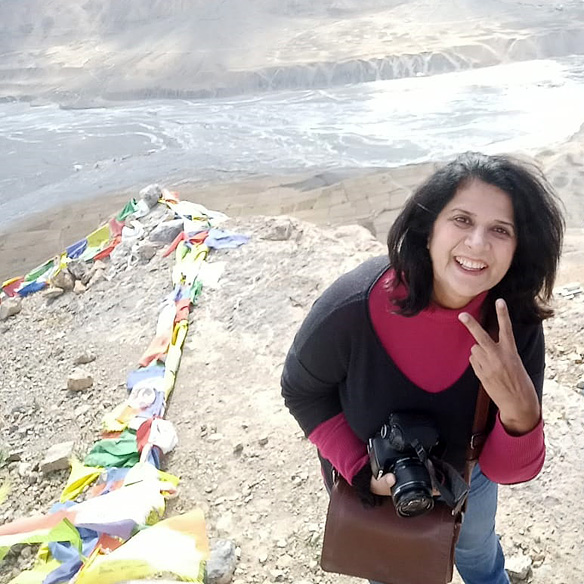
Those of you who have been following my blog would be well aware that I rarely, if ever, post pictures of myself in my blog posts. The closest I get to is the inclusion of a photograph of my hand holding something I’d picked up at the site or that of my feet. There is neither a deep philosophical reason, nor an effort to create a sense of enigma, behind this. It is simply because I usually travel alone, and I am lousy at taking selfies.

So, when my driver offered to take a picture of me during a recent 15-day solo road trip though Kinnaur, Spiti and Lahaul, deep in the remote northern reaches of Himachal Pradesh, amongst the towering Himalayas, I jumped at it. It was a precious opportunity to make my joy whilst travelling to this part of the world achieve posterity. 🙂 Continue reading

the epic solo rajasthan road trip: because travel heals pain

This slideshow requires JavaScript.

[Updated on 30 November 2021]

My mother passed away on 19 July this year from old age. She was 84. It is now almost four months since she’s been gone, yet the pain is still raw. She went too fast. I knew she was going to go to the other side one day. One day. Just that one day was some distant occurrence which I naively believed was not going to happen in my lifetime. We all believe our parents will live forever.

If you are a follower of my blog, you would have noticed the change in the title. I have added ‘Toshi’ in it. Toshi was my mother’s maiden pet name. By adding it to my blog it keeps her alive for me.

We were chalk and cheese. Fought and hugged. She was the most loving human being I had ever come across. And through all of life’s trials and tribulations, she was my constant best friend.

More than anyone else, she also knew my need to travel. To wander. To explore. She understood travel was my one source of inspiration, as well as escape. A source of pragmatic knowledge and elusive wisdom.

It is no surprise then that as I struggled, and still struggle, to cope with my loss, my sister, as if in serendipity, suggested I turn to travel. Continue reading

a guide to independent travel in israel

Have my Israel posts been able to inspire you to make your way to one of the most fascinating [and historically and potentially volatile] countries in our world? I hope yes. Yes enough to add it to your bucket list, have day-dreams about it, and make plans for a journey post COVID-19.

Though I’ve ended each post on Israel with related travel tips, I thought I’d collate the important ones into one post and add a few extra. Just to make it easier for you.

I assure you this will be a short post. Most of my Israel posts have been on an average 2,500 words long. If you indeed read through them, credit goes to the country—it is beautiful—and to you. Thank you super much for giving me company through the series, for liking the posts, and for commenting on them. It has encouraged me and kept me focussed on writing the entire set.

So, here goes my last and 13th post in my Israel series, a country that was long on my wish-list and one I finally got to explore on a solo, independent, 15-day travel in November 2019. Wishing you happy travels too, someday soon.

[Please note there are NO affiliate links in this post, or in any of my posts. Links are provided only to help you with your plans or for you to get extra info. Neither is any of the content in this post or any other post sponsored. The services in this post are what I used and I am simply sharing them with you.] Continue reading