caodaism — vietnam’s home-grown religion of kitsch, pluralism, and unity

This slideshow requires JavaScript.

[Note: Click on the play button or arrows to start the slide show.]

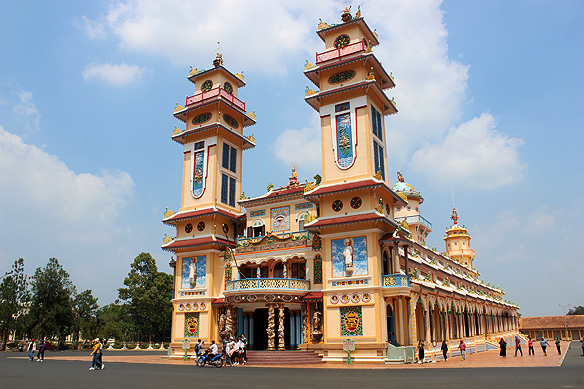
It is mid-day, somewhere in southern Vietnam, 80-odd kilometres from Ho Chi Minh City in Tay Ninh province. I am seated cross-legged inside a cavernous colourful ‘cathedral,’ on the fringes of a 99-year-old hypnotic performance of chants and rituals carried out by hundreds of solemn, serene-faced white-robed disciples.

Teal dragons, in contrast, wrap around soaring pink columns. Their candy red and white tongues stuck out mid-air. Above me, a ceiling recreates the heavens, punctuated with coiled snakes and flowers. Triangles with rays emanating from eyes adorn the windows and facades.

Rich in symbolism, every form and colour in the Cao Dai Holy See represents a belief or value mandated by divinity. Nothing is redundant here.

After all, there is enough inspiration. Vietnam’s very own monotheistic syncretic religion fuses together Buddhism, Confucianism, Taoism, Roman Catholicism, and ancestor worship, with a generous douse of seance [talking to spirits of the dead] into an eclectic mix guided by principles of harmony and simply doing good.

Overlooking this fantasyland are effigies of the first group of Cao Dai spirit mediums who ‘God’ identified himself to on Christmas eve in 1925. On the other end is the Bat Quai Dai altar. The most sacred part of the cathedral, it comprises a large sphere with a left ‘Divine’ eye painted on it, surrounded with religious paraphernalia. The eye represents the all-seeing supreme god Duc Cao Dai who is the universe which lives in all creation.

Not to be construed as an offshoot of any of the religions in its mix, Caodaism, born out of nationalism, was recognized as an independent religion on 7 October 1926 by Vietnam’s French colonial rulers. Officially known as The Great Faith for the Third Universal Redemption, the Holy See in Tay Ninh is its largest place of worship.
Continue reading

part 3: the spiti trilogy: lahaul, the mystical side of life and himachal

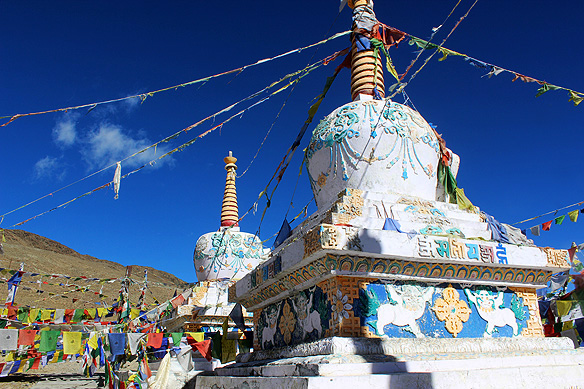
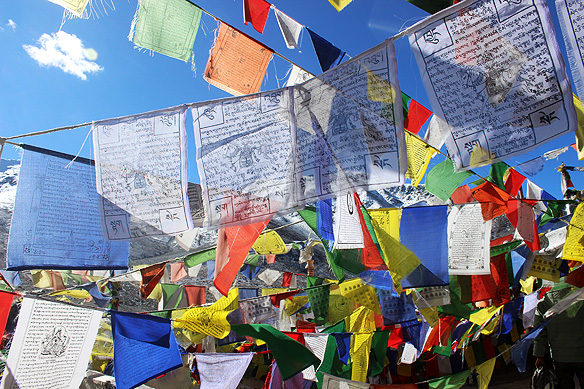
Prayer flags at Kunzum Pass. Because the gods live in the mountains.

Prayer flags at Kunzum Pass. Because the gods live in the mountains.

Welcome to part 3 of my photo diary trilogy on Kinnaur, Spiti, and Lahaul, high up in the Himalayas in India’s Himachal Pradesh.

If Kinnaur is all about the lush flourishing side of living, and Spiti the very opposite—about its barrenness, then Lahaul is the natural outcome of going through both sides of life. It is of tuning in with one’s inner self. I guess you could simply also describe it as meeting one’s Maker.

Here in Lahaul, Buddhist chants echo from monasteries perched atop peaks. Lakes contain deities and so do mountain passes. There is the sacred everywhere, and it is celebrated with much joy.

I would like to share my journey through Lahaul valley with you here. Maybe its magic captures your heart and soul too. 🙂

Continue reading

part 2: the spiti trilogy: spiti, the barren side of life and himachal

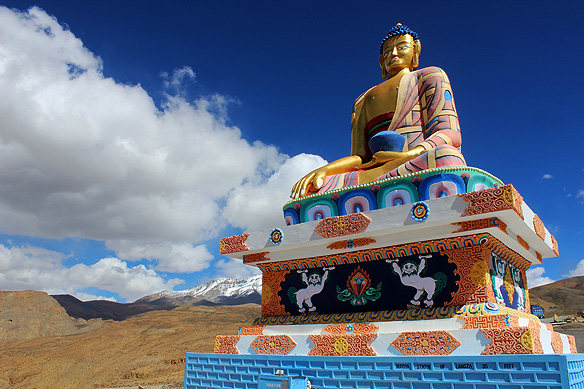
Buddha statue in Langza Village. Because the gods live in the mountains.

Buddha statue in Langza Village. Because the gods live in the mountains.

Welcome to part 2 of my photo diary trilogy on Kinnaur, Spiti, and Lahaul.

This week’s post is about Spiti, a cold desert biosphere in the rain shadow area of the Himalayas bordering Tibet. India’s monsoons do not reach here. Even if they do manage to squeeze their way past the soaring peaks, all they are able to muster is a drizzle. The summers are always dry. The winters are covered in thick snow and ice.

None of which is conducive to agriculture except if carried out on the banks of the Spiti river. The land is otherwise brown and barren, its moonscapes strewn with sand and boulders. Nestled in this arid bleakness are countless ancient monasteries, bedecked and bejewelled with Tibetan Tantric Buddhist iconography. These pockets of sanctity serve as places of refuge, giving strength and meaning beyond a difficult life.

Come along with me to Spiti.

Continue reading

part 1: the spiti trilogy: kinnaur, the verdant side of life and himachal

Sangla valley—Sangla means 'Pass of Light' in Tibetan language. Because the gods live in the mountains.

Sangla valley—Sangla means ‘Pass of Light’ in Tibetan language. Because the gods live in the mountains.

I have always seen myself as an ocean person. I love the rhythm of crashing waves, the smell of salt in the sea air, the white foam breaking into froth around my feet, and tugging me along as it leaves.

And then I went to the Lahaul and Spiti valleys and everything changed inside of me. I became a mountain soul. Those who have been there will understand what I mean.

The Lahaul and Spiti district in India’s northern state of Himachal Pradesh is one of the most beautiful places I have travelled to. Remote and untouched, its offroad route is accessed through neighbouring Kinnaur district if coming in from the Shimla side. When exiting, it continues to Manali to form a loop. Kinnaur and Lahaul are both verdant and green. Sandwiched between them, Spiti, in stark contrast, is a high mountain barren desert perched on the soaring Himalayan range, wild and windswept.

Starting with today, I will be posting a photo diary trilogy of Kinnaur, Spiti, and Lahaul over the coming three weeks. Care to join me and let your soul fall in love with the mountains too? ❤

Note: Lahaul and Spiti used to be two separate districts and were merged into one in 1960. For the purpose of this trilogy, they are treated separately because of their geographic distinctiveness.

Continue reading

the complete travel guide to the treasures of sri lanka’s cultural triangle

Welcome to my travel guide on Sri Lanka’s Cultural Triangle told a bit differently—through short photo-essay chapters on the country’s ancient and medieval history.

Of the six UNESCO-listed cultural world heritage sites in Sri Lanka, five lie within the Cultural Triangle in the heart of the country. It is a region rooted in 2,500 years of history and heritage, both sacred and secular, from timeless Theravada Buddhist sites to splendid Sinhalese royal capitals. All surrounded in lush tropical jungles.

Before I write any further, I would like to briefly explain two terms used in this guide which are part of the warp and woof of the country. Theravada Buddhism and ‘Sinhalese.’ Theravada Buddhism is the oldest school of Buddhism and a direct offshoot of Buddha’s teachings. There are five countries in the world which have Theravada Buddhism as their official religion, and Sri Lanka is one of them. Sinhalese refers to the Indo-Aryan ethnic race native to Sri Lanka.

Whilst this guide covers the five UNESCO-listed sites, it also includes some gems scattered in-between. I hope you find it useful and it helps put the country’s Cultural Triangle as a seamless whole with all the dots connected. ❤

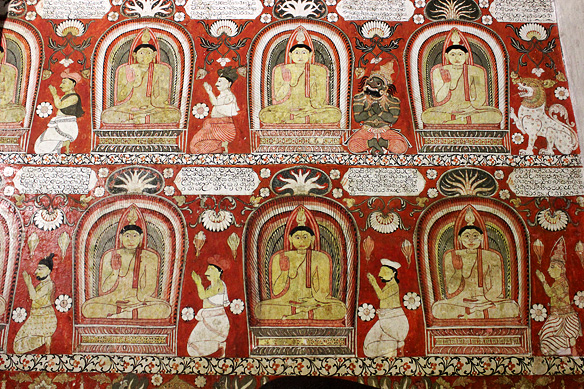
[Title photo: 18th Century Mural at Lankatilaka Vihara, Kandy.]

Table of Contents:

Continue reading

travel shorts: kyrk giz grotto, if ribbons and mud could stick

This slideshow requires JavaScript.

Take a long piece of cloth or ribbon, add a blob of mud to it, and hurl it high onto the ceiling of the grotto. If it sticks, your wishes will come true. If the ribbon falls flat on the ground, well you can either give up, or try again. 🙂

It is a ritual which people from across Turkmenistan carry out at the 50-metre-high grotto in Lebap Province, in remote north-east Turkmenistan. Starting a new job, getting married, or want a baby—it would not be amiss to make a pilgrimage here first. Continue reading

photo essay: in search of kandahar, the taliban’s former capital

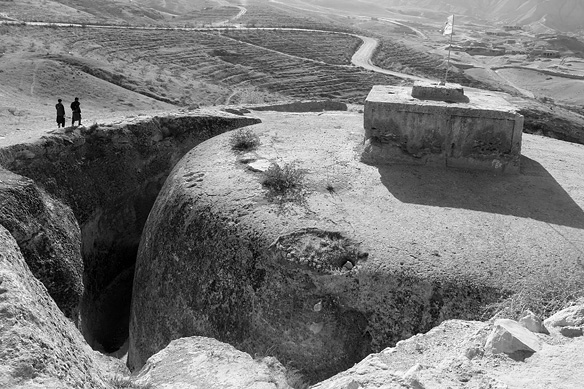
Right up to 15 August, 2021, it was impossible for foreign tourists to visit Kandahar, least of all by road. The city, a Taliban stronghold in southern Afghanistan, was labelled the ‘kidnapping capital’ and lethal land mines infested the road to it every few metres. You had a far greater chance of being blown alive en-route than getting in. And if perchance you did make it in, the odds of staying alive were slim. But a lot has changed since then. I went by car to Kandahar this year in October and spent two nights in the city. And I live to write this post. 🙂

Kandahar, founded by Alexander the Great in 330 BC, has been the spiritual headquarters of the Taliban since its inception in 1994. From 1996 to 2001, when the Taliban were first in control, it served as the capital of Afghanistan. Though Kabul is now the seat of government, the Taliban’s senior-most officials, including its supreme leader Hibatullah Akhundzada and his spiritual advisors, are based in Kandahar. All decisions that affect the lives of Afghans are made right here.

So, what’s Kandahar really like now? Let me take you on a visual journey of this much touted city as I went in search of it. Continue reading

the complete travel guide to balkh: ancient bactria and silk road’s fabled city

Of all the cities that has survived the annals of time, Balkh, the capital of ancient Bactria [6th Century BC to 6th Century AD] in northern Afghanistan, is perhaps the most evocative.

Volumes have been written on its wars when it was the capital of Bactria, and thereafter, a part of post-Bactrian empires. Art and literature have had a constant muse in its colourful personalities, Alexander the Great and Roxanna, and their marriage which paved the course of history. One of the oldest religions in the world, Zoroastrianism, was founded by one of Balkh’s very own citizens, Zoroaster.

But its greatest claim to fame, and subsequently its greatest legacy, came from its simultaneous role as Silk Road’s fabled city. For 1,600 years, from 130 BC – 1453 AD, Balkh was not just a confluence of commodities, but also of religions, ideas, and knowledge. Continue reading

travel shorts: hazrat-e mazar, afghanistan’s most sacred site

Image

This slideshow requires JavaScript.

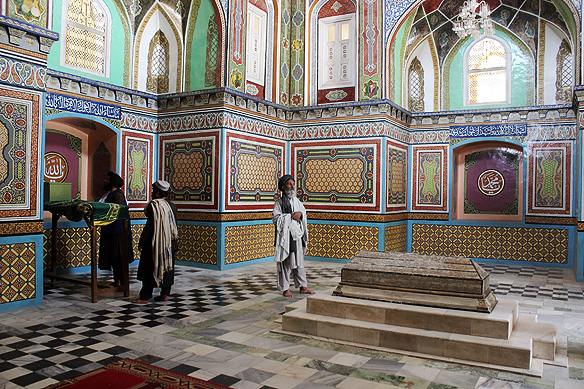
One of Islam’s most sacred sites lies in northern Afghanistan, a mere 55 kilometres from the Uzbekistan border. It is a blue-tiled mosque which glistens like a jewel, changing colour through the day, and home to countless pristine white pigeons.

Whilst the Shi’a sect of Islam believe that Ali, Prophet Muhammad’s cousin and son-in-law, is buried in Najaf, Iraq, the Sunni sect regard Hazrat-e Mazar in Mazar-e Sharif as Ali’s actual tomb.

Both, the city Mazar-e Sharif and its spiritual centrepiece Hazrat-e Mazar, date back to the 12th Century.

There is an interesting Afghan legend as to how the tomb came to be here. Continue reading

an urban monk’s guide to delhi’s spiritual oases

This post is for all those Urban Monks who are not tied to any dogma, are secular, and are more focussed on the spiritual in the chaos of the material. Why do I say this? It’s because that’s what being an Urban Monk is all about. Isn’t it? Finding the sacred, everywhere, in our urban contexts.

This lofty lifestyle goal becomes pretty doable in a city like Delhi. 😊

Tsk tsk. Do I see you shake your head in disbelief? Let me explain.

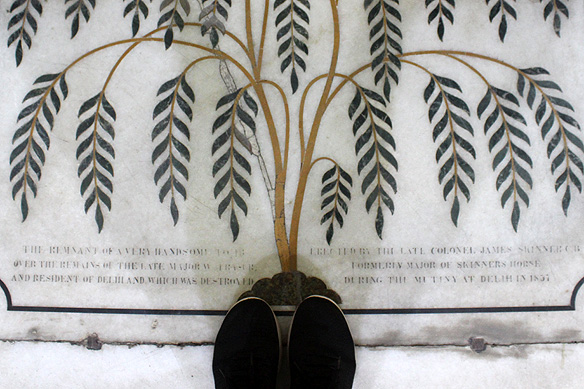
Delhi’s rich history has been crafted by devout Hindus, Sufi pirs, Sikh saints, secular and rigid Central Asian Muslims, and Christian British colonizers. Add to this mix, ancient creeds like Zoroastrianism, Jainism and Buddhism, and modern religions like the Baha’i faith. They have all contributed to the warp and woof of the city’s fabric, turning it into a melting pot of beliefs.

Surrounded by the chaos of a metropolitan city, some of their places of worship are veritable oases of peace and calm. Silent, deep, and serene. As a bonus, they also ooze of history, heritage, and stories galore.

Next time you need to take a breather, there is no need to go rushing to a retreat or to the hills. I mean, you can, but you don’t have to. There is enough in Delhi to rejuvenate you and connect you with the divine. ❤

Here are my seven personal favourites, in no specific order. What are your favourites? Do share in the comments section. Continue reading