travel guide: turkmenistan’s 3 legendary unesco-listed treasures

For a history buff, Turkmenistan is what wish-lists are made of. Its historical sites comprise three of the greatest world cities of the past which served as the capitals of some of the region’s most powerful empires in the ancient and medieval world, namely, the Great Seljuks, Khwarezmshahs, and Parthians.

All three of these cities are UNESCO World Heritage Sites today: Merv in the south-east, Konye Urgench in the north, and Old Nisa near the capital Ashgabat.

Welcome to my travel guide on these legendary metropolises’ fantastic histories and breathtaking monuments. Places very few visit, in one of our world’s Least Visited Countries. ❤

MERV: ‘QUEEN OF THE WORLD’ AND CAPITAL OF THE GREAT SELJUKS

Coronation of Seljuk Sultan Ahmad Sanjar [r. 1118 – 1157]; Jami' al-Tawarikh by Rashid al-Din, Tabriz, Persia, 1307 AD.

Coronation of Seljuk Sultan Ahmad Sanjar [r. 1118 – 1157]; Jami’ al-Tawarikh by Rashid al-Din, Tabriz, Persia, 1307 AD.

Often described as ‘the wandering city,’ Merv is Turkmenistan’s grandest UNESCO World Heritage Site, both in scale and age: 1,236 hectares [including the buffer zone] and 4,500 years. Listed in 1999, it is also the oldest and best-preserved oasis city along the Silk Road in Central Asia. Continue reading

travel diaries: from bamyan to herat via the minaret of jam

Be still, dear wild dancing heart! I chide it that it’s being ridiculous. I am no novice traveller. I have travelled all my life, been to countless countries, places many have not even heard of.

“But this is the first time to the Minaret of Jam,” it whispers gleefully.

Yes, true. And I let it dance away, and smile at it fondly. If it were not for this crazy heart of mine, I would be leading a pretty dull life.

Dear reader, I am about to start a 7-day road trip across Afghanistan’s remote heartland to see its most glorious treasures, including the 12th Century Minaret of Jam. The latter, the very reason why I had travelled all the way to Afghanistan in the first place.

It will take me one-and-a-half days through nothingness to reach the minaret, and then another one-and-a-half days off-road driving to reach civilization, namely Herat.

Here’s to once-in-a-lifetime journeys! ❤ Continue reading

the story of qutub minar

Prologue

Perhaps it would be more apt to title this post: Stories about Qutub Minar. As in plural.

Apart from being Delhi’s most iconic monument, it is steeped in multiple stories and a whole lot of firsts, making it unlike any other in the city. To top it, it is not the handiwork of any one ruler or dynasty, but is a collaborative effort spanning 800 years with even an East India Company officer adding his own bit to it—a Bengal-styled chhatri perched on top of the tower, which was thankfully brought down twenty years later.

So, here are Qutub Minar’s most famous stories. The spunk behind its stones. 😊 Continue reading

india travel shot: shimla’s toy train

Image

Imagine—a cross between a train and a car, a rail motor car as it is called, hurtling over towering Roman arched bridges and through tunnels dug deep into dense rocky hills, past pristine forests and verdant valleys. 103 tunnels and 969 bridges to be exact, of which the world’s highest multi-arch gallery bridge is one. Every now and then it stops at quaint railway stations in little villages. Care for a bite?

The fantastical contraption in the image above, straight out of the pages of British Raj in India, is part of the UNESCO World Heritage Site ‘Mountain Railways of India’ since 2008. No trip to Shimla could be deemed to be complete without the inclusion of a journey in it in the itinerary. Not 120 years ago. And not now. Continue reading

the complete travel guide to the hidden gems of jhalawar

24 blog posts. 5 weeks of travel. A road trip of a lifetime.

What better way to end my Rajasthan series than with a travel guide on Jhalawar. Off the tourist radar, choc-o-bloc with hidden rarely-visited gems, and a laid-back vibe. It is screaming out to be explored. But since there is so little known or publicized about it, it ends up, unfortunately, getting sidelined, and fortunately [for the traveller] offers an opportunity to explore Rajasthan in a time-warped state. The way it used to be.

Here’s Jhalawar’s story and sights, written with valuable inputs from Mahijit Singh, the direct descendant of its Rajput rulers, who still lives in Jhalawar, in Virendra Bhawan. And guess what, his home is a homestay! But more of that later in the post.

Here’s wishing you happy travels in Jhalawar. 🙂 Continue reading

chittorgarh: stories of valour, jauhar, and gods

“I long not to visit Ganga Sagar, Rameshwar or Kashi. It is only for Chittor that my eyes are always thirsty.”

Rajasthan’s folklore and ballads are filled with mention of Chittorgarh. Take this one as well for instance:

“If there is a fort to be reckoned with, it is Chittorgarh. The rest are mere fortresses.”

It was not just the bastions, masonry, and structures these lines referred to, which were of course mighty, but also its men and women and their unshakable grit.

Considered one of Rajasthan’s most formidable forts, Chittorgarh was famous for its sophisticated military architecture, wealth, and heroic rulers. It served as Mewar’s capital from the dynasty’s founding in the 8th Century to 1553 when Udaipur was established, and continued to be used until Mewar became part of independent India.

Despite three sieges over 1,300 years, Mewar’s rulers always managed to regain control of it. Whilst most other Rajput kingdoms surrendered to the Mughals, Mewar and Chittorgarh stood firm. When it did go into an alliance it was, more often than not, on its own terms.

The fort complex, now a UNESCO World Heritage Site, comprises seven city gates, 65 historical buildings, four palaces, 19 large temples and 20 water bodies [there were 84 back in its heyday to meet the needs of its 50,000-strong army for up to four years] spread over 700 acres, 590 feet above the ground. A village is enclosed within its walls since medieval times.

Let me take you on a virtual journey through Chittorgarh, filled with stories of valour, jauhar, and gods. 🙂 Continue reading

the glories of mewar: impregnable kumbhalgarh and exquisite ranakpur

There was an invincible grandeur associated with the Kingdom of Mewar in Rajasthan, of which Udaipur was the capital. Traits which reflected in not just the larger-than-life personas of its rulers but its impregnable forts and exquisite places of faith too.

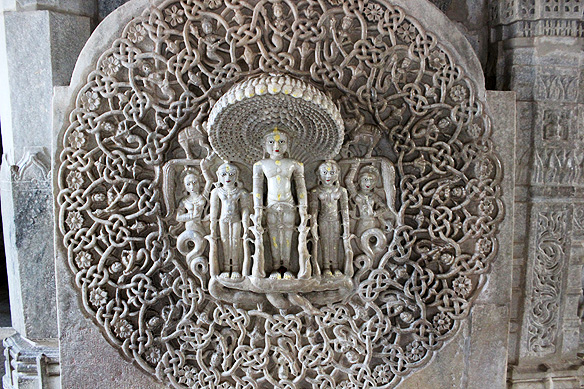
Deep in the wooded Aravalli Hills are two such places: Kumbhalgarh and Ranakpur. Whilst one is a fort of a king remembered to this day for his valour and indomitable spirit, the other is a temple carved out of marble to give shape to a divine dream, with the blessings of the same king.

The route leading to them is treacherous in parts, cutting through the dark, unlit, uninhabited jungle in the form of a rather worn-out pot-holed narrow road. At others, it rises and falls in tune with the hills, passing tiny hamlets and endless herds of livestock. But the rewards for this journey are priceless.

Come, let me show you Maharana Kumbha’s Mewar. ❤ Continue reading

sunder nursery: delhi’s loveliest secret

[Updated on 2 June, 2022. This post was first published on 4 April, 2022. I went back to Sunder Nursery for a night heritage walk led by Sair E Hind in May. This updated post includes images of Sunder Nursery at night.]

Red Fort. Check. Humayun’s Tomb. Check. Qutab Minar. Check. A walk through Chandni Chowk. Check … and one gets deluded into believing that Aah, one has seen it all, done it all in Delhi.

Could one be further from the truth?

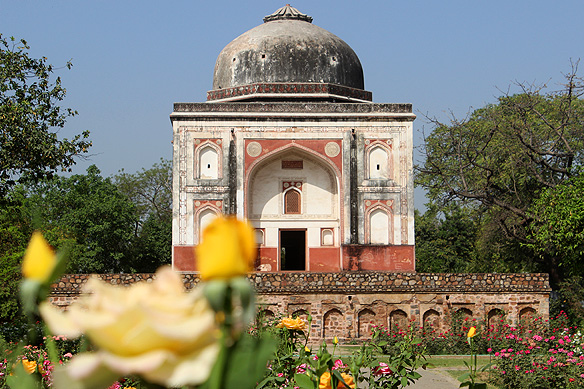
Delhi’s loveliest secret, hidden from prying tourist hordes, is Dilliwale’s [Delhiites] favourite place to have an uninterrupted yoga session, a picnic with close family and friends, or an organic brunch at a weekend farmers’ market. All in the company of blooming flowers, hundred-year-old wise trees from around the world, and exquisite Mughal-era UNESCO-listed monuments.

Sounds too good to be true, doesn’t it? But isn’t that what lovely, best kept secrets look like. Continue reading

photo essay: delhi’s red fort, stories told and untold

Behind a pile of impregnable traffic barriers and guarded by the stern-lipped, but polite, Central Reserve Police Force [CRPF] is Delhi’s most prestigious fort, Qila-e-Mubarak, meaning ‘Auspicious Fort’. Or the Red Fort, as the British called it.

Mughal Emperor Shah Jahan, who designed and built it in 1648 [the same gentleman who built Taj Mahal], would not have been too pleased about the barricades, both human and metal. He was not even happy when his son Aurangzeb built a wall around Lahore Gate, the public entrance.

With a direct line of view from Chandni Chowk to the Diwan-e-Aam [Hall of Public Audience], Shah Jahan argued that the enclosure was like putting a veil in front of a woman’s beautiful face. Continue reading

humayun’s tomb: an ode to destiny’s child

An opiumate and weak general [as popular history would like us to believe] or a gentle ruler determined to regain his lost territories and in fact did. Even if it took him 15 long years in exile racing on horseback through Lahore, Sindh, Rajputana, and Persia.

Were it not for a colossal garden tomb built in his memory by his son, he may well have been forgotten in the dusty pages of time.

This blog post is the story of Indian Mughal history’s most fortunate and unfortunate emperor: Humayun and his enormous resting place in India’s historical capital city, Delhi. Happy exploring! ❤ Continue reading