chittorgarh: stories of valour, jauhar, and gods

“I long not to visit Ganga Sagar, Rameshwar or Kashi. It is only for Chittor that my eyes are always thirsty.”

Rajasthan’s folklore and ballads are filled with mention of Chittorgarh. Take this one as well for instance:

“If there is a fort to be reckoned with, it is Chittorgarh. The rest are mere fortresses.”

It was not just the bastions, masonry, and structures these lines referred to, which were of course mighty, but also its men and women and their unshakable grit.

Considered one of Rajasthan’s most formidable forts, Chittorgarh was famous for its sophisticated military architecture, wealth, and heroic rulers. It served as Mewar’s capital from the dynasty’s founding in the 8th Century to 1553 when Udaipur was established, and continued to be used until Mewar became part of independent India.

Despite three sieges over 1,300 years, Mewar’s rulers always managed to regain control of it. Whilst most other Rajput kingdoms surrendered to the Mughals, Mewar and Chittorgarh stood firm. When it did go into an alliance it was, more often than not, on its own terms.

The fort complex, now a UNESCO World Heritage Site, comprises seven city gates, 65 historical buildings, four palaces, 19 large temples and 20 water bodies [there were 84 back in its heyday to meet the needs of its 50,000-strong army for up to four years] spread over 700 acres, 590 feet above the ground. A village is enclosed within its walls since medieval times.

Let me take you on a virtual journey through Chittorgarh, filled with stories of valour, jauhar, and gods. 🙂 Continue reading
the glories of mewar: impregnable kumbhalgarh and exquisite ranakpur

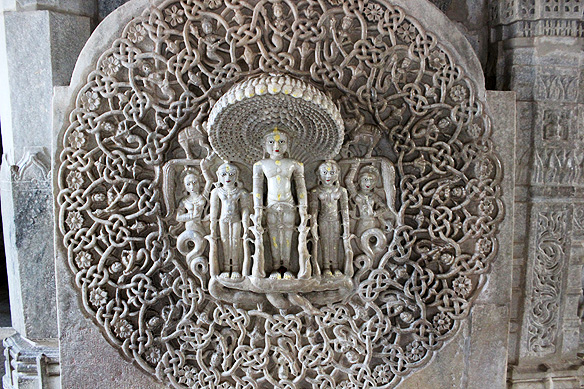
There was an invincible grandeur associated with the Kingdom of Mewar in Rajasthan, of which Udaipur was the capital. Traits which reflected in not just the larger-than-life personas of its rulers but its impregnable forts and exquisite places of faith too.

Deep in the wooded Aravalli Hills are two such places: Kumbhalgarh and Ranakpur. Whilst one is a fort of a king remembered to this day for his valour and indomitable spirit, the other is a temple carved out of marble to give shape to a divine dream, with the blessings of the same king.

The route leading to them is treacherous in parts, cutting through the dark, unlit, uninhabited jungle in the form of a rather worn-out pot-holed narrow road. At others, it rises and falls in tune with the hills, passing tiny hamlets and endless herds of livestock. But the rewards for this journey are priceless.

Come, let me show you Maharana Kumbha’s Mewar. ❤ Continue reading

sunder nursery: delhi’s loveliest secret

[Updated on 2 June, 2022. This post was first published on 4 April, 2022. I went back to Sunder Nursery for a night heritage walk led by Sair E Hind in May. This updated post includes images of Sunder Nursery at night.]

Red Fort. Check. Humayun’s Tomb. Check. Qutab Minar. Check. A walk through Chandni Chowk. Check … and one gets deluded into believing that Aah, one has seen it all, done it all in Delhi.

Could one be further from the truth?

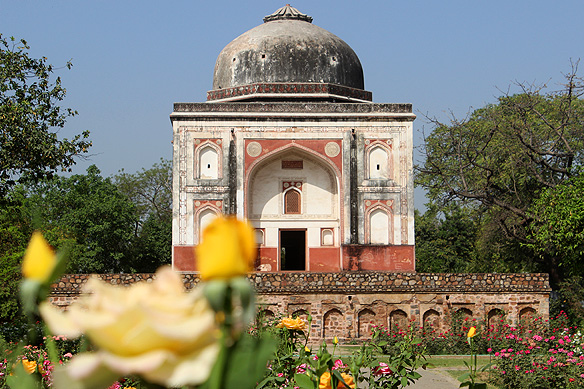
Delhi’s loveliest secret, hidden from prying tourist hordes, is Dilliwale’s [Delhiites] favourite place to have an uninterrupted yoga session, a picnic with close family and friends, or an organic brunch at a weekend farmers’ market. All in the company of blooming flowers, hundred-year-old wise trees from around the world, and exquisite Mughal-era UNESCO-listed monuments.

Sounds too good to be true, doesn’t it? But isn’t that what lovely, best kept secrets look like. Continue reading

photo essay: delhi’s red fort, stories told and untold

Behind a pile of impregnable traffic barriers and guarded by the stern-lipped, but polite, Central Reserve Police Force [CRPF] is Delhi’s most prestigious fort, Qila-e-Mubarak, meaning ‘Auspicious Fort’. Or the Red Fort, as the British called it.

Mughal Emperor Shah Jahan, who designed and built it in 1648 [the same gentleman who built Taj Mahal], would not have been too pleased about the barricades, both human and metal. He was not even happy when his son Aurangzeb built a wall around Lahore Gate, the public entrance.

With a direct line of view from Chandni Chowk to the Diwan-e-Aam [Hall of Public Audience], Shah Jahan argued that the enclosure was like putting a veil in front of a woman’s beautiful face. Continue reading

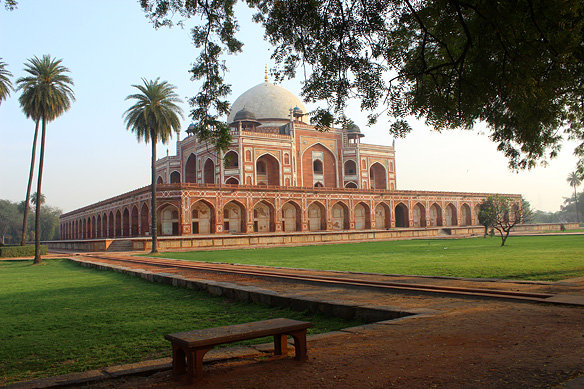
humayun’s tomb: an ode to destiny’s child

An opiumate and weak general [as popular history would like us to believe] or a gentle ruler determined to regain his lost territories and in fact did. Even if it took him 15 long years in exile racing on horseback through Lahore, Sindh, Rajputana, and Persia.

Were it not for a colossal garden tomb built in his memory by his son, he may well have been forgotten in the dusty pages of time.

This blog post is the story of Indian Mughal history’s most fortunate and unfortunate emperor: Humayun and his enormous resting place in India’s historical capital city, Delhi. Happy exploring! ❤ Continue reading

photo essay: amer, the unesco-listed fort and beyond

“This heaven like place was completed in the Hijri year 1008 [1599 AD], being built in a period of 25 years, having been most meticulously designed and expertly decorated. Just as the heavens should always be laden with rain, so also this stately building, the foundation of the Maharaj’s longevity and wealth, be preserved from any kind of damage.”
~ Excerpt from the English translation of a Persian plaque inside the Zenana, Amer Fort.

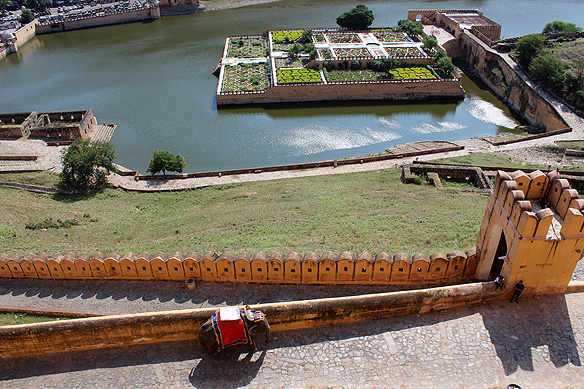
Part of the six ‘Hill Forts of Rajasthan’ UNESCO World Heritage Site, Amer Fort rises high above the placid waters of Maota Lake. Its magnificent Rajput-Mughal edifices reminiscent of the power of the Kachhwaha Rajputs and their strategic ties with the Mughal empire. For 128 years, Mirza Raja Man Singh I’s labour of love served as the administrative base and royal residence of the Amber kingdom. That is, until 1727 when Maharaja Sawai Jai Singh II decided to move the capital to Jaipur some 15 kilometres away.

Most travellers simply visit the fort, gush in wonder, and leave. But there is more to Amer than just this glorious marvel. Much more, beyond the fort. Continue reading

#3 abandoned fatehpur sikri: 7 reasons why agra should be on every travel bucket list

“Jesus, son of Mary said, ‘The world is a bridge, pass over it, but build no houses upon it. He who hopes for a day, may hope for eternity; but the World endures but an hour. Spend it in prayer for the rest is unseen.'”
~ Persian inscription,
Buland Darwaza, Fatehpur Sikri, 1601

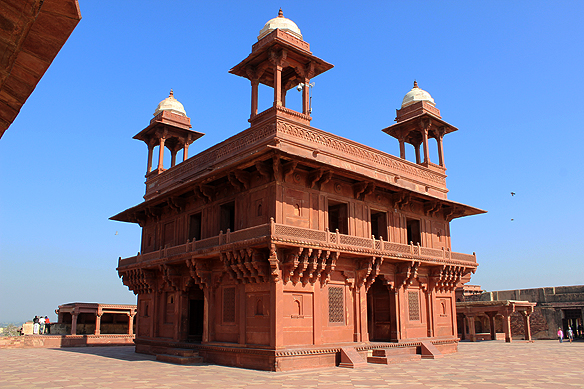
My recollections of Fatehpur Sikri trace back to a family holiday many eons ago. I was 10. I remember being mesmerized as I wandered through the vast, desolate expanses embellished with exquisite stonework. Long fingers of golden sunshine stroked the edifices, setting the scattered, towering, red sandstone walls aflame.

For a 10-year-old it was a surreal place totally removed from all reality as I knew it.

Over the years I would often close my eyes and go back in time to re-emerge starry-eyed about life’s wonders. Amazed about a whole city built by one of the greatest emperors history had known, in honour of a Sufi saint who predicted the one thing he wanted most—a heir to pass on his empire to. Crafted with incredible passion and precision, the emperor Akbar himself oversaw the building of the site from its floor plans to the hand-chiselled columns and doorways to ensure it reflected his secular beliefs and heightened sense of aesthetics. Continue reading

#2 majestic agra fort: 7 reasons why agra should be on every travel bucket list

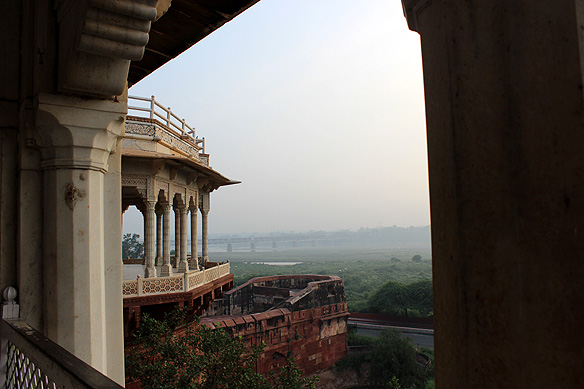
Sunrise at Agra Fort. Why sunrise ? Why not noon, sunset, twilight … Simple. Because at sunrise, when the warm golden light dapples over the 450-year-old walled Mughal palatial precinct and its deserted sprawling expanses, something close to magic happens. Plus I like mornings. 🙂

Built in the Indo-Islamic architectural style, the bow-shaped Fort with its 70-feet-high bastioned walls facing the Yamuna river, served as the Mughal empire’s military strategic point, as well as their royal residence.

The story of the Agra Fort is the story of three of its Mughal emperors—their resolute ambition, blinded passion, and romantic love is emblazoned over the red, intricately carved sandstone and translucent marble edifices. The story has been recounted countless times in Indian history books, movies, and music. Agra Fort lets one relive it, in what was once their home, in the company of its memories.

The emperors were Akbar, Jahangir, and Shah Jahan. Continue reading

#1 poignant taj mahal: 7 reasons why agra should be on every travel bucket list

“The world believes it was built by love but reading Shah Jahan’s own words on the Taj, one could say it was grief that built the Taj Mahal and it was sorrow that saw it through till completion.”
~ Aysha Taryam, The Opposite of Indifference: A Collection of Commentaries

This last week I travelled to Agra. I was keeping a promise to myself to revisit the city at a slower pace, in a more mindful way. It was my 4th visit. Needless to say, my previous ones were of the mass-produced variety.

The universe, weaving its magic in my favour, decided to back me on my plan and gave me one of my most memorable and beautiful travel experiences ever. I did not use any guide. I merely read up a lot, and wandered around the sites a lot more, often seating myself at a quiet spot or another to absorb the place at leisure. May I suggest you do the same? Live Agra’s treasures. Don’t just visit them.

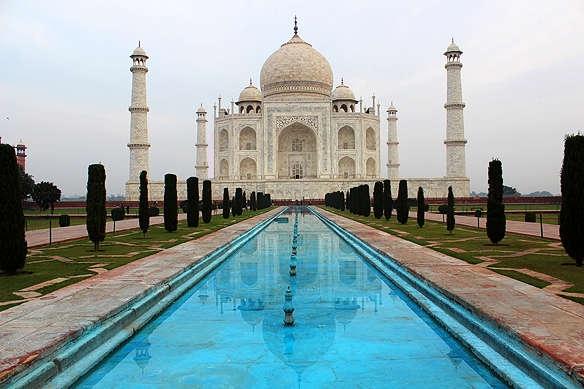
In this post I am uploading a series of pictures of the Taj Mahal, easily Agra’s biggest attraction, taken from 7 am to 12 noon [yes, I was there for five hours 🙂 ], and some basic context one needs to know. I hope it inspires you to let your soul and feet revel in the 350-year-old monument, like mine did. They will both thank you, profusely. Continue reading

top 15 memorable things to do in jerusalem, capital of the holy land

If I forget you, O Jerusalem, let my right hand forget its skill!
Let my tongue stick to the roof of my mouth,
If I do not remember you,
If I do not set Jerusalem above my highest joy!
~ Psalm 137:5-6

For those who have made Jerusalem their home and those who find their way to it, across the seven seas, this verse sums up perfectly what the city in the Judaean Hills means to them.

One of the oldest cities in the world, Jerusalem is a holy city for all three monotheistic Abrahamic religions. Over the millennia, these three religions—Judaism, Christianity, and Islam—have all laid claim to the city as theirs. So have civilizations, empires, and kingdoms. It has been razed to the ground at least twice, laid siege to 23 times, captured 44 times, and attacked 52 times. Yet, through it all, it has survived. And always, been madly loved.

The current walls which surround the Old City date back to 1538 AD and were built by the Sultan of the Ottoman Empire, Suleiman the Magnificent. Inside its walls, the city is divided into four quarters: the Armenian, Christian, Jewish, and Muslim Quarters, and that’s the way it has traditionally been. A UNESCO World Heritage Site, Jerusalem is also on the List of World Heritage in Danger. Both Israel and Palestine consider it to be their capital.

Complicated? There’s more. Three Jerusalems comprise Modern-day Jerusalem. The Old City. West Jerusalem [the new city]. And East Jerusalem [the annexed city]. Pilgrim or traveller, the fact is, Jerusalem with its eclectic mix of heritage and sights, needs to be visited at least once in one’s lifetime.

There are countless unique experiences only to be had in Jerusalem because of its volatile history and spiritual role in the scheme of things. This is by no means an exhaustive, exclusive list. But these are my top 15 memorable things to do list! 🙂 Continue reading