Unknown's avatar

About Rama Arya

I travel for the love of travelling. I blog for the love of blogging. About Me: ramaarya.com My Personal [Travel and Art] Blog: ramaarya.blog My Work: thecommunique.co.in

8 hours in eclectic ajmer, rajasthan’s centre for sufism

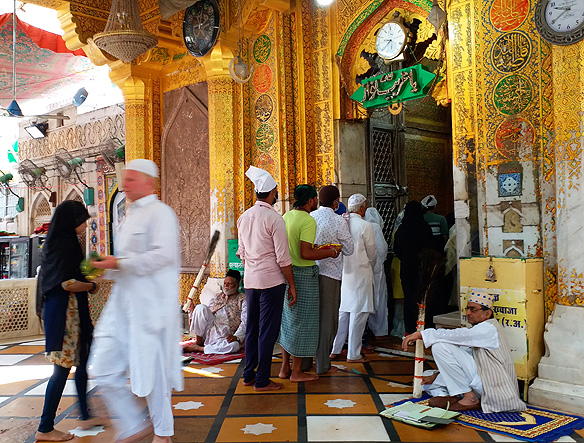
Rose essence from Hinduism’s holy city of Pushkar fills the air of Sufi Islam’s sacred dargah in Ajmer. The courtyard reverberates with qawwalis in praise of the 13th Century saint from Iran, as the faithful shuffle past his grave in deep reverence, heads bowed, eyes lowered, a prayer or two on their lips.

It is 9ish in the morning and I am at the Khwaja Moinuddin Chishti Dargah deep in the heart of Ajmer’s Muslim quarter. As far back as I can remember, I had wanted to visit the tomb-shrine. Now actually standing here, it feels unreal. Surreal.

– – –

Just 15 kilometres from Pushkar, separated by Nag Pahar an ancient hill in the Aravalli range, is Ajmer—Pushkar’s antithesis. Continue reading
pushkar: where the gods and seekers meet

Pushkar.

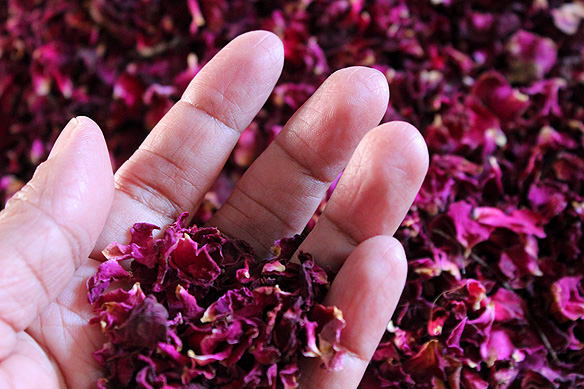
No Hindu pilgrimage is believed to be complete without a stop at Pushkar, Rajasthan’s rose garden. A polestar for the seeker within since ancient times, it is apt that the little town’s rose essences have been exported far and wide through the centuries.

Not that Pushkar’s spirituality washes over one like a massive tumultuous wave, creating an instant transformation. Nope. Nothing like that at all. It is instead subtle and gentle, with a consistent, tangible peace hanging around the 52 ghats and 500 or so temples which line its very soul—Pushkar Sarovar, Sarovar meaning ‘Lake’.

Yet, this devout peaceful haven, a mere two-and-a-half-hour drive from Jaipur, is inexorably tied to an eclectic mix of myths and traditions which range from a first wife’s wrath to being the seat of the Hindu god of creation. Continue reading

15 memorable experiences only to be had in the world heritage city of jaipur

18 November, 1727.

Maharaja Sawai Jai Singh II, the Kachhwaha Rajput ruler at the helm of the Amer Kingdom for the past 28 years, knew he had to make a crucial decision.

Amer Fort, his administrative seat and residence, was becoming too small to meet the needs of his growing kingdom. Water was scarce, and because of it, other resources were being affected.

He needed a new city. A city that reflected his ideas, values, and plans for his kingdom. Continue reading

photo essay: amer, the unesco-listed fort and beyond

“This heaven like place was completed in the Hijri year 1008 [1599 AD], being built in a period of 25 years, having been most meticulously designed and expertly decorated. Just as the heavens should always be laden with rain, so also this stately building, the foundation of the Maharaj’s longevity and wealth, be preserved from any kind of damage.”
~ Excerpt from the English translation of a Persian plaque inside the Zenana, Amer Fort.

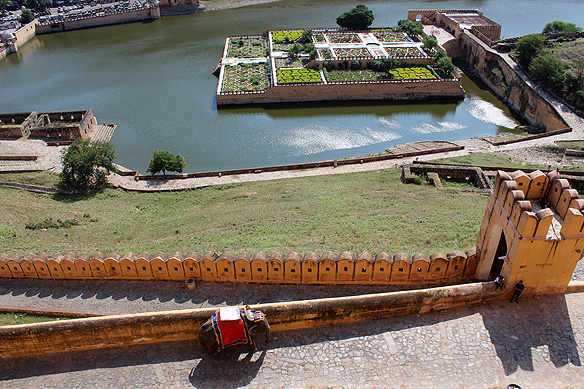
Part of the six ‘Hill Forts of Rajasthan’ UNESCO World Heritage Site, Amer Fort rises high above the placid waters of Maota Lake. Its magnificent Rajput-Mughal edifices reminiscent of the power of the Kachhwaha Rajputs and their strategic ties with the Mughal empire. For 128 years, Mirza Raja Man Singh I’s labour of love served as the administrative base and royal residence of the Amber kingdom. That is, until 1727 when Maharaja Sawai Jai Singh II decided to move the capital to Jaipur some 15 kilometres away.

Most travellers simply visit the fort, gush in wonder, and leave. But there is more to Amer than just this glorious marvel. Much more, beyond the fort. Continue reading

royal splendour in jaipur’s city palace

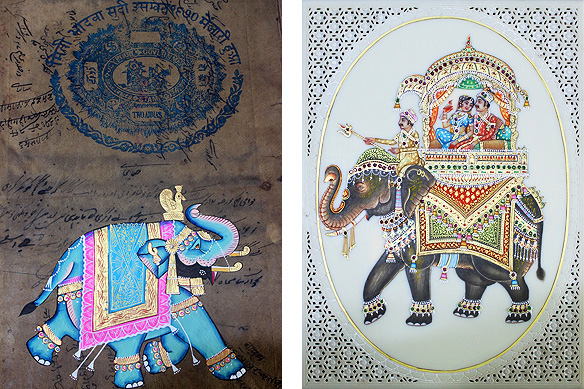
“When you have good luck [pointing towards the elephant in a painting], you find love. When you get love, you feel powerful. When powerful, you are happy. When happy, you are brave. And when brave, you are kind.”

With a broad smile and a tiny squirrel-hair brush held gently in his fingers, he pointed towards one of his favourite works, even as, with a mere few strokes, he also put together a miniature-styled portrait for me replete with a nose ring and odhni.

Hemant is one of the four award-winning Ramdev brothers patronised by Jaipur’s royal family; their studio perched on the fourth floor of Chandra Mahal which houses the royal residential apartments. His ancestors, Jaipur City Palace’s court painters, had spent their entire lives decorating the walls and ceilings of this royal abode and crafting flawless miniature landscapes and portraits since the city’s inception in 1727.

If you’ve been to Jaipur, the City Palace would, without a doubt, have been on your to-do, not-to-miss list. Did you notice the cream coloured, 7-storeyed building topped with a one-and-a-quarter flag which seemed to always loom in the background? Not many take the trouble of exploring this edifice. Yet it contains the palace’s most exquisite, most resplendent rooms. Continue reading

the epic solo rajasthan road trip: because travel heals pain

This slideshow requires JavaScript.

[Updated on 30 November 2021]

My mother passed away on 19 July this year from old age. She was 84. It is now almost four months since she’s been gone, yet the pain is still raw. She went too fast. I knew she was going to go to the other side one day. One day. Just that one day was some distant occurrence which I naively believed was not going to happen in my lifetime. We all believe our parents will live forever.

If you are a follower of my blog, you would have noticed the change in the title. I have added ‘Toshi’ in it. Toshi was my mother’s maiden pet name. By adding it to my blog it keeps her alive for me.

We were chalk and cheese. Fought and hugged. She was the most loving human being I had ever come across. And through all of life’s trials and tribulations, she was my constant best friend.

More than anyone else, she also knew my need to travel. To wander. To explore. She understood travel was my one source of inspiration, as well as escape. A source of pragmatic knowledge and elusive wisdom.

It is no surprise then that as I struggled, and still struggle, to cope with my loss, my sister, as if in serendipity, suggested I turn to travel. Continue reading

an urban monk’s guide to rishikesh and haridwar

Are you an urban monk? I am. Or at least that is how I perceive myself. Ok, that is how I like to perceive myself—not unlike many others who love the city life and its dynamic vibrancy but are equally at ease with spirituality, restraint, and minimalism. Is that not the new order? And when we go to places that are hubs of spirituality, well, we just tend to experience them a tad differently. 😀 Continue reading

photo essay: the hidden graffiti of rishikesh

What do “Across the Universe” by the Beatles, “TM Song” by Beach Boys, “Hurdy Gurdy Man” by Donovan, and “Jesus Children of America” by Stevie Wonder have in common?

Okay. Let me rephrase it. What do Transcendental Meditation, an Ashram on the foothills of the Himalayas, the top pop bands of the 1960s, and Canadian street artist ARTXPAN aka Pan have in common?

Gotcha! 😀

The most fascinating permutations and combinations are often revealed in the most hidden places. Like the street art decorating the ruins of Maharishi Mahesh Yogi’s Ashram in Rishikesh where the Beatles spent the winter of 1968 in search of spirituality and came up with a whopping 48 songs, a bulk of which went into their “White Album.” Continue reading

india travel shot: hari ki dwar – doorway to god – haridwar

Image

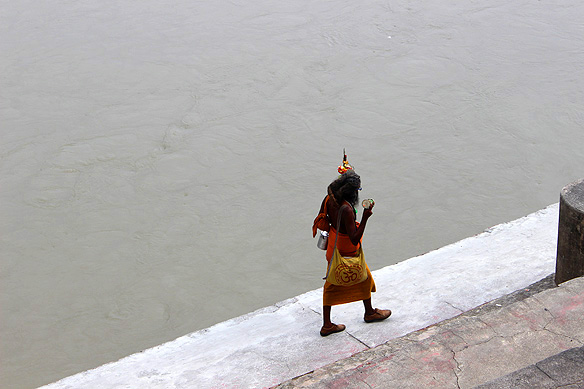
How and why does one small patch of river and land spanning a mere few hundred metres become the holiest site in all of the country? The answer—faith. What else can explain the millions of Hindus from across the country who make the coveted pilgrimage to the brown placid waters of the River Ganges washing 2,100-year-old steps in a pilgrimage town nestled in the plains of Uttarakhand. Day and night. Hail or rain. Year after year. For thousands of years. Continue reading

8 reasons why golconda fort tops the hyderabad bucket list

Back from Hyderabad, the first thing I am invariably asked is:

“So you saw the Golconda Fort?”

It is almost a precondition to determine the authenticity of one’s journey to the city.

[Note: The other qualifiers are Charminar and Hyderabadi Biryani.]

After spending an entire day at the site, as well as part of the night, I figured it boiled down to 8 things which make the fort the magnum opus of Hyderabad. If you have a 9th, 10th, or 11th, please do share! 🙂

But first, some dates to put things in context:

1143 AD—Golconda Fort is first built as a mud fortification by the Kakatiya kings of Warangal.
1364 AD—The fort passes into the hands of the Bahmani Sultanate as part of a treaty.
1518 AD—Sultan Quli Qutb ul Mulk, founder of the Qutb Shahi dynasty makes the fort his capital. He and his descendants build the present stone structure.
1687 AD—Mughal emperor Aurangzeb annexes the kingdom [and fort] to his empire.
1724 AD—Asaf Jah, the first Nizam moves his capital to Hyderabad. The fort is left to the ravages of time. Continue reading