Unknown's avatar

About Rama Arya

I travel for the love of travelling. I blog for the love of blogging. About Me: ramaarya.com My Personal [Travel and Art] Blog: ramaarya.blog My Work: thecommunique.co.in

india travel shot: breakfast in agra be like this

Image

I just had to do a separate post for the above picture. This was one of the highlights of my recent Agra trip.

Clear blue skies. The Taj Mahal a stone’s throw away [100 metres]. A full breakfast spread at Rs. 200. Can travel get any better?

There are lots of viewing points for the majestic Taj Mahal in Agra, with the most common and popular being the view from Mehtab Bagh across the Yamuna river. But the one that takes the cake, or should I say breakfast in this case, is that from the rooftop restaurant of Hotel Saniya Palace. I’d read about Saniya on the net. The reviews which rave about the view, I assure you, are spot on! Tucking into a cheese omelette was never more delectable in my life. Thought I’d share the place with you. 🙂

How to get there: Exit the Taj Mahal complex from the south gate. Walk straight. Turn left at the T-point, and again left into a small, narrow lane. The hotel is seedy. But the restaurant on its rooftop … an absolute gem.

travel diaries: the padlocked past of sidhpur

Travel reveals the most fascinating places. Surreal. Otherworldly. And more often than not, unexpected. Don’t you agree?

My most recent experience that fell into this category was a candy-coloured, turn-of-the-19th Century, European-styled neighbourhood in the nondescript, dusty town of Sidhpur in Northern Gujarat. It was almost bizarre in its very existence. What added to the drama of this completely out-of-place ensemble was that it was abandoned and padlocked, and has been so for years, save a handful or so of its houses.

Much written about in recent times by various bloggers and writers, with even an entire photo exhibition on it by the celebrated Sebastian Cortés in Mumbai in 2015, the place still took me by surprise. I was like, “Is this real?” Even to the extent of touching a few walls, and checking the efficacy of a few locks. I must confess I could not decide what was more hypnotic. The opulent, antiquated mansions. Or the outback, deserted, dusty mantle. Continue reading

a 1,000-year-old royal couple’s expression of love and piety: modhera and patan

Do you like stories? I do. A lot. 🙂

Especially stories of those who live larger-than-life lives in spirit and feat.

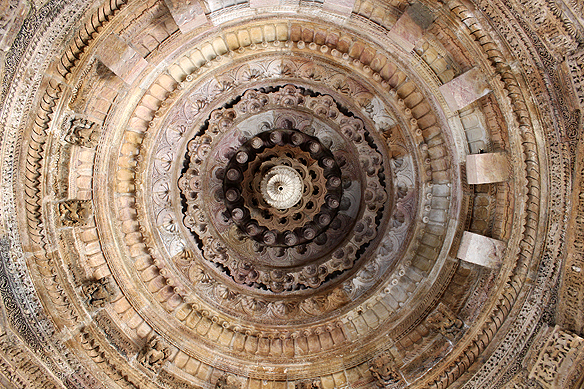
This post is the tale of one such story—of a king called Bhimadeva I and his lovely, loving queen Udayamati, who lived a thousand years ago. And no, it is no myth. There are colossal monuments they left behind as testimony of their love and piety, as I discovered one sunny wintry day I travelled 75 kilometres north-west of Ahmedabad in Western India, in the state of Gujarat.

Come, let me tell you more.

Son of Agni, the fire-god’s, Sun Temple of Modhera

Continue reading

global travel shot: an ethiopian soldier’s gift to ahmedabad

Image

Yin and yang. Negative and positive. Feminine and masculine. Dark and light. Two sides which together make a whole.

Sidi Saeed, an Ethiopian who found his way to the Gujarat Sultanate’s army via Yemen, way back in 1572, seemed to have some inkling of this. Armed with 45 sculptors, “the nobleman who helped the poor and had a large collection of books,” created a series of jalis or stone screens as part of the Sidi Saeed Mosque in the heart of Ahmedabad. The most exquisite was the “tree of life” with its swirling, leaf-lined, abloom branches, topped with a palm motif; its beauty heightened when seen from both the outside and inside. It was hard put to decide which side was a lovelier sight. Continue reading

a self-guided walk through lucknow’s historical precinct

Can one really argue the pleasures of sitting inside a monument, suspended in time, or a leisurely conversation with a local through whom the past lives on? Isn’t that how travel to places steeped in history should be like?

I am prone to believe there is only one unalloyed way to explore heritage precincts—on foot, on your own, and at your own pace. With no stringent “you have 15 minutes here” or the need to absorb a site amidst a non-stop rattle of facts and stories, some true, some crafted just to enchant you.

Last month, I also discovered no city deserves one’s space and slowed down pace more than Lucknow, where nothing much has changed inside its old city walls over the past 250 years. The mosques and imambaras are still functioning. Travellers from far and wide still gaze at its colossal monuments in wonder. Continue reading

lucknow, revolutions of 2 kinds: residency 1857 and ambedkar memorial 2008

“Our lives begin to end the day we become silent about things that matter.” ~ Martin Luther King Jr.

Revolution
rɛvəˈluːʃ(ə)n/ (noun)
1. a forcible overthrow of a government or social order, in favour of a new system.
2. a dramatic and wide-reaching change in conditions, attitudes, or operation.

Martin Luther King Jr’s above quote is one of my favourites. But not all revolutions are violent massacres aimed at toppling a system by a populace who have reached their limits. At times they are opulent statements made to put a point across. The purpose remains the same. Change. I saw both in Lucknow, in the course of one day. One from way back in 1857, and another from 2008. The disparity was striking. The commonality inspiring. Scroll through, and you will see what I mean. 🙂

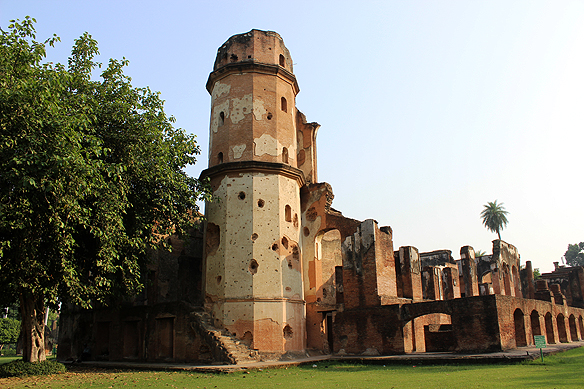
The Residency, 1857

Continue reading

24 hours in incredible allahabad

Amitabh Bachchan’s hometown. If one is Indian, it is the first thing that in most probability comes to mind when one hears of Allahabad. This is by virtue of the superstar’s constant vocal affirmation, flaunted with much pride, of its role in his life. It is where he was born and spent his childhood and youth, before becoming the country’s biggest and brightest star, still shining at 75.

To those spiritually inclined, Allahabad is evocative of all that is sacred in Hinduism. The meeting point of Ganga, Yamuna, and the mythical Saraswati, the city is built on the site of the ancient Aryan town of Prayag—the place for offerings. And perhaps, thus, by pure logic, it is also the site, since time immemorial, of the largest Hindu gathering held every 12 years on the banks of Sangam, or the confluence, in the form of the Maha Kumbh.

Rarely on most travellers’ circuit, Allahabad often gets side-lined in favour of its more popular neighbours on either side—Lucknow and Varanasi. But, like everything else in India, it too oozes of history, heritage, and stories galore, as I was quick to discover. Continue reading

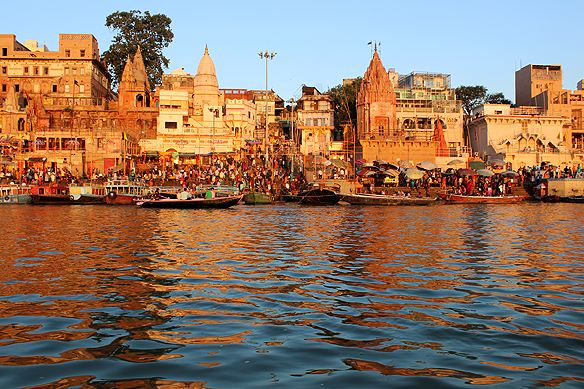
photo essay: varanasi, stories told and untold

No, I did not fall in love with Varanasi at first sight as I had been led to believe would happen by the countless travel glossies and blogs I’d read which eulogised its charms. In fact, I hated it at first sight.

It was crowded, dirty, and noisy. Touts pulled me in desperate attempts in all directions to try and sell me boat rides and Banarasi sarees. Rickshaw drivers were ready to rip me off for a 10-minute canter. The sweetmeat shops had “unsanitary” written all over them in CAPS.

I was booked for three days in Varanasi—the land between the Varuna and Assi tributaries which join the River Ganga, or Ganges in English nomenclature, to form the north and south borders of the city. Its name was corrupted to Benaras during the British Raj.

My heart dreaded the stay as soon as I entered the precincts, pleading: “Let’s just cut the trip short and go back to the serenity and comfort of home.” A small voice in me whispered: “No. Varanasi does not happen every day. Live through it.” Continue reading

global travel shot: alamgir aurangzeb’s mosque in varanasi

Image

Varanasi. The very name rings of sacred Hindu scriptures, stories of Lord Shiva and Ganga, and Hindu beliefs on life and afterlife. The oldest living city in the world, it is the accepted embodiment of Hinduism.

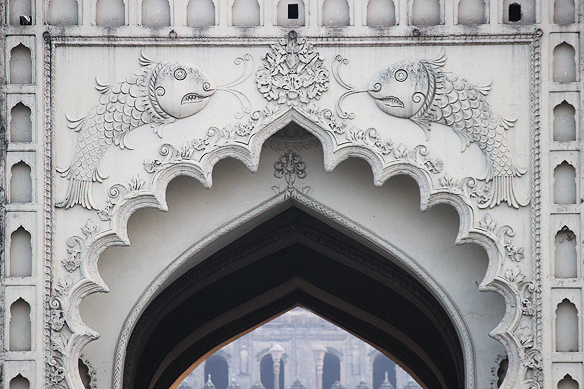
Yet, perched atop Panchganga Ghat by the holy River Ganges, where five streams are said to join, is a lovely functioning mosque—Alamgir Mosque. It is also the largest structure on the ghats. Standing over the ruins of a Krishna temple [the lower walls of the mosque belong to the original Hindu temple], the Hindu deities lie in a nearby edifice. Continue reading

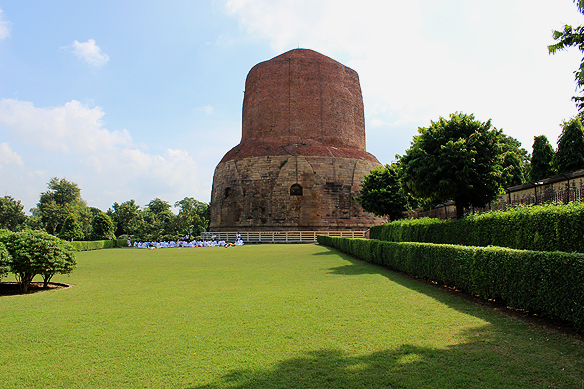
in search of buddha’s sarnath: the traveller’s guide

Oftentimes what we are consciously searching for is not what we are subconsciously looking for. Sounds confusing? 🙂

A few weeks ago, I took a train and bus trip from Delhi in search of Varanasi [Benaras], the Kashi of yore. I found Sarnath in Kashi’s place instead. Perhaps this occurred because there is more of the Buddhist in me than the Hindu. Whatever be the case, Sarnath touched a place deep within my core.

May I state from the outset you do not need a guided tour for Sarnath, and that is not what this post aims at being. Sarnath needs to be experienced and understood at a personal level, in one’s own space and rhythm. What I want to share here are my personal travel learnings to help you make the most of your Sarnath experience, and perhaps allow Sarnath to speak to the Buddhist in you too. ❤ Continue reading