art focus – rockscapes and mindscapes – vinod sharma

vinod_sharma4

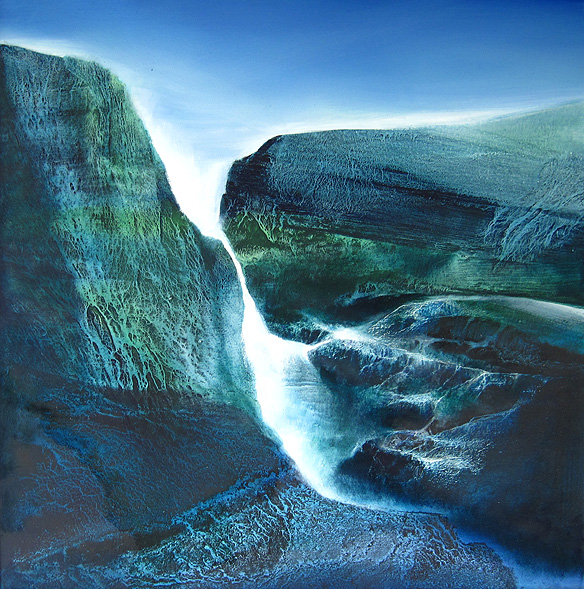
“No, there is no story to my art. My work is not even titled.”

“But you call it rockscapes, and I have heard you at times refer to them as mindscapes?”

Vinod Sharma laughs out aloud, and with a twinkle in his eye explains how his professor at Delhi College of Art coined the terms, albeit in passing.

“I just paint for the sheer joy of it. There is no other reason behind my delineations. There are no moral lessons. No deep revelations from my side. It is only personal joy.”

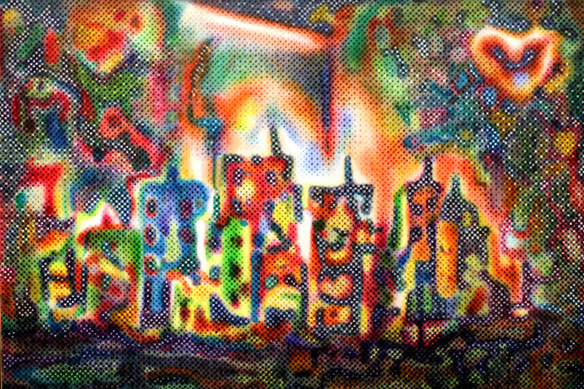
Sharma, originally from Delhi, has been painting his monumental monochromatic canvases—sophisticated in execution and mystical in content—for over two decades now. What started off as landscapes framed by windows later gave way to sceneries swathed in trees and people, and finally morphed into the present skeletal forms of the earth’s surface where Sharma got rid of all trappings and borders, for keeps. Continue reading
art focus – a summer mix – chemould prescott road

summermix_jitishkallat1

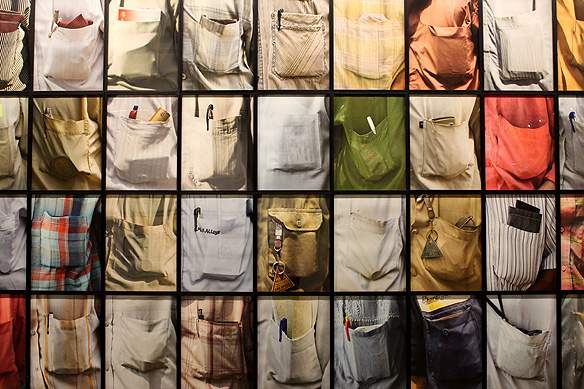
There is the office ID card, the fancy pen, loose change, cell phone, a hand written note. Closer inspection brings to the fore yet further details: the worn Tee, crisp office linen shirt, the crumpled uniform, and slowly the faceless personalities defined by their shirt pockets fill the gallery, and I am in their midst.

Every now and then a spray of raindrops showers the city outside, taking no one by surprise. I am at A Summer Mix, Chemould Prescott Road, an exhibition of 15 gallery artists’ personal commentaries, on a grey monsoon clad day. Continue reading

art focus – journey to the roots – jamini roy 1887-1972

jamini_roy_gopini

“I do not care whether my paintings are good or bad. I want its appearance to be different.”
~ Jamini Roy

And different it is. Not different for the sake of being different, but different as in an expression of his authentic self. Jamini Roy (1887-1972), popularly conferred with the title of father of Modern Indian Art was from Beliatore village in Bankura, West Bengal. His art is his revisits to the simplicity and purity of his rural roots. He is not an outsider here ‘looking into’ rural India. He is the insider, painting his own familiar, much-loved world. Continue reading

nala sopara: mumbai’s ancient buddhist stupa and mythical temples

The historical and artistic magnificence of India never fails to amaze me. Take a step in any direction and one is flooded with the country’s inordinate rich past and culture. Which does not always work in its favour for it lends to the Indian populace a nonchalance towards their own heritage.

Medieval sculptures which audiences lust over in international museums lie covered with petals and incense soot in temple nooks here. Millennia old crumbling edifices stand forgotten, holding on to time in desperation in an attempt to evade being razed down. And because they are in the multitude, one more or one less, sadly become irrelevant.

No part of this country is immune to its own cultural excess. Not even an uber metro like Mumbai. In fact even less so, for I have discovered and experienced sights here across centuries and religions, coexisting in uncanny innate ease. Continue reading

mumbai’s csmvs sculpture gallery: where stones speak of art and god

CSMVS_sculpturegallery1

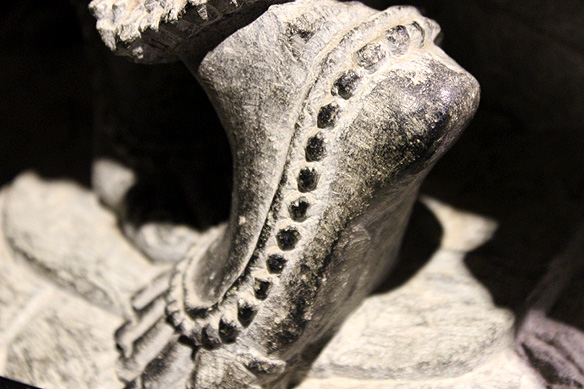
Inspired by Mumbai’s rock-cut cave temples, I set out this afternoon to explore the sculpture gallery at Chhatrapati Shivaji Maharaj Vastu Sangrahalaya. Yup, it’s a mouthful. 🙂 Formerly known as the Prince of Wales Museum of Western India, it is one of the finest museums in the country. The quiet, tasteful sculpture gallery—a crash course in Indian history, religion, and art all rolled into one—is its highlight. Continue reading

mumbai’s ancient rock-cut cave temples

“Let’s explore the rock-cut cave temples of Mumbai this Sunday,” a friend suggests excitedly.

“Caves? I have been to Elephanta and Kanheri. Even written about them! Read my post. 🙂 ”

“Hey, there are more, a lot more in the city itself.”

More? I am confused. Where can there possibly be caves in Mumbai. The city is packed with concrete and people, with little space to walk, least of all millennia old caves to have survived. I am wrong.

Hidden within the crevices of Mumbai’s urban jungle is a pulsating vein of its ancient past. A series of rock-cut temples, connected to each other with tunnels and hidden passageways, lace the city’s basalt bed rock. Continue reading

art focus – masquerade and other apologues – anant joshi

anant_joshi1

It is as if a rainbow had burst and spread its colour, both over vast mounted canvases and minute egg tempered paper boards, alike. I stand in the grey walled halls of Chemould Prescott Road and blink. And then gawk.

As I step closer, yet another world unfurls—a satire rooted in broadsheet cartoons morphed into the artist’s personal commentary on recent social and political events and personalities in India. I recognize Arvind Kejriwal, Manmohan Singh and Narendra Modi. I see athletes and war zones, Jesus Christ and Hindu priests. Continue reading

art focus – street art and dharavi

st+art_dharavi1

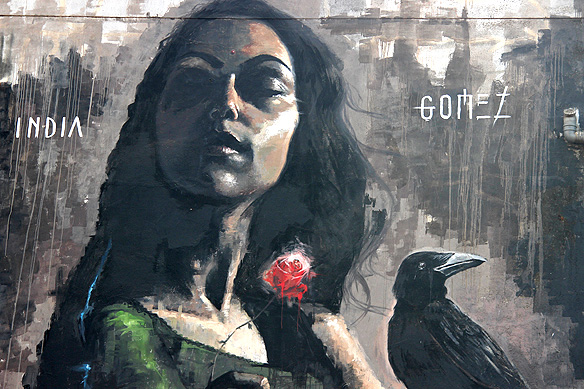
“Bhaiya, Dharavi chaloge?” (Will you go to Dharavi?)

After being turned down twice, a rickshaw finally agrees to take me on the condition, “I will drop you off at the main road. I won’t get a return passenger from there… You will have to walk to 60 Feet Road by yourself.”

Dharavi is not the usual jaunt or destination for a Mumbaikar, least of all a Hindi speaking woman on her own who quite clearly does not have a clue about the ground realities of the place itself! All I know is some statistics, historical details and that the main road is the 90 Feet Road, and perpendicular to it is the 60 Feet Road which I want to explore for its street art. But more on the art later in the post. 🙂 Continue reading

art focus – deconstructed innings: a tribute to sachin tendulkar – tenart

tenart1

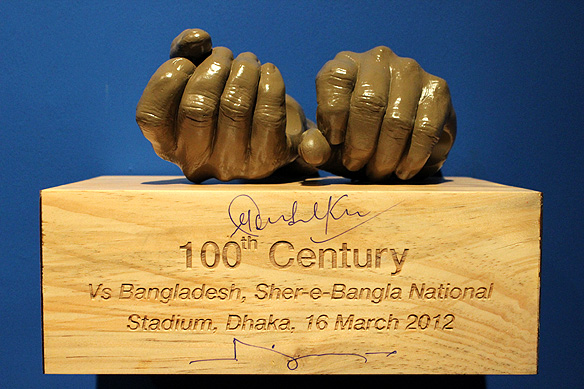
Indian contemporary art has come a long way in the last two decades, distinctive in its blend of Indian subjectivity and international sensibilities. A landmark in this journey for the modern art enthusiast, and the sports fan in this case, is its current foray into the space of cross-disciplinary creativity.

I had walked into the National Gallery of Modern Art, Mumbai not knowing what to expect that day. Art and sport? I was the predictable, pseudo, purist audience steeped in self-indicted cynicism. I left the gallery a couple of hours later, overwhelmed and humbled with emotion, pride, and an insight into the complexities woven around a sporting legend and its artistic elucidations.

Ten of India’s finest modern art protagonists had come together for the first time, through ‘Deconstructed Innings,’ with the singular purpose of artistically interpreting the innings of one of the country’s greatest sporting heroes, collaborating with the icon himself. The result was an exhibition that was aesthetically beautiful and exhilarating in experience. Continue reading

the 18th century kamangari wall paintings of kutch

kamangari1

With this post I digress to another side of Kutch—the ornamental wall paintings which decorate the walls of homes, temples and work places in the vast salt pans’ midst. An art form sadly extinct, and least known of Kutch art and crafts.

Dating back to the 18th Century, the Kamangari School of Painting, painted on scrolls and walls, and unique to Kutch, is now a vanished tradition—its remnants found in a couple of Bhuj’s museums, a few random surviving homes, and a portico in the decaying monastery of the Kanphata yogis that I visited in Than. Continue reading