a self-guided walk through shimla, the british raj’s summer capital

1864. The British Crown was now directly in control of the Indian subcontinent. Five years had passed since they had squashed the Indian Mutiny. It had been a tough fight lasting nearly two years and two months, but they’d won in the end.

Summers in their new capital, Calcutta, were, however, brutal. Oh, how they longed for the grey overcast days back home, bathed in gentle drizzle.

Since the 1820s, the earlier British East India Company officers stationed in India had been escaping from the sun-baked plains to a hamlet in the middle hills of the Himalayas during such summers. The hamlet, comprising some 50 houses, was called Shayamala after a local Hindu goddess.

India’s new rulers decided to make this association more permanent. They renamed the hamlet ‘Shimla,’ and set up the British Raj’s ‘Summer Capital’ on its seven hills.

Every year, just before the sweltering heat clamped down on the Gangetic plains, the entire administrative machinery would move here, replete with traders, restaurateurs, and socialites. Once the heat cooled down, and snow started to peck its slopes, they would all move back again south-eastwards.

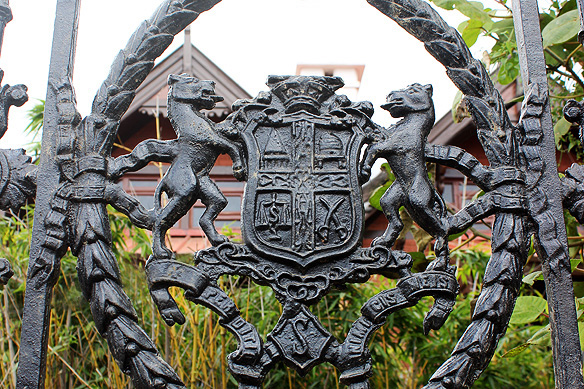
A mini-Britain was created in Shimla’s hills. Timber-strapped Tudor houses, soaring neo-Gothic churches, grand town halls, and a theatre for concerts and plays. On the Ridge, which offered rather splendid views, a bandstand was thrown in where military bands could play music and the gentry could indulge in leisurely strolls. Not too shabby now, perhaps they whispered to each other in relief.

Though it is now 77 years since the British have left, their summer capital’s remnants still dot Shimla, and more so on its main commercial pedestrian artery—Mall Road.

Here is a self-guided walk on what to watch out for should you ever be in the vicinity, with suggestions for eating and staying dating back to the colonial days. Take your time and savour its charms. After all, Shimla was always for the long haul. ❤

PS. Take the lift up to Mall Road, and on exiting the lift turn left towards Christ Church.

Continue reading

kullu manali and their 11 loadstones

Loadstone: Noun. A person or thing that is the focus of attention or attraction. In aplenty. In other words—Kullu and Manali.

– – –

Two of India’s most popular hill stations’ names are often taken in the same breath. Even though they are separated by some 40-odd kilometres.

Welcome to Kullu Manali. Two towns located on the verdant Kullu valley in India’s Himachal Pradesh with the ice-blue Beas river gurgling past them.

Free of a colonial overprint, or the culture and faith of an invading ruler, these two towns have in the past, as well as today, continue to epitomize Himachal history, traditions, and heritage. In all its unadulterated richness.

Gods are in abundance here, and so are centuries-old beliefs. The lines between mythology and mundane reality are blurred with characters from the epics Mahabharata and Ramayana popping up everywhere. Ancient sages, mythical heroes, demons, and the proverbial Noah [in Hinduism’s case Manu] who set forth from his ark to kick-start the lineage of mankind. They are all somehow associated with the Kullu valley which has earned itself the moniker ‘Valley of Gods.’

There’s also tall graceful fir trees, rivers fed by melting glaciers punctuated with hot water springs, and wooden homes which have housed many a generation of pahari [mountain] folks inside their weathered walls.

You will need at least a few days to get acquainted with Kullu and Manali’s sites. Hotels and taxis are easily available. Let me not go into them here. Rather let this post be a roadmap of what makes these two towns attract pilgrims and tourists in their droves, always. ❤ Continue reading

part 3: the spiti trilogy: lahaul, the mystical side of life and himachal

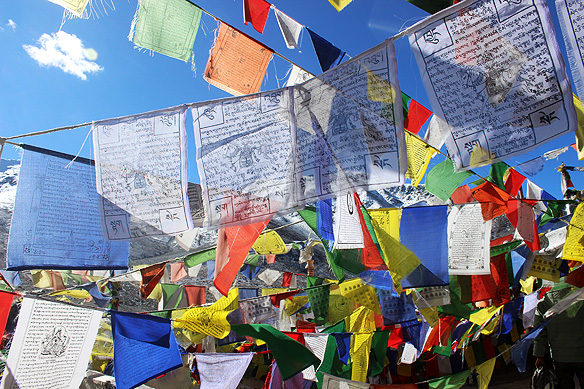
Prayer flags at Kunzum Pass. Because the gods live in the mountains.

Prayer flags at Kunzum Pass. Because the gods live in the mountains.

Welcome to part 3 of my photo diary trilogy on Kinnaur, Spiti, and Lahaul, high up in the Himalayas in India’s Himachal Pradesh.

If Kinnaur is all about the lush flourishing side of living, and Spiti the very opposite—about its barrenness, then Lahaul is the natural outcome of going through both sides of life. It is of tuning in with one’s inner self. I guess you could simply also describe it as meeting one’s Maker.

Here in Lahaul, Buddhist chants echo from monasteries perched atop peaks. Lakes contain deities and so do mountain passes. There is the sacred everywhere, and it is celebrated with much joy.

I would like to share my journey through Lahaul valley with you here. Maybe its magic captures your heart and soul too. 🙂

Continue reading

part 2: the spiti trilogy: spiti, the barren side of life and himachal

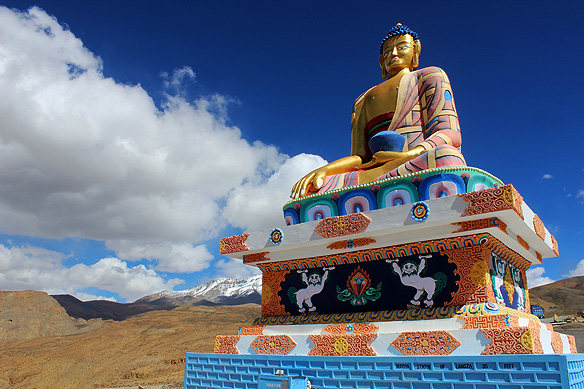
Buddha statue in Langza Village. Because the gods live in the mountains.

Buddha statue in Langza Village. Because the gods live in the mountains.

Welcome to part 2 of my photo diary trilogy on Kinnaur, Spiti, and Lahaul.

This week’s post is about Spiti, a cold desert biosphere in the rain shadow area of the Himalayas bordering Tibet. India’s monsoons do not reach here. Even if they do manage to squeeze their way past the soaring peaks, all they are able to muster is a drizzle. The summers are always dry. The winters are covered in thick snow and ice.

None of which is conducive to agriculture except if carried out on the banks of the Spiti river. The land is otherwise brown and barren, its moonscapes strewn with sand and boulders. Nestled in this arid bleakness are countless ancient monasteries, bedecked and bejewelled with Tibetan Tantric Buddhist iconography. These pockets of sanctity serve as places of refuge, giving strength and meaning beyond a difficult life.

Come along with me to Spiti.

Continue reading

part 1: the spiti trilogy: kinnaur, the verdant side of life and himachal

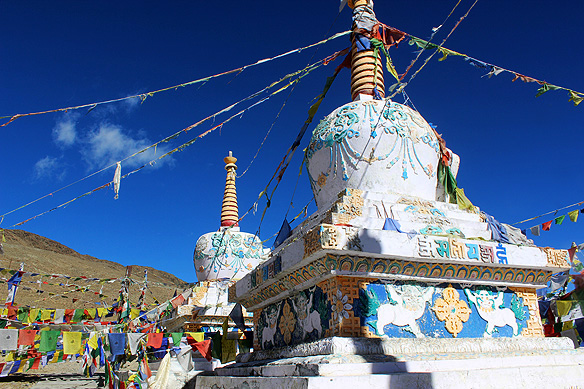
Sangla valley—Sangla means 'Pass of Light' in Tibetan language. Because the gods live in the mountains.

Sangla valley—Sangla means ‘Pass of Light’ in Tibetan language. Because the gods live in the mountains.

I have always seen myself as an ocean person. I love the rhythm of crashing waves, the smell of salt in the sea air, the white foam breaking into froth around my feet, and tugging me along as it leaves.

And then I went to the Lahaul and Spiti valleys and everything changed inside of me. I became a mountain soul. Those who have been there will understand what I mean.

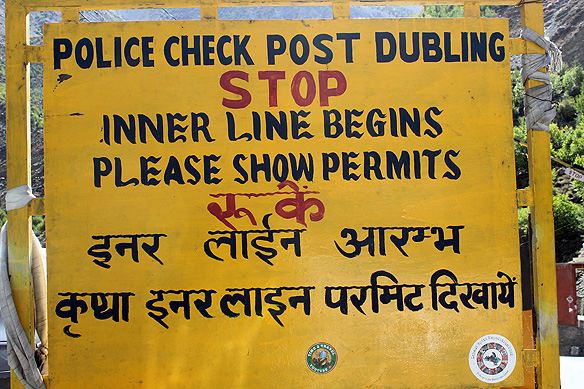
The Lahaul and Spiti district in India’s northern state of Himachal Pradesh is one of the most beautiful places I have travelled to. Remote and untouched, its offroad route is accessed through neighbouring Kinnaur district if coming in from the Shimla side. When exiting, it continues to Manali to form a loop. Kinnaur and Lahaul are both verdant and green. Sandwiched between them, Spiti, in stark contrast, is a high mountain barren desert perched on the soaring Himalayan range, wild and windswept.

Starting with today, I will be posting a photo diary trilogy of Kinnaur, Spiti, and Lahaul over the coming three weeks. Care to join me and let your soul fall in love with the mountains too? ❤

Note: Lahaul and Spiti used to be two separate districts and were merged into one in 1960. For the purpose of this trilogy, they are treated separately because of their geographic distinctiveness.

Continue reading

the story of qutub minar

Prologue

Perhaps it would be more apt to title this post: Stories about Qutub Minar. As in plural.

Apart from being Delhi’s most iconic monument, it is steeped in multiple stories and a whole lot of firsts, making it unlike any other in the city. To top it, it is not the handiwork of any one ruler or dynasty, but is a collaborative effort spanning 800 years with even an East India Company officer adding his own bit to it—a Bengal-styled chhatri perched on top of the tower, which was thankfully brought down twenty years later.

So, here are Qutub Minar’s most famous stories. The spunk behind its stones. 😊 Continue reading

a heritage buff’s guide to the eight cities of delhi

Delhi, a city of 7 cities, 8 cities or 14 cities? It depends on which lens one is looking at the city from. But it surely is not one city!

India’s political centre has been around for a long time. 1,300 years as per historical records, in which it served as the capital city for different rulers over various periods.

Many set up their own capital, in their own name, for posterity’s sake in and around Delhi. For instance, Mubarak Shah, the second Sayyid dynasty ruler during the Delhi Sultanate period founded Mubarakabad in the 15th Century [included in the 14 cities list]; it is now a neighbourhood called Kotla Mubarakpur.

All together, 14 such cities were built over the centuries in this patch of strategically placed land in northern India with the fertile Gangetic plain to its east, the impenetrable Deccan plateau to the south, and the arid desert state of Rajasthan to the west. An area nourished by the river Yamuna and the monsoons.

Much smaller than present-day Delhi, these cities were often built a short distance away from an old one or incorporated earlier ones into its boundary walls, and at times even existed concurrently. Each of them has added a distinctive layer to Delhi, making Modern India’s capital quintessentially different from any other. Where else can you time travel across a millennium in an hour.

For this post, I am taking the ‘8 cities in a city’ theory. Seven historical cities in Delhi that still exist, and New Delhi, listed in chronological order.

It is a longish post. After all, we talking about 1,300 years and eight cities. 🙂 Hope you enjoy reading it as much as I enjoyed writing it.

Happy time travel! Continue reading

india travel shot: jantar mantar, a slice of jaipur in delhi

Image

Deep in the heart of New Delhi’s central business district, Connaught Place, is a remnant of the Princely State of Jaipur. Surprised?

Known earlier as Jaisinghpura Village, this patch of land formed part of Jaipur’s territories from the 16th Century right up to the year 1911. When Maharaja Sawai Jai Singh II built a monumental observatory to measure time in Delhi, on the invitation of the Mughal Emperor in 1724, he was technically building it on his own land.

He named his futuristic structures to measure the movement of the heavens Jantar Mantar, meaning instruments and formulae. So chaffed was he by his invention, he repeated it in his own capital, Jaipur, and three other cities in the following years.

Fast forward to 1911: Sir Edwin Lutyens decides this area is to be the site for the new Imperial capital, New Delhi. But it is already occupied. So, the British government buys it off from Jaipur, relocates all the villagers [to nearby Karol Bagh], and razes their homes to the ground. Except for the monuments and places of worship that stand on it.

Hence, surrounded by high-rises is a fenced area of green with a medieval observatory, along with Hindu [Hanuman Mandir and Bhairav Mandir], a couple of Jain temples, and a Sikh temple [Bangla Sahib Gurudwara], all dating back to Jai Singh’s reign.

These have become so much a part of Delhi’s heritage, the fact that they are actually remnants of the Princely State of Jaipur are all but forgotten. 🙂

– – –

Note: Yash Gupta, a conservation architect at Intach, leads a fabulous 2-part walk through Jaisinghpura based on his research of the area.

lodhi art district’s 16 most dazzling street art paintings

What happens when a sedate neighbourhood for government employees comes face-to-face with passionate street artists from across the world—Lodhi Art District happens. 😊

A leafy residential area dating back to Edwin Lutyens’ 1940s New Delhi, Lodhi Colony is characterised by wide streets and housing blocks encased in lofty colonial arches and vast facades. Unlike most of Delhi, it is relatively traffic-free—the perfect setting for an open-air art gallery, is what St+art India Foundation figured in 2015.

And so, over the years, street artists from across the world and India, were invited to transform its faded vanilla walls into riots of colour. At times the art was loaded with thought-provoking messaging, and at others about the simple truths of life. But always, magnificent in their aesthetic beauty.

There are some 60 street art works scattered over the neighbourhood, as of December 2022. You would need a whole day to see them all. Of these, 16 are drop-dead dazzling, and my absolute favourites!

I have included a link to a google map prepared by St+art at the end of this post to help you locate these paintings, along with a link to their official [free] audio guide available on HopOn India.

Here they are, the best of Lodhi Art District’s lot. Be prepared to be bowled over. ❤ Continue reading

delhi’s shahjahanabad unraveled: heritage, sacred places, markets, and food

No visit to Delhi would be deemed complete without a visit to Shahjahanabad, popularly referred to as ‘Old Delhi’ after the creation of Lutyens’ ‘New Delhi.’ But it is an overwhelming place. A sensory overload. After all, what do you expect from 400 years of continued habitation and history packed into 6.1 sq. kilometres.

This pocket of land has seen it all. The zenith of Mughal rule. India’s First War of Independence. The sure and steady takeover of Delhi by the British, culminating in India’s independence in 1947.

It has been razed to the ground and bathed in blood three times over the course of time. Yet, it has bounced back on its feet. Livelier. It has seen executions in the name of religion, and yet, coexistence continues to exist within its walls. Devoid of any ‘city planning,’ apart from the Fort area, Chandni Chowk, and Jama Masjid, it has grown organically over the centuries with bundles of overhead electric wires and unpaved paths put up, as and when needed, to meet infrastructure needs. Yet, there are heritage treasures in its midst which are some of the most stunning in the country.

This chaotic wonderland, which defies all rules, had its foundation stone laid on 19 April, 1639 by the Mughal Emperor Shah Jahan. For nine years, thereafter, construction took place under imperial orders, and in 1648 it was declared ready for use as the new Mughal capital. Continue reading