are you a wannabe, could be, or should be travel blogger?

ramaarya_travelessentials

Ever wonder how you fare as a travel blogger?

Recently I designed an online assessment tool on travel blogging for one of the organisations I partner with. It is a simple quiz. 11 questions. But it helps one figure out where one stands. Are you a wannabe, could be, or should be travel blogger?

Please click here to start the quiz.

And if you wish, do feel free to share your scores in this post’s comments section. 🙂

about me: in a bit more detail

ramaarya_wordpress_post

Compliments of the New Year! 🙂

It is already the 7th of January, and it seems just yesterday that I was contemplating the closure of yet another year and what all it had meant for me even as it paved the way for a sequel. There was a sense of déjà vu in the air.

Except for one thing—a chunk of my holidays was taken up in finalizing my personal site. Tweaking it and polishing it to ensure it was perfect, for me at least. You could call the site my fancy online business card, for a better word. But why a personal site, you may ask? Is a blog not enough? Continue reading

36 hours in kolkata

kolkata_36hours11

Let me first clarify that this is not a mandatory schedule, or a list of top not-to-miss attractions. It is instead how I spent my 36 hours in the city of joy—as a traveller, art enthusiast, and a volunteer, and ended up falling in love with it, despite the lousy weather, crowds, and advertised poverty.

It is an attempt to see the city with very personal eyes.

Kolkata aka Calcutta is not a world city. I would not even call it an Indian city. It is Bengali where the faces are round and everyone and all road signs converse in the native tongue, under a colonial mantle.

The mix, I would like to believe, is unique to it. On one side Kolkata is deeply indigenous when it comes to deities and festivals, and the arts and music. On the other, it nonchalantly wears its monumental British legacy with ease and a stiff upper lip. Somewhere in between, the city has become synonymous with charity.

36 hours is not really enough to absorb all that it holds in its folds. But it sufficed as an engaging enough introduction for me, and maybe does for you as well. 🙂 Continue reading

indian sculpture’s 1,500 year journey at the indian museum, kolkata

indian_museum

A nondescript placard on the wall reads: “Buddhist Stupa, 2nd Century BC, Bharhut, Madhya Pradesh.”

I turn around and almost knock into a magnificent red sandstone 9-feet high railing and 23-feet high gateway, teetering in awe at its grandeur and proximity. It is covered profusely with intricate imagery of secular life and Buddhist teachings in 2nd Century BC India. Short inscribed labels in Brahmi script record the names of donors.

The monumental piece is nothing short of breathtaking. Much like everything else in the archaeology gallery of India’s oldest and largest museum, the Indian Museum located just around the corner of Park Street, Kolkata, and built in 1878 by the then British Raj.

Arranged in chronological rather than thematic order, the gallery showcases 1,500 years of India’s sculpture art, from which emanate its various schools and inter-linkages, in a seamless story.

Piqued? Come join me on a virtual tour of this collection under whirring fans, encased in a hot humid corridor in a Doric columned colonial edifice. 🙂 Continue reading

uncut: road trip to kutch

uncut_kutch1

“Sometimes it’s not about the destination, but about the journey itself.” ~ Anonymous

This is my last and final post on my 5-day road trip to Kutch taken in December 2014; a road trip full of personal 1sts that I would be happy to turn into 2nds. Uncut, here are some images which did not make it to my eight blog posts on the region but summarize my journey just as eloquently. Continue reading

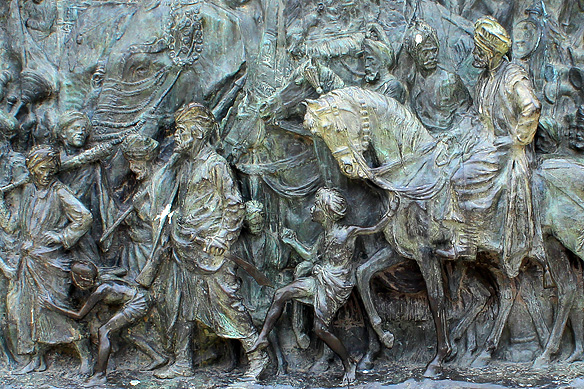
palaces of bhuj and mandvi

bhuj_palaces4

Think palaces and royalty in Kutch. Think Bhuj and Mandvi. They are (sorry, were) almost synonymous with each other till the 2001 Gujarat Earthquake which brought much of the region to dust. Yet a few structures still stand, recounting an era that whispers to the traveller.

Kutch was a princely state till India’s independence; the walled city of Bhuj dating back to 1510 the state’s commercial and administrative nerve centre. In 1548 Rao Shri Khengarji started work on the Darbargadh or palace complex. Over the next 300 years, subsequent rulers further added to it, reflecting prevailing cultural and artistic trends. Continue reading

than monastery of the slit ear yogis, and fossils of kutch

Deep in the rolling hills outlying the Great Rann of Kutch, some 65 odd kilometres from Bhuj, is a centuries old Hindu monastery, the Than monastery, steeped in medieval traditions and customs, its actual age disputable. There is not another soul for miles; the only sound heard being that of the peacocks singing in the surrounding forests. Within the monastery’s thick limestone whitewashed walls a sole yogi, with a handful of companions, keeps an exclusive tantric monastic order alive—the Kanphata (slit ears) sect founded by the sage Dhoramnath. Continue reading

koteshwar temple, kutch: an 1820 ode to shiva

koteshwar_temple2

I am not one for religious rituals for the simple reason that I am quite ignorant of most of them, whether it be what one is supposed to say and do in a temple, church, mosque, synagogue or gurdwara. But that has in no way diluted my love for religious places. 🙂 Yes, god is everywhere—Next to me, as well as you. But within certain sacred walls, in the culmination of art and the faith of followers, He (or to be a feminist She—God doesn’t really care; we are the ones with all the issues) is a bit more tangible. Almost visible in his invisibility. Continue reading

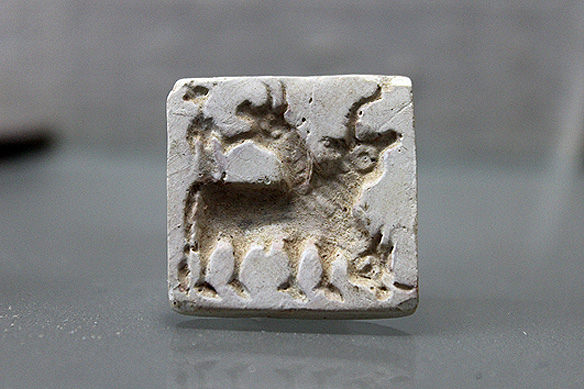
the 4,500 year old harappan site of dholavira, kutch

dholavira1

“At the height of our civilization, our technological development, our social and material complexity, all signs point to progress, we often think. And yet, all is not as it seems and once in a while it occurs to us to look into the past to discover our future.”

The above lines, read in the adjoining museum, accompany me as I walk into the majestic and isolated ruins of the 4,500 year old Harappan city of Dholavira. There is a hushed stillness all around. The only sounds I can hear are the birds chirping in some distance, and my guide’s quiet voice pointing to some detail or the other. The sun beats down on both me and the dusty stones strewn over the site, the latter telling me stories long forgotten and now valiantly being attempted to be reread and understood. I am in the north-east corner of Kutch, on the island of Khadir surrounded by the Great Rann. Continue reading

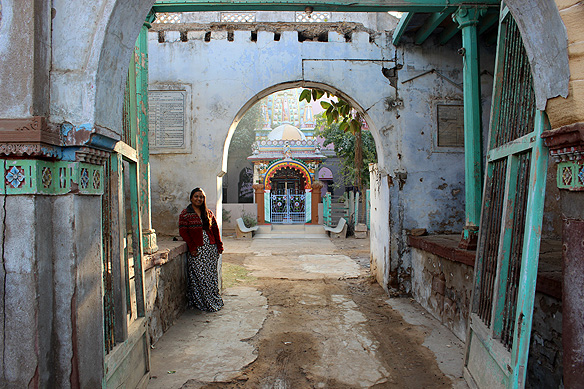
temples of bhuj: the grand and the familial

bhuj_temples1
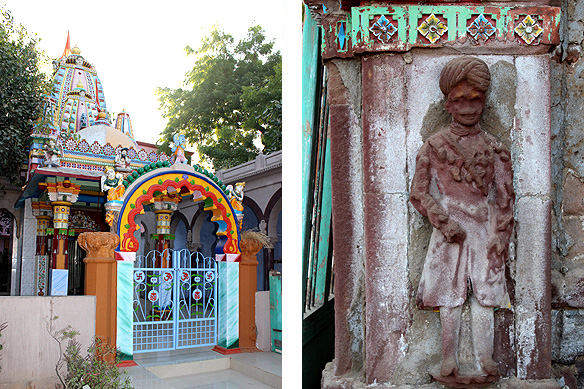
bhuj_temples2
Above: The Soni family temple

Every day as I set off to explore one corner or another of Kutch I would pass a dazzling white edifice in Bhuj, my base during my travels in north-west Gujarat. And my eyes would hold on to it, till it disappeared from sight. It was the Swaminarayan Temple of Bhuj. I knew I could not leave without visiting it. Call it faith. Call it the traveller’s call. But I found myself waking up at the crack of dawn this morning and finding my way towards it. Continue reading