photo essay: in search of bundi’s prehistoric rock paintings

Destination, or the journey? In travel, it is often hard put to distinguish between the two.

When I went to Bundi in Rajasthan a fortnight ago, I had no clue that merely 30 kilometres south of the town were 101 sites of prehistoric rock art painted 15,000 years ago. They were discovered by a one Mr. Kukkiji in 1997, who was to take me to the sites himself. What I knew less of was the charms of the paintings’ backdrop—the caves lined tranquil wide rivers, on whose lush shores the Bhil, an Indian Adivasi tribal had made their homes. Continue reading →

global travel shot: the prehistoric rock paintings of bundi

Image

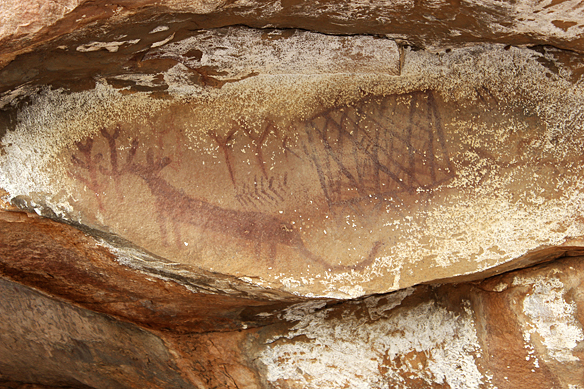
The image above is that of an antelope in a forest, next to a trap waiting to catapult it to its death. Nope. This is not somewhere in the interiors of France or Spain, more commonly associated with prehistoric art, or even in Bhimbetka where India’s prized rock art collection lies.

It is instead on the insides of a cave lining a tributary of the river Chambal in Gararda, Rajasthan, 35 kilometres from Bundi, my base a fortnight ago.

Painted 15,000 years ago in mineral colours, very few people know of it. Just a handful come from the far corners of the world to marvel at its beauty, and timelessness.

And if it were not for a local sweetmeat-shop-owner-turned-archaeologist, we would not know of it either. He discovered the site in 1997 and has passionately been creating awareness of it ever since, unearthing 101 caves festooned with prehistoric art to-date. His name is Kukkiji. Continue reading →

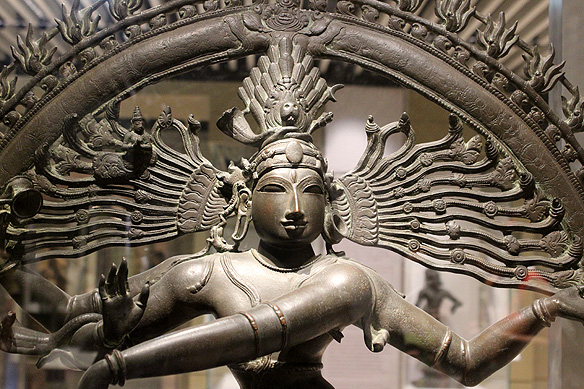
national museum, new delhi – 90 minutes at the museum

The National Museum, New Delhi makes the herculean task of experiencing India’s monumental heritage spanning 5,000 years—doable. You could always spend 3 minutes looking at each object in its 210,000 piece collection. But that would take 14.5 months with no sleep or meals inbetween. Or you could do an audio tour and spend a day exploring its glorious galleries through 64 masterpieces. And if you have just one and a half hours, then why not feast your eyes on its very best.

Earlier housed in the Rashtrapati Bhawan [President’s residence], the collection has its roots in 1947 when the Royal Academy, together with the governments of India and Britain, decided to hold an “Exhibition of Indian Art” in London. Selected artefacts from museums across India were collected for the showing.

Before returning the exhibits to their respective museums, it was decided to display the exhibition in Delhi as well. What a huge success it turned out to be! The overwhelming response led to the idea of a permanent National Museum being set up in the capital with its very own building by India Gate which it moved into in 1960.

The National Museum has it all. From the iconic Harappan Dancing Girl to elegant Gandharan Buddhas, from exquisite miniature Mughal paintings to luscious Tanjore compositions, from Chola bronzes to 20th Century decorative arts, from medieval sculptures of voluptuous Hindu deities to diamond and emerald regalia of its once-upon-a-time royalty. The Museum has all these, and much much more.

Here are my 15 favourite pieces collated after rambling through its collections and meditating over its audio tour. Doable in 90 minutes. 🙂 Continue reading →

the 6 untold treasures of vadodara

Friend: “You’re going to Vadodara. Wonderful idea! There is a lot to see in the city. After all, it is the cultural capital of Gujarat.”
Me: “Nice. So what do you suggest I visit and explore?”
Friend: “The Lukshmi Villas Palace is an absolute must!”
Me: “Ok, will do. What else?” [As I jotted it frantically in my notebook in anticipation of being hit by a barrage of to-do-things]
Friend: “The museum attached to the palace is another must do.”
Me: “Ok, got that down too. And?”
Friend: “Hmmm. Oh well. I don’t know. But there is a lot. Hey, it is the cultural capital. But I don’t know…”

Yes, that is it with Vadodara, earlier known as Baroda. Though it is publicly acknowledged as the cultural capital of Gujarat, its attractions are neither documented nor publicised. At least not enough and one cannot be blamed for wondering if they even exist. Continue reading →

champaner—the muslim part of the champaner-pavagadh unesco world heritage site

Fairy tales often start like this, don’t they: Once upon a time there was a fearless, virtuous king who had dreams of conquering an invincible fortress perched on a hill. His father and grandfather had time and again attempted to defeat it too, but to no avail.

The tale I am writing about continues like this: The brave king was Sultan Abu’l Fath Nasir-ud-Din Mahmud Shah I, ruler of the Gujarat Sultanate and great-grandson of Ahmed Shah I, founder of Ahmedabad, Gujarat in 1411. The invincible fortress belonged to the Kichchi Chauhan Rajputs on Pavagadh.

Calling himself “Sultan al-Barr, Sultan al-Bahr” meaning “Sultan of the Land, Sultan of the Sea,” history knows him as Mahmud Begada. The name “Begada” was derived from his winning two gadhs in his lifetime, namely Pavagadh and Junagadh. Continue reading →

pavagadh—the hindu part of the champaner-pavagadh unesco world heritage site

I have a book titled Speaking Stones World Cultural Heritage Sites in India which I must confess is my most prized possession. Coming to terms these past few months with some harsh realities on death and the transience of life, I reached out to the hard bound volume on my bookshelf to see what I could add to a wish-list to make come true.

The pages opened, almost as if urged by some mysterious calling, on Champaner-Pavagadh. Truth be told, I had never heard of the place before. But it was nearby and seemed doable over a few days. A friend pointed out the weather was all wrong for the rendezvous: “No one travels for pleasure to Gujarat in May when temperatures are soaring at 43 degrees.” The little voice in me said, “Who cares about the heat. Remember life truths!” 🙂

And, thus, one fine early morning, I found myself boarding a train to Vadodara, my base for my explorations. What I learnt and saw and experienced in the ensuing days far outweighed my expectations. But I run ahead of myself. Let’s start at the beginning. Continue reading →

the mythological frescoes of nandalal bose in vadodara

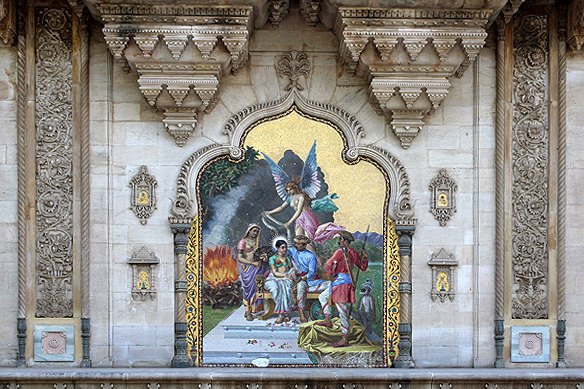
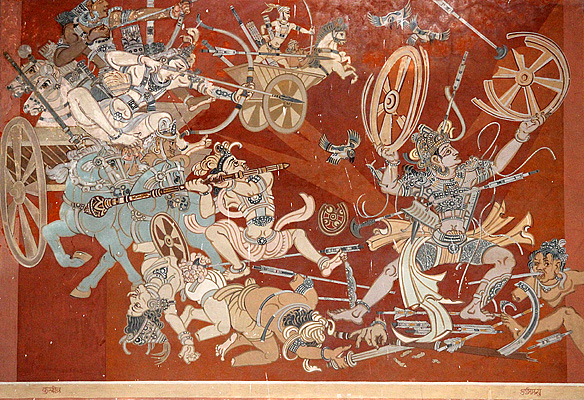
In the heart of Baroda, now called Vadodara, within the royal Gaekwad family’s once sprawling grounds is the Kirti Mandir or Temple of Fame. The gigantic stone cenotaph was built in 1936 to ensure their ancestors’ posterity. A sun, moon, and a map of undivided India etched on a bronze globe are perched on top of its shikhara—a sovereign declaration of the spread and timelessness of Gaekwad rule.

But the cenotaph is weathered now and forgotten. It is visited on the rare occasion when a royal family member passes away and is brought to the adjacent cremation grounds to be burnt and then transposed into a plaster-of-paris bust placed in one of the rooms lining the passageways.

A lone 70-year-old guard, who has spent the last 60 years serving the royal family, with his one-year-old grandson’s arms wrapped around his neck unlocks the large doors should perchance a traveller land up at the temple’s doorstep. But this post is not about the royal family. I will write about them on another date. This one is about the art and artist whose mythological masterpieces decorate the walls inside Kirti Mandir. Continue reading →

global travel shot: champaner, a 500-year-old indo-saracenic poem in stone

Image

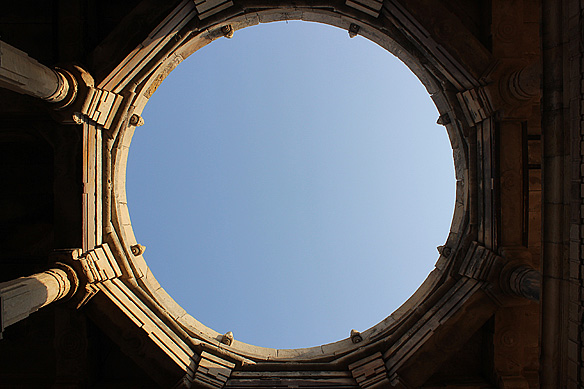
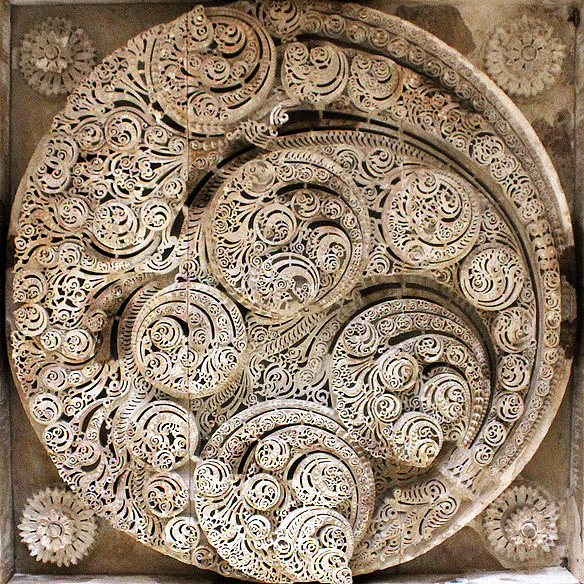
“Look up, at the ceiling.” I am broken from my reverie, as I drift through a forest of 172 stone pillars, by my guide Manoj’s voice prodding me to halt in my tracks and raise my eyes, heavenwards.

High up, inside a dome above the main mihrab is the most exquisitely carved sculpture I have seen to date. And I find myself gasping in awe. Is this for real? I am not too sure what stuns me more. Its immense size, the fineness of the swirling leaves, or its incongruous placement—I am in a 500-year-old mosque in Champaner in Gujarat, 50-odd kilometres outside Vadodara, and the sculpture is Hindu-Jain in style and content. Continue reading →

photo essay: ftii, stories of indian cinema told and untold

What is Pune without the FTII? Okay, one may say “lots” as my previous post 36 hours in Pune blatantly states. But one cannot deny FTII is integral to the city, and historically, even to the country.

Its contribution to Indian cinema through its alumni is legendary. Whether it be the histrionics of Jaya Bachchan, Shabana Azmi, and Naseeruddin Shah or the directorial vision of Sanjay Leela Bhansali, Vidhu Vinod Chopra, and Prakash Jha, each has added a gem or two in India’s prized entertainment business—Bollywood.

FTII, the Film and Television Institute of India’s history is no less captivating. Christened Film Institute of India in 1960, the autonomous body under the Ministry of Information and Broadcasting and a member of CILECT, was given its current name in 1974.

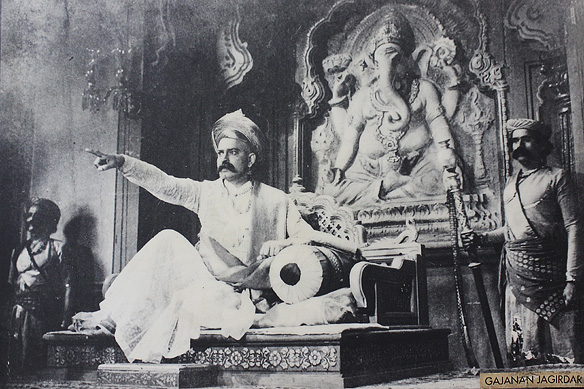
Though I am no movie buff, to be Indian translates to a love for cinema. But alas, one cannot just walk into FTII’s famed campus in the north-west outskirts of Pune. Closed to the public, the Institute opens its doors to common-folks on rare occasions. One such was for a heritage walk during the heritage week organised jointly by Janwani and Intach Pune. Continue reading →

36 hours in pune


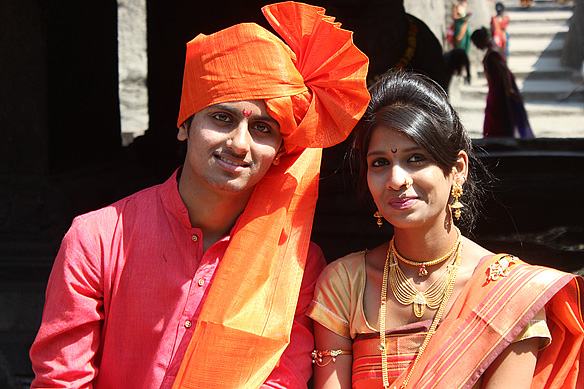
Pune youth at the 8th Century Pataleshwar Cave Temple celebrating Pune Heritage Week
– – –
It took me three years to make the journey to Pune, a city nestled in the Sahyadri hills four hours by road and 149 kilometres away from Mumbai.

Every second person I have met in Mumbai has been somehow connected to Pune. It is either through their family or studies [when they were younger] or if nothing else a place they go to chill out. I figured this in itself warranted I see it with a local, and here I mean a Mumbaikar with one foot in Pune. And so I waited. And waited. Till my desire to explore the city out-weighed the comfort of a well-versed, impossible to pin down, human guide.

Clueless about the geography of the city, but armed with a smattering of facts, figures, and stories from poring over books and articles, I found myself one fine morning seated on a bus aptly named Shivneri. For the uninitiated, Chhattrapati Shivaji Maharaj was born in Shivneri Fort on the outskirts of Pune.

But more of that later on in the post. I was headed to Mumbai’s lesser known and lesser glamorous, yet historically and culturally [as I was soon to discover] richer neighbour. It also happened to be heritage week in Pune which turned out to be in my favour. Continue reading →