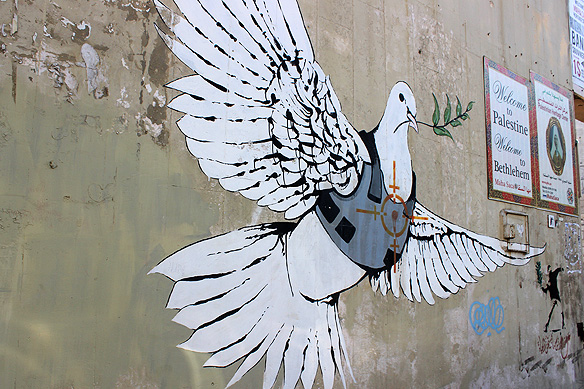
photo essay: the writing is on ‘the wall’, bethlehem

Eight metres high. That is twice the height of the Berlin Wall. With watchtowers and a buffer zone for electric fences and military patrols, the Wall surrounds Bethlehem.

It is part of a 708-kilometre-long separation barrier of which 15% runs along the agreed Green Line, while 85% of it encroaches into Palestine, splitting communities, villages and cities alike.

On one side of the wall, a ‘western’ world thrives. On the other, an ‘eastern’ world is shackled, its every move monitored with cameras, sensors, and hundreds of checkpoints. Somewhere in between, in the ‘seam zone’ flanked by the Green Line and the separation barrier are 25,000 Palestinians living on 9% of Palestine, neither here nor there, and requiring a permit to exist.

Travel is not always about pretty candy floss sights. At times it is also about harsh realities, often painful and ugly.

I had heard a lot about the Wall. Yet, the actual sight of it was overwhelming. Hard to digest. Sending shivers down my spine. Continue reading

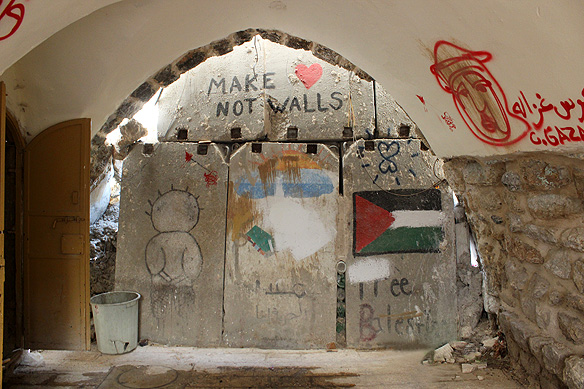
hebron, half-brothers of a common father: microcosm of the israel-palestine conflict

Hebron is complicated.

A web of fuzzy boundaries, intruded spaces, complex unresolved issues piled on top of each other. Hebron is the story of the lineal descendants of two half-brothers of a common father, perpetually at war over one question: Who has more rights.

Have you ever wanted to understand the Israeli-Palestinian conflict? Okay, ‘understand’ is perhaps being overly ambitious. How about inch a little bit closer to making sense of the dynamics between the two?

If yes, then head to Hebron. The answers are there.

Thirty kilometres south of Jerusalem, Hebron is the largest Palestinian city in the West Bank. An industrial town, it generates one-third of West Bank’s GDP. Its UNESCO World Heritage Site status celebrates the limestone Mamluk-era Old City and the world’s only public building within which has stood intact for 2,000 years, and continues to serve its original purpose. That of a monumental memorial and place of worship.

But apart from the above two, and more than the two, Hebron is also a microcosm of the Israeli ‘occupation’ of Palestine. 800 Jewish settlers, protected by hundreds of Israel Defense Forces [IDF] soldiers, live among 200,000 Arab Palestinians. International law considers these Jewish settlements as illegal.

Hebron means ‘connect’ in Hebrew. Palestinians call the city al-Khalil, ‘Friend of God.’

Every story has two sides. Mired with blood, tears, and conflict, Hebron more than others, as I discovered one autumn day in Israel’s Occupied Territories. Continue reading

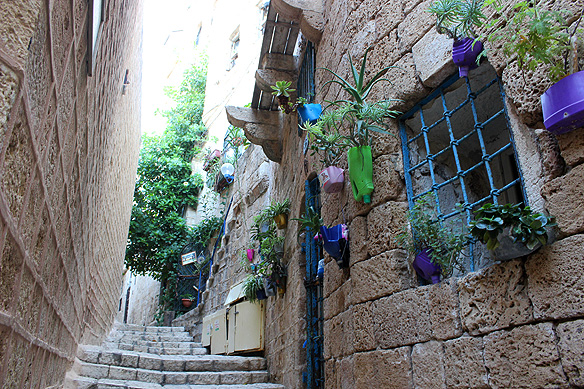
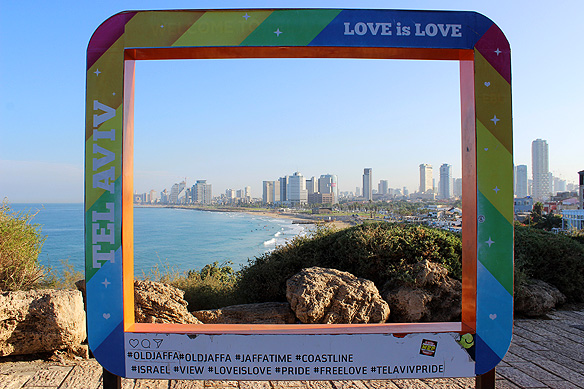
a self-guided walk through the yafo of tel aviv-yafo: old jaffa

On your travels in Tel Aviv, you may be lured into signing up for a ‘free’ walking tour of Old Jaffa along with 40 others only to realise at the end, a generous tip is mandatory or you run the risk of looking like a penny-pincher! Or, if your pockets are deep and well-lined, you may decide to go for a ‘private’ tour and pay through your nose for a couple of hours being shepherded from point A to B. If these are your cup of teas, do go for any of the two.

But the truth is—you don’t need either.

Old Jaffa is best explored on one’s own, at one’s own pace, getting lost and finding new delightful secrets instead.

The other half of Tel Aviv-Yafo, Israel’s pleasure-seeking city on the Mediterranean Sea, Yafo or Jaffa is everything Tel Aviv is not. Historic and steeped in ancient stories. Which makes for an interesting union between the two, signed and sealed in 1949. Read on and let me explain. Continue reading

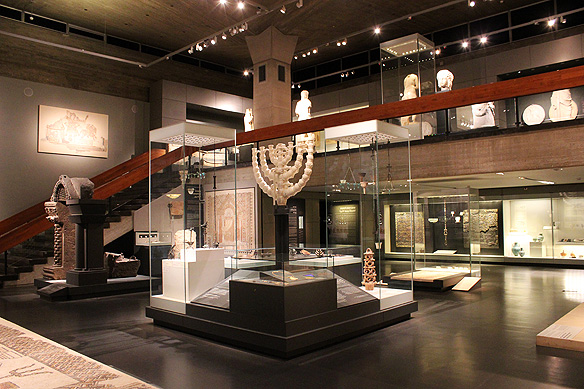
israel museum, jerusalem – tuesday evening at the museum

One of the things I truly miss in the ongoing COVID-19 pandemic, apart from simply walking in the open air [even if it is noisy, polluted, and chaotic as Mumbai often is], is spending time in a museum or art gallery. The latter form a large chunk of my me-time on both weekends and in my travels. Cocoons of sweet silence. Their artefacts and art filled with stories of heritage and humankind. Luckily for me, Mumbai thrives on its art and cultural scene. There is lots happening if you poke around.

Over the years, and it has been quite a few, I have also learnt that if you really want to understand a nation and its people, the best place to start is its national museums. The collection, curation and display, and more significantly how the local populace relate to these museums, reveal heaps about its attitude to its own legacy.

No surprises then that a visit to the Israel Museum was high up on my bucket list when I was in the country, last year November. Though open daily, once a week, on Tuesdays, the museum is open from 4 in the afternoon to 9 at night. May I also add, it is the best time to visit. By then the tourists have moved on to other sights and the locals have emerged from their homes to wander around its gleaming halls, filled with a quiet pride. Continue reading

the 5 untold treasures of northern israel

Welcome back to my Israel series. One of my favourite countries in the world.

Jerusalem and the West Bank are the crux of most travels to the Holy Land. Which is completely understandable. It’s tough to compete with sites related to the religions of over half the global population and the multifaceted catch 22 political situation between Palestine and Israel. But the outcome is that one often neglects the extreme north and south of the country. Why, oh why, are the most stunning treasures often missed out on tourist loops?

I did not get to explore the Negev Desert and Eilat when I went to Israel for two weeks in November last year—this is now scheduled as my first post-COVID 19 travels—but I did make it to the north, all the way to the Lebanese and yes, Syrian borders. And it is what I encountered on the way that makes travel in Israel so darned addictive. Every 25-odd kilometres was a new experience, unlike anything else.

In prettiness personified multi-cultural Haifa, I gazed in wonder at one of Israel’s most photographed views, the picture-perfect symmetrical Baha’i Gardens from the top of Mount Carmel. Did you know when the Baha’i pray, they face Northern Israel? Aah, but more of that later in this post. In Crusader Akko, I witnessed the reckless courage of a movement determined to bring Jerusalem back into the Christian fold. And if not Jerusalem, oh, then Akko would do. Continue reading

a self-guided walk through biblical mount of olives

Caution: This post is for travellers. Not tourists.

Whew. Now that I have got that out of the way, let me write on. Comforted by the thought you and I are on the same page.

Some of us like to wander. To immerse ourselves at a particular site just because, inexplicably, it touches a chord within us. To gaze at the details. Behind and under the obvious. To look at all versions of history and legends with an open mind.

The reason I bring it up particularly for my post on the Mount of Olives is because one cannot not visit the Mount of Olives while in Jerusalem. For that would be blasphemy. But you’d like to do it at your own pace.

Why? Because you are in the Holy Land. And Jesus Christ spent his last night before his crucifixion as well as ascended to heaven from here. Christian communities from around the globe have built a string of lovely churches down a near perpendicular street between these two key sites. Because you do not have to be believers of the Old or New Testament to believe in a higher sacred self. Or Roman Catholic or Eastern Orthodox. But also, because the view from the top and the walk to the bottom is what memories, which make you all starry-eyed once back home, are made of. 🙂 Continue reading

36 hours in tel aviv

Flashback. 11 April, 1909. There are 66 Jewish families standing in a circle on a desolate sand dune, just north of Jaffa, the ancient Arab port-city on the Mediterranean coast. Inside the circle are two boxes. One contains 60 grey seashells with plot numbers and the other has 60 white seashells with names of the families. A girl randomly picks up a grey seashell while a boy picks up a white seashell.

And hence, the first 60 plots of Tel Aviv meaning the ‘hill of spring’ are assigned and Israel’s future city is born. Within one year all the homes are built along with the main streets.

Flashforward. November 2019. The Tel Aviv I am standing in is futuristic and forward-looking. It is an IT hub, gay capital of the Middle East, vegan capital of the world, secular, hedonistic, and has an all-night party scene and 15 kilometres of sun, sand and sea.

There are around 3,000 high-tech companies and start-ups in the city, the highest outside Silicon Valley, to the extent Tel Aviv and its surrounding areas are called Silicon Wadi [Wadi is Arabic for valley]. The technology behind all chats, the world’s first anti-virus software, and USB stick were invented here.

I see lesbian couples indulging in heavy PDA and muscled men in leather briefs strut down the jogging paths on Rothschild Boulevard. Everyone seems to have a dog. According to statistics, Tel Aviv has a 17-to-1 people to dog ratio and 60 dog parks. And yes, it is also one of the top 10 cities for the most beautiful women … and men.

But Tel Aviv is not just all beauty and brains and their furry best friends, as I discovered. Continue reading

the three magnificent jewels of israel’s judaean desert

It was 2 am and I could not take my eyes off the exhilarating landscape in the travel documentary. I sat hunched over my computer with goose bumps on my arms, infatuated at the desert and oasis and sea which unfurled in front of me. I was leaving for Israel in a couple of weeks.

“This can’t be for real???” was all my cynical mind could muster at regular intervals. But numerous other media reiterated the same splendours with stubborn vendetta to my doubting self.

Not many places live up to their hype—except the Judaean Desert. As I discovered last year in November. Continue reading

nazareth, in search of jesus christ’s hometown

“Can anything good come out of Nazareth?”

“Come and see.”

The above conversation took place between two of Jesus Christ’s would-be disciples, Nathanael and Philip, some 2,000 years ago and has been recounted many times over through the Bible.

Nazareth back then was a city steeped in vice. Against a backdrop of crime and derelict morals, a young innocent virgin was told she would give birth to the son of god. This son went on to spend his childhood and youth in Nazareth’s by-lanes and eventually lead a religion that has 2.4 billion followers today or almost one-third of the global population.

Though Bethlehem is more closely associated with Christ during Christmas, I thought I’d write about his hometown instead this festive season, and the sites connected with his home and family—for is that not what Christmas is about? A time for celebration with family. 😊 Continue reading

global travel shot: uninterrupted prayers at the wailing wall

Image

Welcome to my blog post series on Israel, a tiny country where world politics and religions converge, and it takes a mere five hours to drive across its entire length. 🙂

So, is Israel on your bucket list? It was on mine. For a very long time. But I was filled with doubts on how to go about it. It turned out that the one country I was most unsure and nervous about travelling to solo and independently was in fact the easiest to explore on my own. Israel is an independent traveller’s dream come true.

Don’t believe me?

Come along with me as I blog about Israel over the next few months, the land of Yhwh’s “Chosen Ones,” in a series which traverses three Abrahamic religions and countless natural sites of mind-boggling beauty over a 15-day voyage—at the epicentre of which is the “Wall.” Continue reading