a guide to solo travel in afghanistan for the indian traveller

At the 12th Century Minaret of Jam with my driver Sher Aga [middle] and fixer-cum-translator Obaid [extreme left].

At the 12th Century Minaret of Jam with my driver Sher Aga [middle] and fixer-cum-translator Obaid [extreme left].

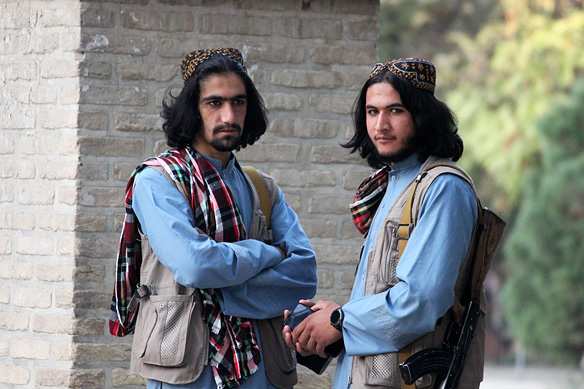
“Why are you in this western tour group? Why are you with them?”

I faced this question at almost every checkpoint during the few days I travelled in Afghanistan as part of a group. [For the rest of my 18 day travels in the country, I travelled alone and on my own.] A Taliban soldier on the 5th day was more explicit. “This is your country! You don’t need to be with them to see Afghanistan.”

– – –

This travel guide to Afghanistan is specifically meant for Indians. Like Indians in colour and passport. It does not, and cannot, apply to people of other colours and nations or an Indian with a western passport. 🙂

Let me put it in context first.

According to Indian textbooks, Afghanistan was once a part of India. According to Afghan textbooks, India was once a part of Afghanistan. Sorry, not India, but ‘Hindustan.’ Afghans, like the rest in Central Asia, still refer to India by its Silk Road-era name given to the sub-continent by the Persians.

Afghan fine-dining restaurant menus have Hyderabadi Biryani and Aloo Gobi listed under ‘Afghan Dishes,’ while Afghan women wear nose rings and bindis and are adamant it is an Afghan thing. We Indians, of course, believe it is all intrinsically ours, and just smile about it in smug complacency. You get the drift.

Both countries have shared personalities and dynasties across a millennium. For one thousand years it was the likes of Mahmud of Ghazni, Muhammad Ghori, the Khilji Dynasty, Lodi Dynasty, Mughal Emperor Babur, and Sher Shah Sur. Today, it is a chunk of Bollywood. Yes, Salman Khan, Shah Rukh Khan, Aamir Khan and Celina Jaitley, yesteryear heroes Feroz Khan and Sanjay Khan, and bad guy Kader Khan all have Afghan blood in them. And these are just a few in a long list. Continue reading

photo essay: in search of kandahar, the taliban’s former capital

Right up to 15 August, 2021, it was impossible for foreign tourists to visit Kandahar, least of all by road. The city, a Taliban stronghold in southern Afghanistan, was labelled the ‘kidnapping capital’ and lethal land mines infested the road to it every few metres. You had a far greater chance of being blown alive en-route than getting in. And if perchance you did make it in, the odds of staying alive were slim. But a lot has changed since then. I went by car to Kandahar this year in October and spent two nights in the city. And I live to write this post. 🙂

Kandahar, founded by Alexander the Great in 330 BC, has been the spiritual headquarters of the Taliban since its inception in 1994. From 1996 to 2001, when the Taliban were first in control, it served as the capital of Afghanistan. Though Kabul is now the seat of government, the Taliban’s senior-most officials, including its supreme leader Hibatullah Akhundzada and his spiritual advisors, are based in Kandahar. All decisions that affect the lives of Afghans are made right here.

So, what’s Kandahar really like now? Let me take you on a visual journey of this much touted city as I went in search of it. Continue reading

global travel shot: yangykala canyon in western turkmenistan

Image

In October this year, I did two fabulous and least visited countries back-to-back: Turkmenistan and Afghanistan. Thirty days of spectacular human, cultural, and geographical terrain. For the traveller in me, it was 30 days of paradise!

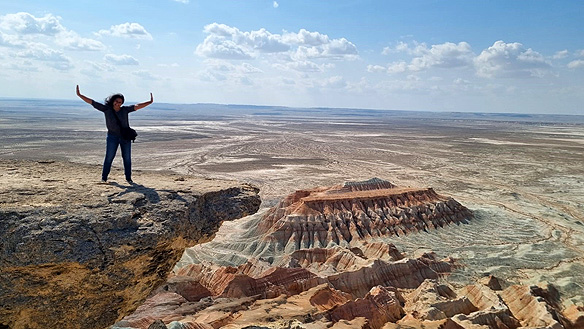
The picture above is at Crocodile’s Mouth in Yangykala Canyon, Western Turkmenistan. Some millions of years ago the canyon was the prehistoric Tethys Sea’s ocean floor. Then continents collided and oceans receded, revealing miles and miles of this surreal desolate landscape in all its glory. And yes, I am standing on the edge of a crumbling limestone overhang. At times, I can be pretty brave too. 🙂

P.S. This image was taken by Dondon, a world traveller I met when visiting Turkmenistan.

the complete travel guide to balkh: ancient bactria and silk road’s fabled city

Of all the cities that has survived the annals of time, Balkh, the capital of ancient Bactria [6th Century BC to 6th Century AD] in northern Afghanistan, is perhaps the most evocative.

Volumes have been written on its wars when it was the capital of Bactria, and thereafter, a part of post-Bactrian empires. Art and literature have had a constant muse in its colourful personalities, Alexander the Great and Roxanna, and their marriage which paved the course of history. One of the oldest religions in the world, Zoroastrianism, was founded by one of Balkh’s very own citizens, Zoroaster.

But its greatest claim to fame, and subsequently its greatest legacy, came from its simultaneous role as Silk Road’s fabled city. For 1,600 years, from 130 BC – 1453 AD, Balkh was not just a confluence of commodities, but also of religions, ideas, and knowledge. Continue reading

top 15 memorable things to do in kabul, afghanistan’s capital

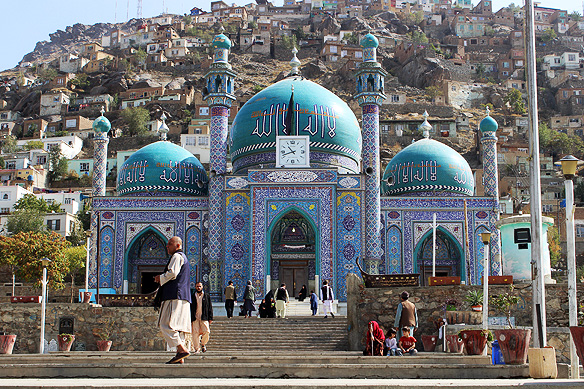
Afghanistan’s capital, Kabul, is not your regular city. Hemmed in by the Hindu Kush Mountains and Kabul River, it is beautiful. And broken.

The city traces itself back some 3,500 years and was a strategic trading centre on the Silk Road linking India with the Hellenic world. Over the centuries, the Who’s Who of Central Asia’s rulers and empires have ruled over it.

One of its earliest turning points was in the 9th Century when it was conquered and Islamised by the Abbasid Caliphate. Prior to this, Kabul was politically and culturally a part of India with a Buddhist and Hindu populace and rulers. Another major turning point was in 1776, when it officially became the capital of ‘Afghanistan,’ a nation the country’s founding father Ahmed Shah Durrani had established a decade earlier. Continue reading

travel shorts: hazrat-e mazar, afghanistan’s most sacred site

Image

This slideshow requires JavaScript.

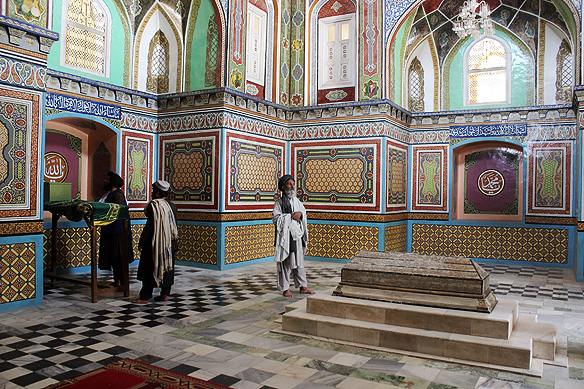
One of Islam’s most sacred sites lies in northern Afghanistan, a mere 55 kilometres from the Uzbekistan border. It is a blue-tiled mosque which glistens like a jewel, changing colour through the day, and home to countless pristine white pigeons.

Whilst the Shi’a sect of Islam believe that Ali, Prophet Muhammad’s cousin and son-in-law, is buried in Najaf, Iraq, the Sunni sect regard Hazrat-e Mazar in Mazar-e Sharif as Ali’s actual tomb.

Both, the city Mazar-e Sharif and its spiritual centrepiece Hazrat-e Mazar, date back to the 12th Century.

There is an interesting Afghan legend as to how the tomb came to be here. Continue reading

taliban afghanistan, a solo indian woman traveller, and help from unexpected quarters

An Australian tour company versus the Taliban. Who would you trust?

If I am not mistaken nearly everyone would choose the tour company. I did too.

After all, it is ‘white-owned’, from a ‘developed country,’ and the default conclusion is that ‘I would be safe with them’ in an otherwise unsafe country—in this case, Afghanistan under the Taliban.

Instead, as the only person of colour in a group of 10 led by two white Australian tour leaders, I was subjected to a barrage of India-bashing from the group. By the time one of the group, a Welshman living in Poland, crossed the lines on the seventh day of the tour, I’d had enough. I told them to stop. What happened next is what travel nightmares are made of. Continue reading

a guide to independent travel in israel

Have my Israel posts been able to inspire you to make your way to one of the most fascinating [and historically and potentially volatile] countries in our world? I hope yes. Yes enough to add it to your bucket list, have day-dreams about it, and make plans for a journey post COVID-19.

Though I’ve ended each post on Israel with related travel tips, I thought I’d collate the important ones into one post and add a few extra. Just to make it easier for you.

I assure you this will be a short post. Most of my Israel posts have been on an average 2,500 words long. If you indeed read through them, credit goes to the country—it is beautiful—and to you. Thank you super much for giving me company through the series, for liking the posts, and for commenting on them. It has encouraged me and kept me focussed on writing the entire set.

So, here goes my last and 13th post in my Israel series, a country that was long on my wish-list and one I finally got to explore on a solo, independent, 15-day travel in November 2019. Wishing you happy travels too, someday soon.

[Please note there are NO affiliate links in this post, or in any of my posts. Links are provided only to help you with your plans or for you to get extra info. Neither is any of the content in this post or any other post sponsored. The services in this post are what I used and I am simply sharing them with you.] Continue reading

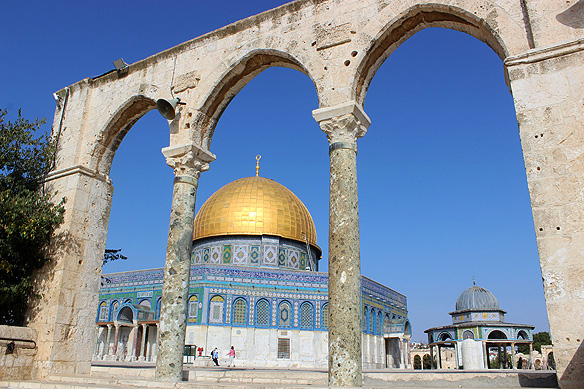
top 15 memorable things to do in jerusalem, capital of the holy land

If I forget you, O Jerusalem, let my right hand forget its skill!
Let my tongue stick to the roof of my mouth,
If I do not remember you,
If I do not set Jerusalem above my highest joy!
~ Psalm 137:5-6

For those who have made Jerusalem their home and those who find their way to it, across the seven seas, this verse sums up perfectly what the city in the Judaean Hills means to them.

One of the oldest cities in the world, Jerusalem is a holy city for all three monotheistic Abrahamic religions. Over the millennia, these three religions—Judaism, Christianity, and Islam—have all laid claim to the city as theirs. So have civilizations, empires, and kingdoms. It has been razed to the ground at least twice, laid siege to 23 times, captured 44 times, and attacked 52 times. Yet, through it all, it has survived. And always, been madly loved.

The current walls which surround the Old City date back to 1538 AD and were built by the Sultan of the Ottoman Empire, Suleiman the Magnificent. Inside its walls, the city is divided into four quarters: the Armenian, Christian, Jewish, and Muslim Quarters, and that’s the way it has traditionally been. A UNESCO World Heritage Site, Jerusalem is also on the List of World Heritage in Danger. Both Israel and Palestine consider it to be their capital.

Complicated? There’s more. Three Jerusalems comprise Modern-day Jerusalem. The Old City. West Jerusalem [the new city]. And East Jerusalem [the annexed city]. Pilgrim or traveller, the fact is, Jerusalem with its eclectic mix of heritage and sights, needs to be visited at least once in one’s lifetime.

There are countless unique experiences only to be had in Jerusalem because of its volatile history and spiritual role in the scheme of things. This is by no means an exhaustive, exclusive list. But these are my top 15 memorable things to do list! 🙂 Continue reading

travel diaries: unravelling west bank’s area ‘a’

Was it Area A, B, or C. I struggled to get my head around them as the highway wound its way through all three, one into the other in a convoluted mix. At each crossroad and Area juncture there were checkpoints galore. Israeli soldiers behind bullet-proof glass and on watch towers pointed their guns at every vehicle and person that passed by on the road.

“Sit still please and no pointing.” Our Arab driver insisted as we slowed down at each checkpoint. I was torn between ducking under the seat and staring at the soldiers in warped fascination. Before I could decide, we had moved on. Only to be met by another checkpoint and red road signs.

“This road leads to Palestinian Village. The entrance for Israeli citizens is dangerous.”

“This road leads to Area ‘A’ under the Palestinian Authority. The entrance for Israeli citizens is forbidden, dangerous to your lives and is against the Israeli law.”

Area A turns out to be a string of typical Middle Eastern cities with markets, mosques, and a well-worn homely feel. To get from one to the other though, one needed to travel through the war zone highways. Makes for a difficult commute if one had to do intercity travel on a regular basis. Continue reading