[My below post first appeared as a travelogue in Hindustan Times, one of the largest newspapers in India, on 6 March, 2016 in both its print and online editions. The online edition can be read here]
– – –
[My below post first appeared as a travelogue in Hindustan Times, one of the largest newspapers in India, on 6 March, 2016 in both its print and online editions. The online edition can be read here]
– – –
“Once upon a time I was young and beautiful. I flirted. I was brash. I was elegant. Time changed me. History scarred me. Will you love me still?”
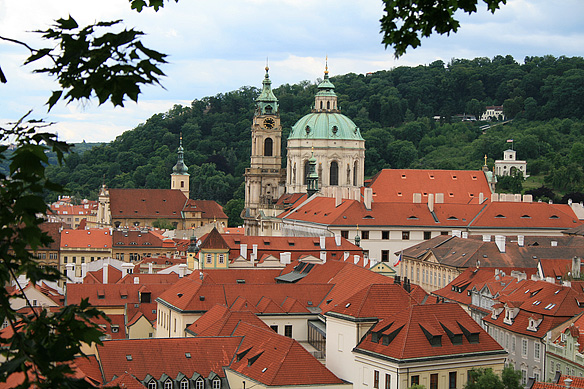
Lying on the banks of the Danube, the twin cities of Buda and Pest are a bygone romantic fairytale draped in swaths of 60 years of communism, and at present the capital of a nation struggling to find its place in a capitalist world. Budapest demands and deserves delving beyond the obvious as one of Europe’s most popular holiday destinations and beautiful cities; if for no other reason than to just believe in fairy-tales again. Continue reading

“I am a seagull, of no land,
I call no shore my home,
I am bound to no place,
I fly from wave to wave.”
~ Empress Elisabeth of Austria aka Sisi (1837-1898)
A fervent traveler, the Empress of Austria and Queen of Hungary, Sisi, born Elizabeth, the Duchess of Bavaria, was a beautiful, lonely, reclusive woman. An adamant non-conformist and free spirit, she married her cousin Franz Joseph I, Emperor of Austria (1848–1867) at 17, and spent the rest of her life refusing to carry out the traditional roles of empress, wife or mother expected of her. The death of her eldest child at two, and the suicide of Rudolf, her fourth child, pushed her deeper into her shell. She was assassinated by an Italian anarchist in 1898. Continue reading

On my way to Český Krumlov – South Bohemian folk Baroque architecture (18th-19th Century) around the village green of Holašovice
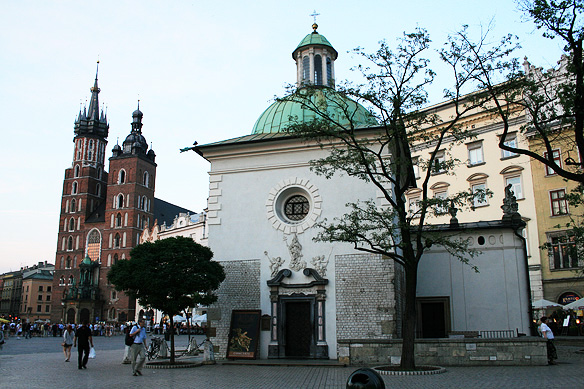
The fairy tale continued as I traveled deeper into Eastern Europe, the castles becoming more romantic, the squares prettier and the churches more quaint. Meandering cobbled streets worn over the centuries, red tiled roofs competing with the surrounding green hills, and the lone church spire characterize these pockets of history frozen in time, many of them today UNESCO World Heritage Sites. Continue reading

Last year I traveled through Eastern Europe, through fairy tales, castles, medieval squares, expressionless communism, and the other side of Eastern Europe – the mighty High Tatra Mountain range with its granite bulk towering over the skyline of Slovakia and Poland, as I drove through gentle undulating hills to reach its midst. Continue reading
My favourite walk in London. 🙂 It is also a long walk—from St. Katharine Docks to Westminster, by the South Bank, meandering over London’s many bridges and through the cathedrals, theatres and pubs that line the edge of the River Thames. The nicest part is that as you walk, the sun starts to set and the lights come on and it is like walking through one huge painting.

St. Katharine Docks were once the Port of London’s most central docks Continue reading
Early Saturday morning and all of London seems asleep. The only sounds I hear are that of my running feet on their way to the tube station. It is a good few hours to Wells and Glastonbury. And when you leaving in a few days, oh well, sleeping in on a Saturday morning is the last priority on one’s list. 😀
England’s smallest cathedral city, Wells, derives its name from the three wells within its walled precincts, which during the Middle Ages were believed to have therapeutic qualities. Its other key attraction, for nearly a millennium, has been its cathedral [Cathedral Church of St. Andrew], and understandably so. Continue reading
“We make a living by what we get, we make a life by what we give.” ~
Sir Winston Churchill (1874-1965)
There are many advantages to travel—it reveals facets of people, places and our world which are often quite extraordinary.
Blenheim Palace is not in the top “things to do” list, and so tends to get sidelined. Which is a good thing, as it is thus, saved from the crowds and plastic commercialism which invariably smothers the real essence of overtly popular places. But what is Blenheim? It is a home, a very grand home of a man who was a statesman, orator, writer and artist, all rolled into one. It is the birthplace of Sir Winston Churchill—Britain’s most famous prime minister and Nobel Prize laureate for literature in 1953, who also happened to be the grandson of the 7th Duke of Marlborough.
The 300-year-old baroque palace puts Britain’s statesman in a completely different context, amidst ceilings by Nicholas Hawksmoor and stonework by Grinling Gibbons. I had to keep telling myself this was somebody’s “home”! Look at the pictures and you will understand my awe.
The baroque splendour of Winston Churchill’s family home:
Continue reading

This is my favourite photo. I was walking across Parliament Square towards Big Ben and Winston Churchill’s statue rose in front of me …
I love the way London is segregated in its functionality. It is pure Classicism in its order. There is legal London. Royal London. Financial London. And political London, also more commonly known as Whitehall.
Whitehall is a homogeneous line of government buildings, pierced with landmarks both significant and world-famous such as No. 10 Downing Street, Horse Guards Parade, Banqueting House and the Cenotaph. Not many tourists take this road. It is populated by government officials going about the business of running a country. Yet, Trafalgar Square at one end, and Westminster Palace [housing the UK Parliament] and Westminster Abbey at the other end, constitute the most visited tourist spots of London. Continue reading
Some places turn out to be such a pleasant surprise! I had put down Kew Palace and the Kew Royal Botanical Gardens for today. I’d been starting to feel a bit jaded—you know the “been there, done that” feeling and I, therefore, wanted to do something inconsequential for a change. Botanical gardens and palaces seemed to fit the bill perfectly. 🙂 Not too demanding was what I told myself. Continue reading