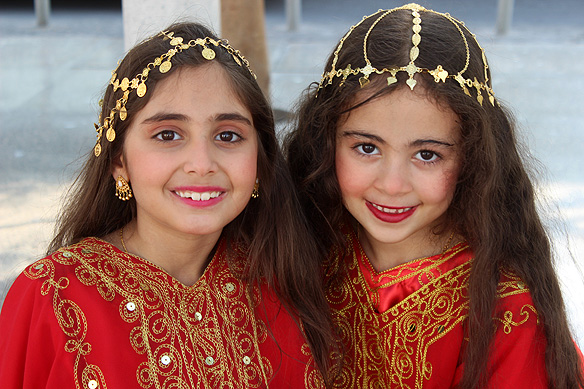
An eight-month pregnant young woman grabbed my phone from my hands, spoke to the cab driver at the other end in Kazakh, stood with me till he arrived, and left only after bundling me into the gleaming white vehicle.
I will never forget her and her serene warm face. I had been struggling to communicate my pickup location across language barriers with my cab driver on a massive multi-lane street in Astana. It was dark. I was clueless. And then she came along. Out of the blue.
That is Kazakhstan for you where people are so helpful, you do not even need to ask for help.
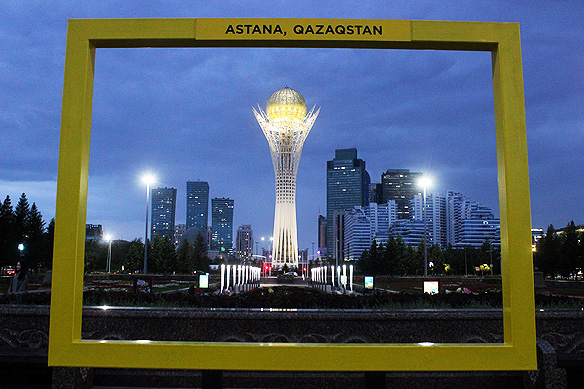
If you ever wondered what a modern city would look like, if created from scratch, where hearts such as hers are a common occurrence, then make your way to Astana, Kazakhstan’s capital since December 1997. Astana literally means ‘Capital City.’
And if like me, you had read that Kazakhstan’s capital was Nur-Sultan, and were a bit confused what was its correct current name. It is still Astana.
For around four years, from 2019 to 2022, Astana was renamed Nur-Sultan in honour of the country’s first President Nursultan Nazarbayev [1991 – 2019].
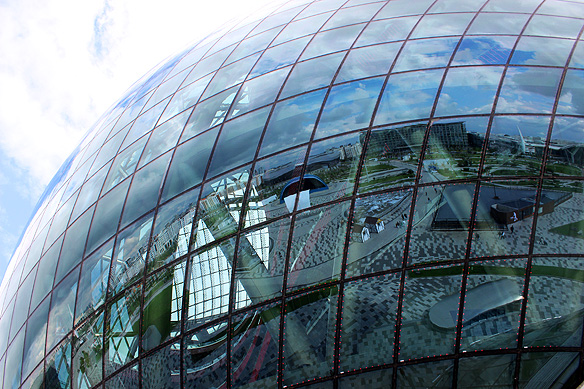
The city, located in the north-centre of the country in the middle of nowhere, has been around since 1830 when it went by the name Akmoly. It, however, really came into its own when the empty area adjoining it was transformed into a futuristic capital by Japanese architect Kisho Kurokawa in 1998. All those fantastically fabulous buildings one sees in the city-centre are government offices, including the supreme court.
Selected through a competition that was thrown open to the finest, most talented urban planners and architects in the world, his ‘new’ capital on the banks of Ishim River is meant to epitomize Kazakhstan’s vision for the future and its mythical past.