travel shorts: a tale of two heritage cities—shamakhi and sheki in azerbaijan

This slideshow requires JavaScript.

This is the tale of two cities in the land of fire, oil, and gas: Shamakhi where Azerbaijan’s rich medieval heritage took birth. And Sheki, which witnessed this same heritage’s closing chapter before the country was enveloped, first into the Russian empire and soon after, into the Soviet Union.

One specific dynasty’s rule had dominated Azerbaijan’s windswept plains and highlands in the Middle Ages. They were the Shirvan Shahs who ruled the Shirvan region, and whose capital Shamakhi was a trading post on the famed Silk Road.

Such was the glory and power of the Shirvan Shahs that their capital Shamakhi flourished for seven hundred years, from the 9th to 15th Centuries. When it did end its role as their capital, it was only because of nature’s unpredictable jostles. Shamakhi was prone to earthquakes. In the 15th Century, after one of the worst earthquakes the city had seen till then, its rulers felt it was wiser to move their capital lock-stock-and-barrel to Baku.

Most of Shamakhi was razed to the ground in this earthquake. Except for Juma Mosque, Caucasus’ second oldest mosque dating to 743. Juma or Friday Mosque has consistently, and lovingly, always been restored over the centuries. Its most recent face-lift was in 2013. Continue reading
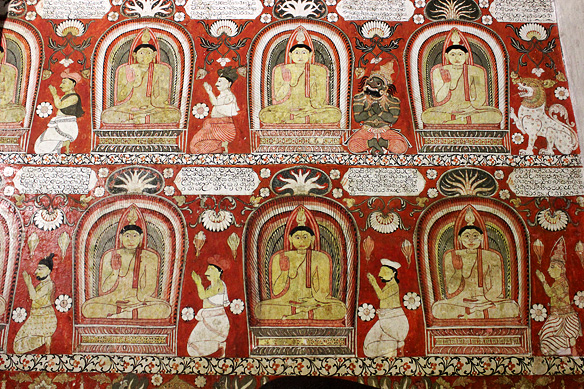
the complete travel guide to the treasures of sri lanka’s cultural triangle

Welcome to my travel guide on Sri Lanka’s Cultural Triangle told a bit differently—through short photo-essay chapters on the country’s ancient and medieval history.

Of the six UNESCO-listed cultural world heritage sites in Sri Lanka, five lie within the Cultural Triangle in the heart of the country. It is a region rooted in 2,500 years of history and heritage, both sacred and secular, from timeless Theravada Buddhist sites to splendid Sinhalese royal capitals. All surrounded in lush tropical jungles.

Before I write any further, I would like to briefly explain two terms used in this guide which are part of the warp and woof of the country. Theravada Buddhism and ‘Sinhalese.’ Theravada Buddhism is the oldest school of Buddhism and a direct offshoot of Buddha’s teachings. There are five countries in the world which have Theravada Buddhism as their official religion, and Sri Lanka is one of them. Sinhalese refers to the Indo-Aryan ethnic race native to Sri Lanka.

Whilst this guide covers the five UNESCO-listed sites, it also includes some gems scattered in-between. I hope you find it useful and it helps put the country’s Cultural Triangle as a seamless whole with all the dots connected. ❤

[Title photo: 18th Century Mural at Lankatilaka Vihara, Kandy.]

Table of Contents:

Continue reading

travel diaries: hiking through the horton plains

There is a deafening silence as I enter the Horton Plains in the wee hours of the morning. Above me, the silver sun is still trying to find its way back into the sky. It is not an easy task.

A thick blanket of mist and cloud engulf me, the golden blades of montane grass, and the sand-spattered 3.5-billion-year-old Precambrian-era boulders. Every now and then a slight drizzle kisses my upturned face. I peer through the mist, strain my ears for another human sound. A footstep, laugh, threads of a conversation. All I can hear is my own breath. I look at my phone. There is no signal. Continue reading

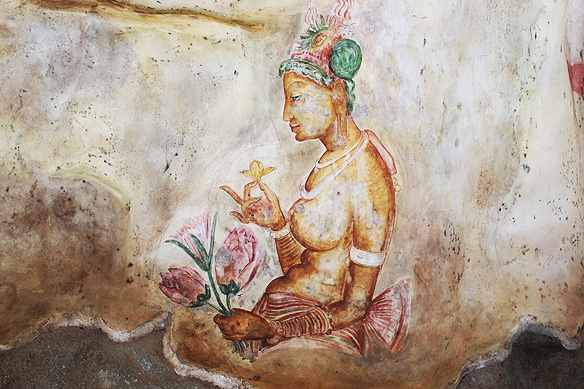
the sigiriya frescoes: king kassapa I and his 500 damsels

477 AD. Anuradhapura, Sri Lanka.

29-year-old Prince Kassapa I was filled with a deep burning desire to be king. So deep, it seemed to completely engulf him. To be the ruler of Anuradhapura, Sri Lanka’s ancient historical spiritual heart. How wondrous would that be!

And he would have been. Could have been. Except for one problem. His mother was the non-royal wife of Moriya King Dhatusena. The rightful heir to the coveted throne was his young half-brother Moggallana, offspring of his father’s chief consort.

Not to be deterred, Kassapa I, also known as Kashyapa I, decided to lead a palace coup with the help of Migara, the army commander who had a personal grudge of his own against the king. Young Moggallana, meanwhile, managed to escape, and took refuge in South India.

When Kassapa demanded to know the location of his father’s treasury, his imprisoned father responded saying Anuradhapura’s water tank was his one-and-only treasure. Miffed on hearing this, Kassapa had his father entombed alive.

For the rest of his life, Kassapa’s subjects and rivals, as well as the local Buddhist monks, would call him Pithru Ghathaka Kashyapa meaning Kashyapa the Patricide. It was a label he would not be able to shake off even after death.

In a bid to start afresh, away from public disgrace and the threat of a possible future retaliation by Moggallana, Kassapa moved his capital 75 kilometres south. Here, deep in Sri Lanka’s tropical plains stood a 180-metre-high monolith volcanic rock pillar with unhindered 360-degree views for miles on end. Continue reading

11 memorable experiences only to be had in turkmenistan

Tourist number: 1933.

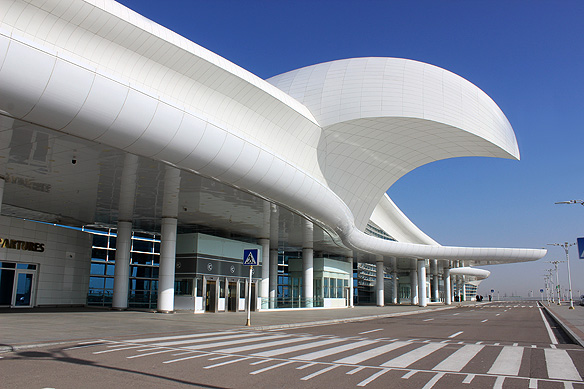
It is the early hours in the morning of 1 October, and I am at the gleaming falcon-shaped marble-encased airport in Ashgabat, capital of Turkmenistan. I ask the official at the visa counter what does this line on my entry stamp mean. He explains that 1,932 tourist visas had been issued in 2023 before mine. I am 1,933rd. This does not include the 3-to-7-day transit visas, by-the-way.

With a silly grin plastered on my face, I tell him he has no idea how much it means to have that sticker on my passport. Many months of planning and three back-to-back flights, from Goa to Muscat to Dubai to Ashgabat, and I am finally, finally here.

I guess my enthusiasm is contagious. The otherwise poker-faced official gives a little smile and wishes me a happy stay. I respond with a beaming grin.

Outside, shifting lights on the airport’s facade recreate a falcon’s flapping wings. Continue reading

travel guide: turkmenistan’s 3 legendary unesco-listed treasures

For a history buff, Turkmenistan is what wish-lists are made of. Its historical sites comprise three of the greatest world cities of the past which served as the capitals of some of the region’s most powerful empires in the ancient and medieval world, namely, the Great Seljuks, Khwarezmshahs, and Parthians.

All three of these cities are UNESCO World Heritage Sites today: Merv in the south-east, Konye Urgench in the north, and Old Nisa near the capital Ashgabat.

Welcome to my travel guide on these legendary metropolises’ fantastic histories and breathtaking monuments. Places very few visit, in one of our world’s Least Visited Countries. ❤

MERV: ‘QUEEN OF THE WORLD’ AND CAPITAL OF THE GREAT SELJUKS

Coronation of Seljuk Sultan Ahmad Sanjar [r. 1118 – 1157]; Jami' al-Tawarikh by Rashid al-Din, Tabriz, Persia, 1307 AD.

Coronation of Seljuk Sultan Ahmad Sanjar [r. 1118 – 1157]; Jami’ al-Tawarikh by Rashid al-Din, Tabriz, Persia, 1307 AD.

Often described as ‘the wandering city,’ Merv is Turkmenistan’s grandest UNESCO World Heritage Site, both in scale and age: 1,236 hectares [including the buffer zone] and 4,500 years. Listed in 1999, it is also the oldest and best-preserved oasis city along the Silk Road in Central Asia. Continue reading

travel diaries: from bamyan to herat via the minaret of jam

Be still, dear wild dancing heart! I chide it that it’s being ridiculous. I am no novice traveller. I have travelled all my life, been to countless countries, places many have not even heard of.

“But this is the first time to the Minaret of Jam,” it whispers gleefully.

Yes, true. And I let it dance away, and smile at it fondly. If it were not for this crazy heart of mine, I would be leading a pretty dull life.

Dear reader, I am about to start a 7-day road trip across Afghanistan’s remote heartland to see its most glorious treasures, including the 12th Century Minaret of Jam. The latter, the very reason why I had travelled all the way to Afghanistan in the first place.

It will take me one-and-a-half days through nothingness to reach the minaret, and then another one-and-a-half days off-road driving to reach civilization, namely Herat.

Here’s to once-in-a-lifetime journeys! ❤ Continue reading

the story of qutub minar

Prologue

Perhaps it would be more apt to title this post: Stories about Qutub Minar. As in plural.

Apart from being Delhi’s most iconic monument, it is steeped in multiple stories and a whole lot of firsts, making it unlike any other in the city. To top it, it is not the handiwork of any one ruler or dynasty, but is a collaborative effort spanning 800 years with even an East India Company officer adding his own bit to it—a Bengal-styled chhatri perched on top of the tower, which was thankfully brought down twenty years later.

So, here are Qutub Minar’s most famous stories. The spunk behind its stones. 😊 Continue reading

india travel shot: shimla’s toy train

Image

Imagine—a cross between a train and a car, a rail motor car as it is called, hurtling over towering Roman arched bridges and through tunnels dug deep into dense rocky hills, past pristine forests and verdant valleys. 103 tunnels and 969 bridges to be exact, of which the world’s highest multi-arch gallery bridge is one. Every now and then it stops at quaint railway stations in little villages. Care for a bite?

The fantastical contraption in the image above, straight out of the pages of British Raj in India, is part of the UNESCO World Heritage Site ‘Mountain Railways of India’ since 2008. No trip to Shimla could be deemed to be complete without the inclusion of a journey in it in the itinerary. Not 120 years ago. And not now. Continue reading

the complete travel guide to the hidden gems of jhalawar

24 blog posts. 5 weeks of travel. A road trip of a lifetime.

What better way to end my Rajasthan series than with a travel guide on Jhalawar. Off the tourist radar, choc-o-bloc with hidden rarely-visited gems, and a laid-back vibe. It is screaming out to be explored. But since there is so little known or publicized about it, it ends up, unfortunately, getting sidelined, and fortunately [for the traveller] offers an opportunity to explore Rajasthan in a time-warped state. The way it used to be.

Here’s Jhalawar’s story and sights, written with valuable inputs from Mahijit Singh, the direct descendant of its Rajput rulers, who still lives in Jhalawar, in Virendra Bhawan. And guess what, his home is a homestay! But more of that later in the post.

Here’s wishing you happy travels in Jhalawar. 🙂 Continue reading