global travel shot: champaner, a 500-year-old indo-saracenic poem in stone

Image

“Look up, at the ceiling.” I am broken from my reverie, as I drift through a forest of 172 stone pillars, by my guide Manoj’s voice prodding me to halt in my tracks and raise my eyes, heavenwards.

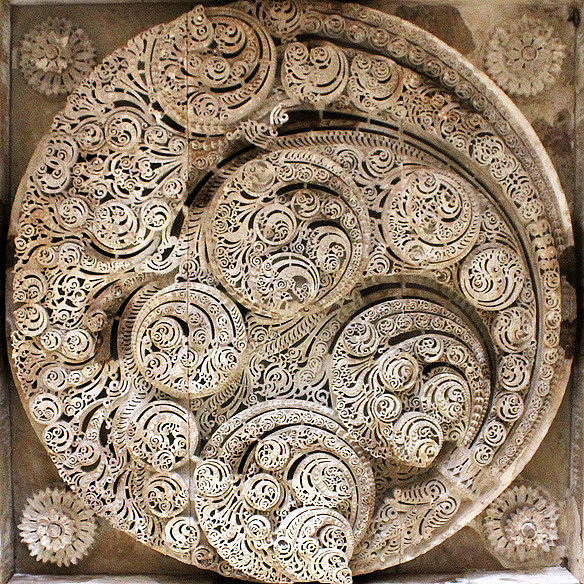
High up, inside a dome above the main mihrab is the most exquisitely carved sculpture I have seen to date. And I find myself gasping in awe. Is this for real? I am not too sure what stuns me more. Its immense size, the fineness of the swirling leaves, or its incongruous placement—I am in a 500-year-old mosque in Champaner in Gujarat, 50-odd kilometres outside Vadodara, and the sculpture is Hindu-Jain in style and content. Continue reading
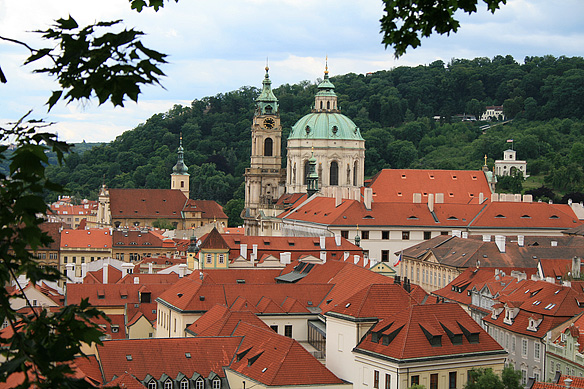
praha, the royal bohemian city of 500 spires—photo essay

prague1

One of my wanderings in Central and Eastern Europe was through Prague—or Praha in Czech—the economic, political, and cultural centre of Central Europe for most of its 1,100 years of existence. Generally acclaimed as one of the most beautiful cities in the world, it is after London, Paris, Istanbul, and Rome, the fifth most visited European city.

An overnight train from Budapest in a dark, panelled, velvet-clad train compartment took me to the “City of a Hundred Spires” [based on the count of a 19th Century mathematician]; a statistic which has now increased to 500 spires piercing its ethereal skyline. Praha was left largely untouched by the second World War unlike other European cities since Hitler made it a Nazi Germany protectorate in 1939. The result is a precinct pulled straight from the pages of a mythical past: Those that are romanticized and reminiscenced about, and are a treasure trove of art and architectural styles. Continue reading

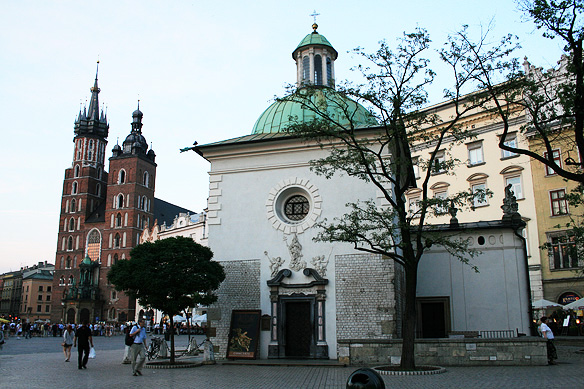
36 hours in krakow

krakow_4

Krakow is my last stop as I travel through Central Eastern Europe.

The royal capital of Poland, the city is unlike any other I have visited. And yes, this may well sound clichéd, but its past justifies the claim. The Old Town with its Jewish Quarter and Auschwitz II-Birkenau were one of the first to go on UNESCO’s World Heritage List.

Pronounced “Krakuf” in Polish, the medieval city of Krakow is straight from a mythical tale replete with dragons and princes. According to legend the 1,000-year-old city was founded by Krakus, a Polish prince who slayed the evil Wawel Dragon, and went on to build his castle and city over its lair on Wawel Hill by the banks of the River Vistula.

A set of bones of a pleistocene creature hangs over the Wawel Cathedral entrance. I am told they belong to the dragon and “The world will come to its end when the bones will fall on the ground.” Continue reading

global travel shot: remembering german nazi auschwitz, 70 years on

Image

auschwitz

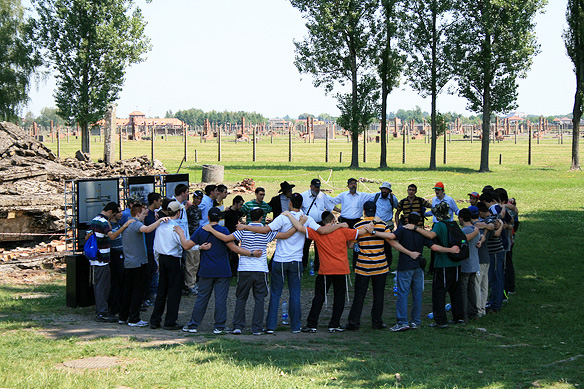
When the bus dropped me off at Auschwitz II–Birkenau—a former German Nazi concentration and extermination camp on the outskirts of Krakow in Poland—on a summer day in 2012, I was not sure what to expect.

I was no stranger to scenes of debased humanity, having wandered through the Killing Fields in Cambodia, and explored the corridors of Robben Island in South Africa. I knew I would see pain, suffering, and the manifestation of an absolute ruthless version of humankind. But to what extent and how it was mourned 70 years on in Auschwitz II–Birkenau gave me both the jitters and hope. It still does. Continue reading

cambodia: the sacred and ugly of divine rule

cambodia_angkor1

[My below post first appeared as a travelogue in Hindustan Times, one of the largest newspapers in India, on 6 March, 2016 in both its print and online editions. The online edition can be read here]

– – –

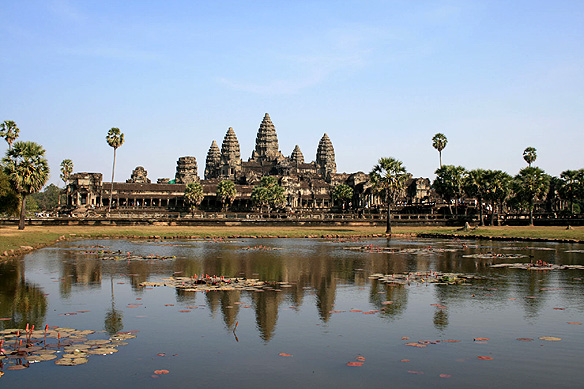
From Angkor Wat to the killing fields of the Khmer Rouge, Cambodia reveals that civilisations hold within them, both, the seeds of greatness and those of depravity

Continue reading

once upon a time, there was a fairy tale called buda-pest

budapest_1

“Once upon a time I was young and beautiful. I flirted. I was brash. I was elegant. Time changed me. History scarred me. Will you love me still?”

Lying on the banks of the Danube, the twin cities of Buda and Pest are a bygone romantic fairytale draped in swaths of 60 years of communism, and at present the capital of a nation struggling to find its place in a capitalist world. Budapest demands and deserves delving beyond the obvious as one of Europe’s most popular holiday destinations and beautiful cities; if for no other reason than to just believe in fairy-tales again. Continue reading

empress sisi’s vienna – today

“I am a seagull, of no land,
I call no shore my home,
I am bound to no place,
I fly from wave to wave.”
~ Empress Elisabeth of Austria aka Sisi (1837-1898)

A fervent traveler, the Empress of Austria and Queen of Hungary, Sisi, born Elizabeth, the Duchess of Bavaria, was a beautiful, lonely, reclusive woman. An adamant non-conformist and free spirit, she married her cousin Franz Joseph I, Emperor of Austria (1848–1867) at 17, and spent the rest of her life refusing to carry out the traditional roles of empress, wife or mother expected of her. The death of her eldest child at two, and the suicide of Rudolf, her fourth child, pushed her deeper into her shell. She was assassinated by an Italian anarchist in 1898. Continue reading

elephanta caves: mumbai’s 7th century shiva temples


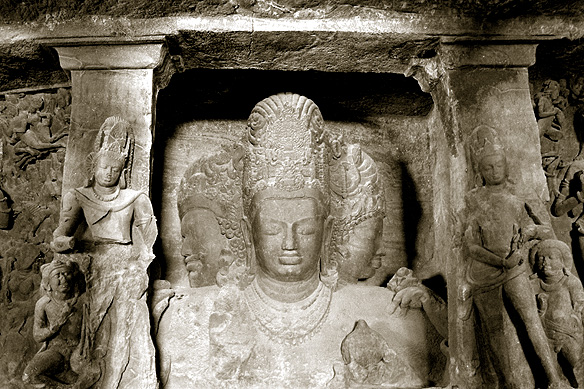
Trimurti or Sadashiva – The Creator, The Protector, The Destroyer 

Some 10 kilometers into the Arabian Sea, off the coast of South Mumbai, is a verdant island covered with five 7th Century rock cut temples dedicated to the Shaiva Hindu sect. Known as Elephanta Island and originally as Gharapuri, literally meaning the ‘city of caves’, its basalt rock hewn temples pay homage to the various forms and legends of Shiva. Continue reading

medieval squares of eastern europe


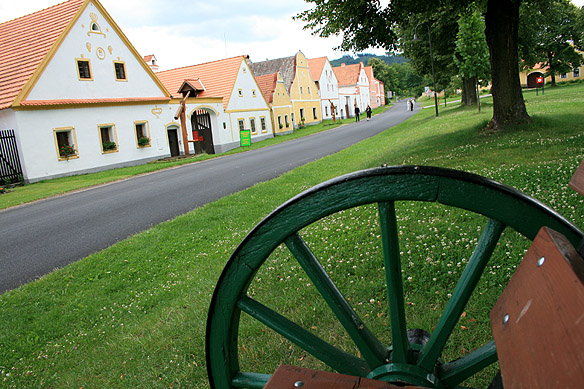
On my way to Český Krumlov – South Bohemian folk Baroque architecture (18th-19th Century) around the village green of Holašovice

The fairy tale continued as I traveled deeper into Eastern Europe, the castles becoming more romantic, the squares prettier and the churches more quaint. Meandering cobbled streets worn over the centuries, red tiled roofs competing with the surrounding green hills, and the lone church spire characterize these pockets of history frozen in time, many of them today UNESCO World Heritage Sites. Continue reading

goa travel tips

If you planning to go to Goa for that perfect holiday this Christmas, hang out at the beach, chill, laugh, smile without a care…


Do not miss (in no particular order) 🙂 : Continue reading