global travel shot: the prehistoric rock paintings of bundi

Image

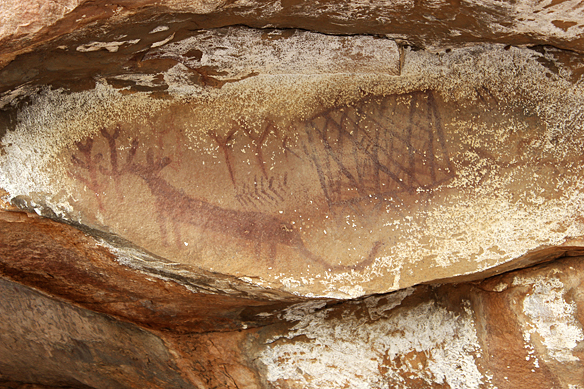
The image above is that of an antelope in a forest, next to a trap waiting to catapult it to its death. Nope. This is not somewhere in the interiors of France or Spain, more commonly associated with prehistoric art, or even in Bhimbetka where India’s prized rock art collection lies.

It is instead on the insides of a cave lining a tributary of the river Chambal in Gararda, Rajasthan, 35 kilometres from Bundi, my base a fortnight ago.

Painted 15,000 years ago in mineral colours, very few people know of it. Just a handful come from the far corners of the world to marvel at its beauty, and timelessness.

And if it were not for a local sweetmeat-shop-owner-turned-archaeologist, we would not know of it either. He discovered the site in 1997 and has passionately been creating awareness of it ever since, unearthing 101 caves festooned with prehistoric art to-date. His name is Kukkiji. Continue reading
national museum, new delhi – 90 minutes at the museum

The National Museum, New Delhi makes the herculean task of experiencing India’s monumental heritage spanning 5,000 years—doable. You could always spend 3 minutes looking at each object in its 210,000 piece collection. But that would take 14.5 months with no sleep or meals inbetween. Or you could do an audio tour and spend a day exploring its glorious galleries through 64 masterpieces. And if you have just one and a half hours, then why not feast your eyes on its very best.

Earlier housed in the Rashtrapati Bhawan [President’s residence], the collection has its roots in 1947 when the Royal Academy, together with the governments of India and Britain, decided to hold an “Exhibition of Indian Art” in London. Selected artefacts from museums across India were collected for the showing.

Before returning the exhibits to their respective museums, it was decided to display the exhibition in Delhi as well. What a huge success it turned out to be! The overwhelming response led to the idea of a permanent National Museum being set up in the capital with its very own building by India Gate which it moved into in 1960.

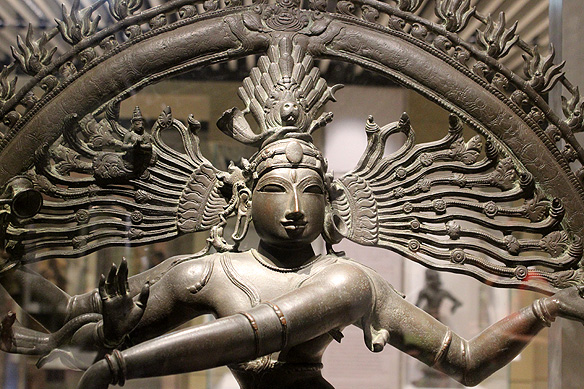
The National Museum has it all. From the iconic Harappan Dancing Girl to elegant Gandharan Buddhas, from exquisite miniature Mughal paintings to luscious Tanjore compositions, from Chola bronzes to 20th Century decorative arts, from medieval sculptures of voluptuous Hindu deities to diamond and emerald regalia of its once-upon-a-time royalty. The Museum has all these, and much much more.

Here are my 15 favourite pieces collated after rambling through its collections and meditating over its audio tour. Doable in 90 minutes. 🙂 Continue reading

the mythological frescoes of nandalal bose in vadodara

In the heart of Baroda, now called Vadodara, within the royal Gaekwad family’s once sprawling grounds is the Kirti Mandir or Temple of Fame. The gigantic stone cenotaph was built in 1936 to ensure their ancestors’ posterity. A sun, moon, and a map of undivided India etched on a bronze globe are perched on top of its shikhara—a sovereign declaration of the spread and timelessness of Gaekwad rule.

But the cenotaph is weathered now and forgotten. It is visited on the rare occasion when a royal family member passes away and is brought to the adjacent cremation grounds to be burnt and then transposed into a plaster-of-paris bust placed in one of the rooms lining the passageways.

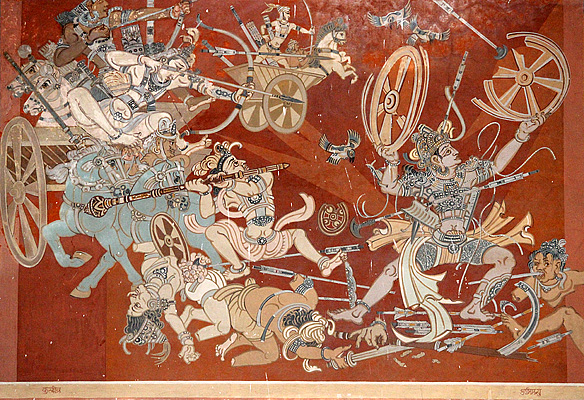
A lone 70-year-old guard, who has spent the last 60 years serving the royal family, with his one-year-old grandson’s arms wrapped around his neck unlocks the large doors should perchance a traveller land up at the temple’s doorstep. But this post is not about the royal family. I will write about them on another date. This one is about the art and artist whose mythological masterpieces decorate the walls inside Kirti Mandir. Continue reading

global travel shot: champaner, a 500-year-old indo-saracenic poem in stone

Image

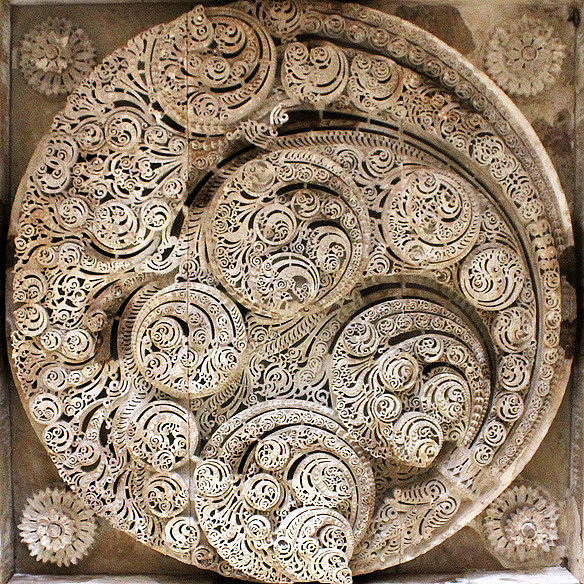
“Look up, at the ceiling.” I am broken from my reverie, as I drift through a forest of 172 stone pillars, by my guide Manoj’s voice prodding me to halt in my tracks and raise my eyes, heavenwards.

High up, inside a dome above the main mihrab is the most exquisitely carved sculpture I have seen to date. And I find myself gasping in awe. Is this for real? I am not too sure what stuns me more. Its immense size, the fineness of the swirling leaves, or its incongruous placement—I am in a 500-year-old mosque in Champaner in Gujarat, 50-odd kilometres outside Vadodara, and the sculpture is Hindu-Jain in style and content. Continue reading

36 hours in pune


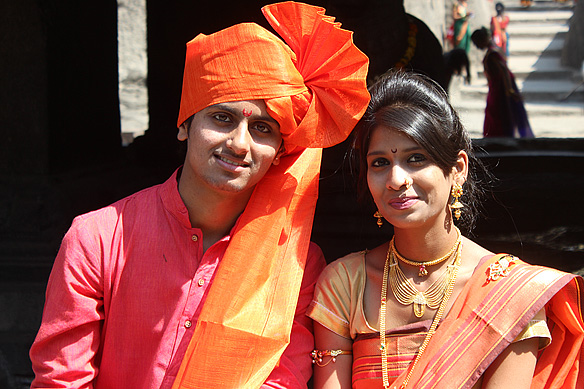
Pune youth at the 8th Century Pataleshwar Cave Temple celebrating Pune Heritage Week
– – –
It took me three years to make the journey to Pune, a city nestled in the Sahyadri hills four hours by road and 149 kilometres away from Mumbai.

Every second person I have met in Mumbai has been somehow connected to Pune. It is either through their family or studies [when they were younger] or if nothing else a place they go to chill out. I figured this in itself warranted I see it with a local, and here I mean a Mumbaikar with one foot in Pune. And so I waited. And waited. Till my desire to explore the city out-weighed the comfort of a well-versed, impossible to pin down, human guide.

Clueless about the geography of the city, but armed with a smattering of facts, figures, and stories from poring over books and articles, I found myself one fine morning seated on a bus aptly named Shivneri. For the uninitiated, Chhattrapati Shivaji Maharaj was born in Shivneri Fort on the outskirts of Pune.

But more of that later on in the post. I was headed to Mumbai’s lesser known and lesser glamorous, yet historically and culturally [as I was soon to discover] richer neighbour. It also happened to be heritage week in Pune which turned out to be in my favour. Continue reading

kelkar museum: one man’s collection of 21,000 objets d’art

kelkar_museum15
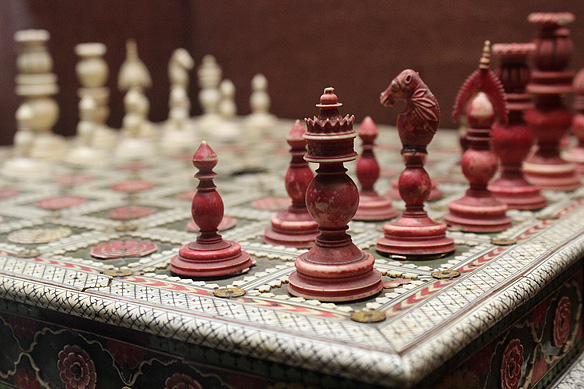
Chess: Ivory; Maharashtra; 18th Century

“Aapko andar aadhaa ghanta hi lagega [It will only take you half an hour inside],” the auto rickshaw driver tells me with full conviction. A little voice inside of me shakes its head and mutters, “Naaaa, an hour. I need an hour.”

Neither know me well. I end up spending two hours.

Remember when we were little children and the whole world was one fantasy land filled with fantastical objects, much like an Aladdin’s cave? The Raja Dinkar Kelkar Museum is a manifestation of that fantasy.

Tucked inside an obscure lane in Pune’s Old City—2,500 pieces of a whopping 21,000 objet d’art collection—are displayed over three floors and 42 sections of what was once Dr. Dinkar G. Kelkar’s (1896 – 1990) home. Though much of the edifice is now a museum the family continues to live in a portion closed to the public. Continue reading

about me: in a bit more detail

ramaarya_wordpress_post

Compliments of the New Year! 🙂

It is already the 7th of January, and it seems just yesterday that I was contemplating the closure of yet another year and what all it had meant for me even as it paved the way for a sequel. There was a sense of déjà vu in the air.

Except for one thing—a chunk of my holidays was taken up in finalizing my personal site. Tweaking it and polishing it to ensure it was perfect, for me at least. You could call the site my fancy online business card, for a better word. But why a personal site, you may ask? Is a blog not enough? Continue reading

3 reasons why the bdl tops as mumbai’s most lovely museum

bdlmuseum_titlepic

Do you like museums? I do. Not all of them though. Just those that stand out, whether it be in scale or the splendour of its exhibits, recount a tale which draws one within its folds, or is so darned quaint it looks like it stepped straight out from another world, another time.

I spent this past Sunday at one that fit the last bill.

One does not often relate Mumbai to museums. And when one does, it is invariably the grand Chhatrapati Shivaji Maharaj Vastu Sangrahalaya which comes to mind. The name itself is a mouthful as is its repertoire of treasures. But there is another that is just as inimitable, albeit in an altogether different way—reminiscent of a large Victorian doll house brimming with charm and pretty things. It is the Dr. Bhau Daji Lad Museum in Byculla.

Three things set the second one apart and place it firmly as Mumbai’s most lovely repository: Its restored stunning Victorian edifice, a bevy of vibrant clay models which transform the place into a magical fantasy, and its exquisite collection of decorative arts which showcase India’s rich heritage. Quite a heady mix!

Read on to know more. 🙂 Continue reading

indian sculpture’s 1,500 year journey at the indian museum, kolkata

indian_museum

A nondescript placard on the wall reads: “Buddhist Stupa, 2nd Century BC, Bharhut, Madhya Pradesh.”

I turn around and almost knock into a magnificent red sandstone 9-feet high railing and 23-feet high gateway, teetering in awe at its grandeur and proximity. It is covered profusely with intricate imagery of secular life and Buddhist teachings in 2nd Century BC India. Short inscribed labels in Brahmi script record the names of donors.

The monumental piece is nothing short of breathtaking. Much like everything else in the archaeology gallery of India’s oldest and largest museum, the Indian Museum located just around the corner of Park Street, Kolkata, and built in 1878 by the then British Raj.

Arranged in chronological rather than thematic order, the gallery showcases 1,500 years of India’s sculpture art, from which emanate its various schools and inter-linkages, in a seamless story.

Piqued? Come join me on a virtual tour of this collection under whirring fans, encased in a hot humid corridor in a Doric columned colonial edifice. 🙂 Continue reading

art focus – i am a landscape painter – archana hande

In respect to all, please know that these are historical photos, showing pictures, telling stories about those who are no longer with us.
I also acknowledge we are on Rann/ Forbidden Kingdom/ Wangai land; I take this opportunity to acknowledge all Elders, past and present.
Everyday everything goes back to the earth.

*The permission to narrate this story is given to me by the Family & Land.

~ Archana Hande

Archana Hande’s exhibition ‘I am a Landscape Painter’ is the story of Abdul Suthar, part true, part imagined. A Kutchch Muslim, Abdul leaves India, together with his camels, through the port of Kolkatta [Calcutta] for Australia. What he could have been, based on the choices that came his way, to where he eventually finds himself, deep in the 19th Century Goldfields trail, is recounted in Hande’s art through the landscapes he traversed. Continue reading