global travel shot: homeboys in dubai

Image

Me: “Kahaan se hai aap?” [Where are you from?] I call out to the group of men working at the Dubai Creek. Their blue salwar kameezes had caught my eye and I was photographing them from across the road.
“Dera.”
Me: “Dera Ishmail Khan?”
“Nahin, Dera Ghazi Khan.” [No, Dera Ghazi Khan.]
Me: “Main bhi.” [Me too.]

For a while I am stunned. Dera Ghazi Khan in Punjab province, Pakistan, is where my ancestors are from. It is a medieval city, founded in 1530 by Ghazi Khan, a Balochi chieftain, and has its own dialect. From the 16th to 18th Centuries, it was part of Mughal empire’s Multan province. When British India was partitioned in 1947 as part of independence, my family came to the other side of the newly created border as refugees. I have never been able to cross the border back, even briefly, because of political differences between the two nations since then.

I had also never met anyone from my hometown outside my immediate family and Delhi’s refugee community—ever. There are not that many of us, namely, Dera Ghazi Khan Hindus. And here was a group from “back home,” laughing and chatting with me across a glistening tarmac road in Dubai. I wondered if they were distant relatives. Those eyes reminded me of my father’s.

For many years now, I have been travelling to Dubai and via Dubai. From a time it had not yet become a city of glass and steel, and life centred around the Deira instead. I have often been asked what do I like so much about the city. My answer is in the group of young men I met today. Dubai for me will always be the place where two arms of a warring family hug each other in camaraderie, away from the glare of politics back home. Here, their pasts and differences have been put to rest. 🙂
global travel shot: yangykala canyon in western turkmenistan

Image

In October this year, I did two fabulous and least visited countries back-to-back: Turkmenistan and Afghanistan. Thirty days of spectacular human, cultural, and geographical terrain. For the traveller in me, it was 30 days of paradise!

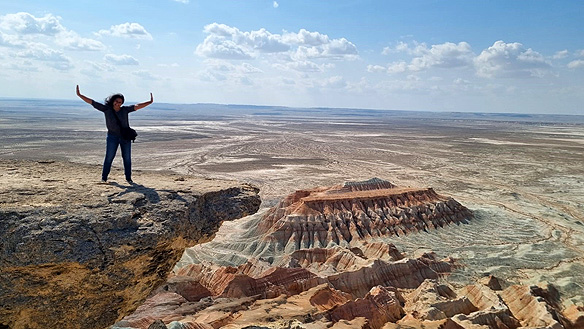
The picture above is at Crocodile’s Mouth in Yangykala Canyon, Western Turkmenistan. Some millions of years ago the canyon was the prehistoric Tethys Sea’s ocean floor. Then continents collided and oceans receded, revealing miles and miles of this surreal desolate landscape in all its glory. And yes, I am standing on the edge of a crumbling limestone overhang. At times, I can be pretty brave too. 🙂

P.S. This image was taken by Dondon, a world traveller I met when visiting Turkmenistan.

global travel shot: silk road opulence in bikaner

Image

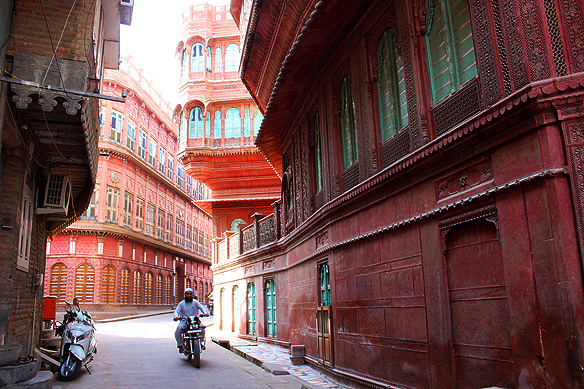
Ever wondered what the homes of the Great Silk Road merchants looked like? Please look at the image above this paragraph. All the monumental edifices lining the pronged road belonged to one such family—the three Rampuria brothers—the wealthiest merchants in Bikaner.

A small princely state deep in the deserts of northern Rajasthan, Bikaner’s strategic location on the Great Silk Road promised, and delivered, immense wealth to its people through the taxes imposed on the wares that passed through it and access to markets for Indian commodities. Silk, spices, precious stones, metals, and opium made the people of Bikaner into billionaires of their era. Continue reading

global travel shot: the 6th nizam of hyderabad’s wardrobe

Image

When you are one of the richest men in the world, a ruler of a princely State where diamonds are measured in kilograms and pearls by acres, and have an obsession for fine clothes, lots of fine clothes—this is what your wardrobe looks like. 🙂 Continue reading

global travel shot: nalanda, the world’s first residential international university

Image

When writing the title of this post, I found myself in a bit of a quandary. Should I call it a global travel shot or an Indian travel shot? The former won.

The above image is of the red brick ruins of the world’s first residential international university—Nalanda Mahavihara—built in the Indian state of Bihar in the 5th Century AD. To be more specific, it is an image of the stupa marking the nirvana of Sariputra, Buddha’s famed disciple, within the university. A Sanskrit name, Nalanda means giver of lotus stalks; mahavihara translates to great monastery.

For 800 years, Nalanda, now a UNESCO World Heritage Site, attracted the brightest brains from all over the ancient world, from as far afield as Central Asia, China, and Korea. Hungry for knowledge, these scholars flocked to Nalanda’s doors to be met by a rigorous oral examination by its gatekeepers. Only those who passed were allowed to study inside the coveted walls. Many were turned away. Continue reading

global travel shot: uninterrupted storytelling in djemaa el-fna

Image

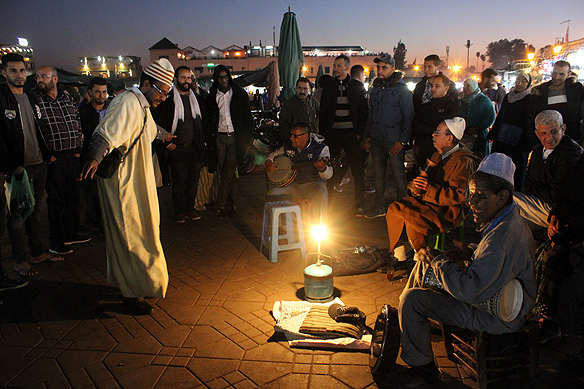
Welcome to my blog post series on Morocco. 🙂

I was travelling through Morocco these past three weeks. Exploring its four Imperial cities, camping under the stars in the Sahara Desert, hiking through the Todra Gorge, soaking in the sun, sand and sea in Essaouira, and falling in love with pearl-blue Chefchaouen.

What better way could there be to kick-start my series than by writing a post on Morocco’s most popular city’s most famous site: Djemaa el-Fna. Continue reading

global travel shot: an ethiopian soldier’s gift to ahmedabad

Image

Yin and yang. Negative and positive. Feminine and masculine. Dark and light. Two sides which together make a whole.

Sidi Saeed, an Ethiopian who found his way to the Gujarat Sultanate’s army via Yemen, way back in 1572, seemed to have some inkling of this. Armed with 45 sculptors, “the nobleman who helped the poor and had a large collection of books,” created a series of jalis or stone screens as part of the Sidi Saeed Mosque in the heart of Ahmedabad. The most exquisite was the “tree of life” with its swirling, leaf-lined, abloom branches, topped with a palm motif; its beauty heightened when seen from both the outside and inside. It was hard put to decide which side was a lovelier sight. Continue reading

global travel shot: alamgir aurangzeb’s mosque in varanasi

Image

Varanasi. The very name rings of sacred Hindu scriptures, stories of Lord Shiva and Ganga, and Hindu beliefs on life and afterlife. The oldest living city in the world, it is the accepted embodiment of Hinduism.

Yet, perched atop Panchganga Ghat by the holy River Ganges, where five streams are said to join, is a lovely functioning mosque—Alamgir Mosque. It is also the largest structure on the ghats. Standing over the ruins of a Krishna temple [the lower walls of the mosque belong to the original Hindu temple], the Hindu deities lie in a nearby edifice. Continue reading

global travel shot: champaner, a 500-year-old indo-saracenic poem in stone

Image

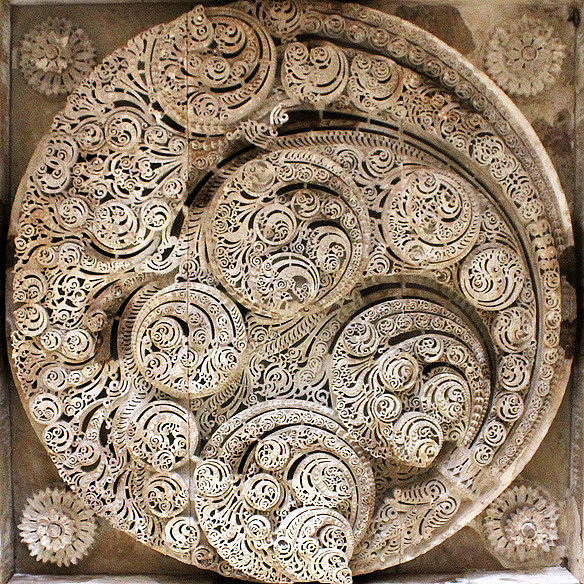
“Look up, at the ceiling.” I am broken from my reverie, as I drift through a forest of 172 stone pillars, by my guide Manoj’s voice prodding me to halt in my tracks and raise my eyes, heavenwards.

High up, inside a dome above the main mihrab is the most exquisitely carved sculpture I have seen to date. And I find myself gasping in awe. Is this for real? I am not too sure what stuns me more. Its immense size, the fineness of the swirling leaves, or its incongruous placement—I am in a 500-year-old mosque in Champaner in Gujarat, 50-odd kilometres outside Vadodara, and the sculpture is Hindu-Jain in style and content. Continue reading

global travel shot: a sweetmeat shop owner’s gift to pune

Image

dagdusheth_ganpati

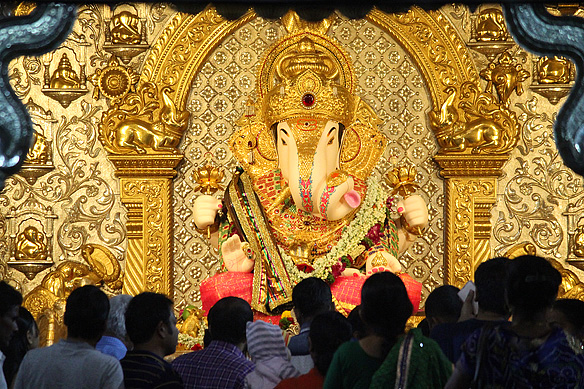
Welcome to my Pune series.

I decided to start my collection of posts on Mumbai’s less glamorous neighbour with the story of the above deity, Dagdusheth [Halwai] Ganpati. It reflects, perhaps most aptly, the depth of Pune’s cultural heritage in its seemingly commonplace everyday places—a heritage which is felt many times over at a pan-national level. Don’t believe me? Read on. 🙂

At first glance the effigy appears to be merely an oversized kindly Ganpati, Maharasthra’s most loved god, and the remover of obstacles. Covered in 8 kilograms of gold, and insured to the tune of US$150,000, the Ganpati is a devotee’s gift to the city and birthplace of the annual Ganeshotsav [Ganesh festival]. Continue reading