travel diaries: in search of king tamar’s svaneti

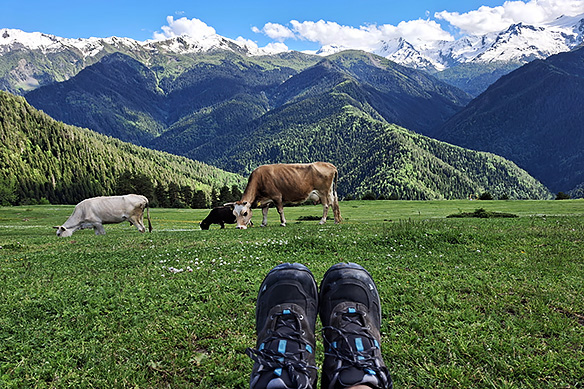
Mepeta Mepe, King of Kings Tamar was only 18 when she was crowned co-ruler of the Kingdom of Georgia in 1178. Six years later, when her father King Giorgi III died, she became its sole ruler. Here, I’d like to add some context regarding the word ‘Mepe’ before I write further. Georgian is a gender-neutral language, and Mepe means king or sovereign ruler, immaterial of whether the person is male or female.

Coming back to Tamar, her title was not the only unusual part of her story. Georgia, under her rule, reached its political and cultural zenith. Its borders spread from the Black Sea in the west to the Caspian Sea in the east, and the Greater Caucasus Mountains in the north all the way to eastern Türkiye and northern Iran in the south. She founded multiple cultural academies, and the arts and literature flourished with masterpieces such as the epic poem Knight in the Panther’s Skin by Shota Rustaveli written as an ode to her extraordinariness. Continue reading →
travel shorts: georgia, birthplace of wine and the toastmaster

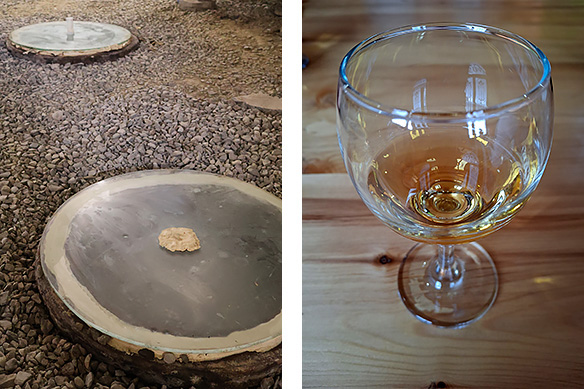
When the word for ‘cheers’ [Gaumarjos] translates to ‘to victory,’ it tells you a lot about the role of wine drinking in a country that has been racked by attacks for millennia.

Wine in the Caucasian country of Georgia is not just a drink. It is an integral part of elaborate feasts called ‘supra‘ led by a ‘tamada‘ or toastmaster, who makes fiery toasts using scooped-out animal horns without ever getting drunk. It is a celebration—of a people holding onto their own identity. Hoping for wins at war. Winning those wars. Rejoicing in those wins. Whether the borders expanded or shrunk. Continue reading →

photo essay: remnants of soviet georgia

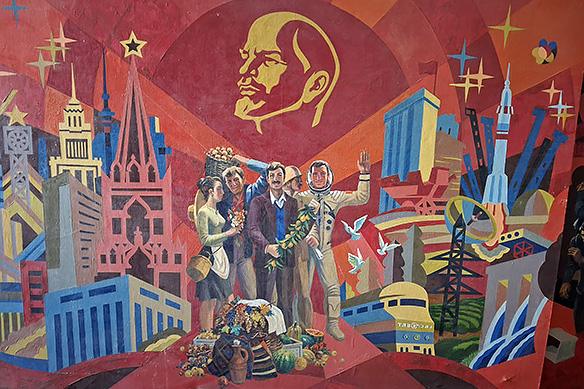
The relationship between Georgia and Russia is, well—complicated. Irrevocably woven, yet defiantly independent, Georgia’s past avatar as the Georgian Soviet Socialist Republic still peeps through across the country. You only need to look. A brutalist masterpiece. A colossal deserted mine with cable cars still frozen mid-air in space and time. Poker-faced apartment blocks sliced with horizontal walkways and plunging lifts. Magnificent abandoned sanatoriums built over healing springs that have given way to tall overgrown trees, moss, and wildflowers.

An urbex paradise. A lesson that nothing lasts forever. Continue reading →

travel shorts: home at the kutaisi family house museum

I am
what inspires me.
You are
what you love.
If you set your heart
upon a purpose,
you shall arrive there—
and believe me—
there,
you will find me.
~ Mari Berdzenadze, Excerpt from LAK’ECH

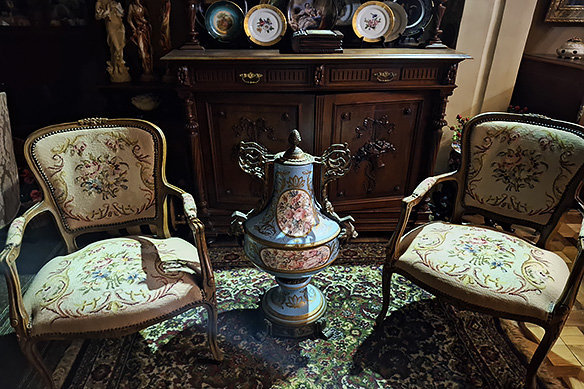
Deep in the heart of Kutaisi’s oldest neighbourhood is Mari’s home. Number 39 on Dato Berdzenadze Street—the street is named after her brother who died aged 21. He was the bodyguard of Eduard Shevardnadze, foreign minister during the Soviet-era, and independent Georgia’s second president. Dato was killed during elections. The house goes by the name Kutaisi Family House Museum. Continue reading →

usgalimal, south goa’s 30,000-year-old geoglyphs

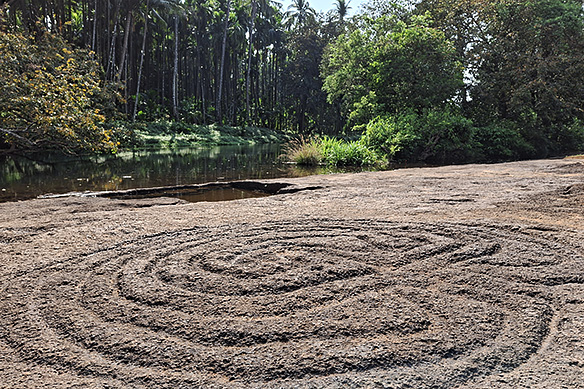
I am often asked what is my favourite travel destination. High up on the long list is India. Just when I think I have figured the travel scene out here, it throws me a googly. Now look at Goa for instance. Top layer: beaches and Portuguese-era culture and churches. Second layer: pristine tropical nature and ancient Hindu temples. Third layer? Prehistoric geoglyphs.

Yes, even I was taken by surprise. Far from prying eyes is a collection of some 125 rock carvings spread over 5,000 sq. metres on a laterite shelf dated between 20,000 BC and 30,000 BC in South Goa. They are known as the Usgalimal rock engravings, named after the nearest village. Continue reading →

museum visit: piprahwa relics—the light and the lotus

By oneself indeed is evil done and
by oneself is one defiled, by oneself
is evil not done and by oneself is one
purified. Purity and impurity
depend entirely on oneself; no one
can purify another.

~ Dhammapada, Verse 165

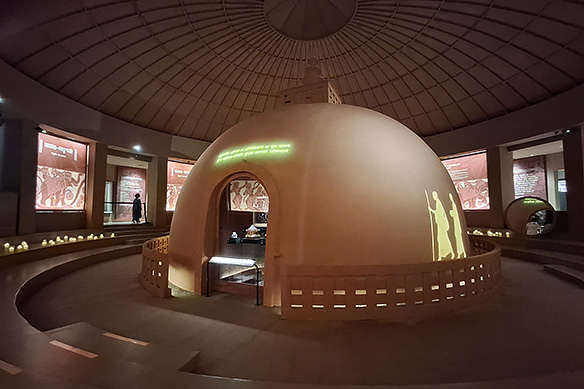
The story of Buddha’s Piprahwa relics is as unusual as the story of the man himself—a 6th/ 5th Century BCE prince, Siddhartha Gautama from the Indo-Gangetic plain, who renounced worldly life and possessions to find a faith built on compassion and self-discovery.

Throughout his life, he was adamant he be treated only as a teacher and not God. Because there was no God. Only our karma. Continue reading →

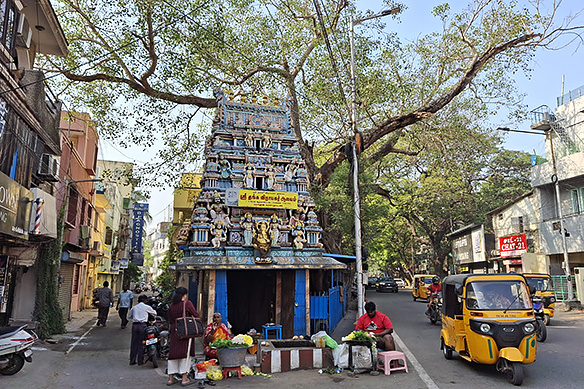
72 hours in chennai: colonial history, an apostle, and hindu gods

Chennai had long been on my wish-list. Even though I have travelled extensively through Tamil Nadu, including its magical temple towns’ route, the southern state’s capital had somehow evaded me.

When I got an opportunity earlier this year to explore the city whilst on a personal philanthropic project [I run pro bono workshops in development communication skills for the social sector], no surprises that I grabbed it with glee! The weather was perfect. It was February. I was going to be based in Alwarpet, right next to the city’s historical centre, Mylapore. And I was in no rush. Continue reading →

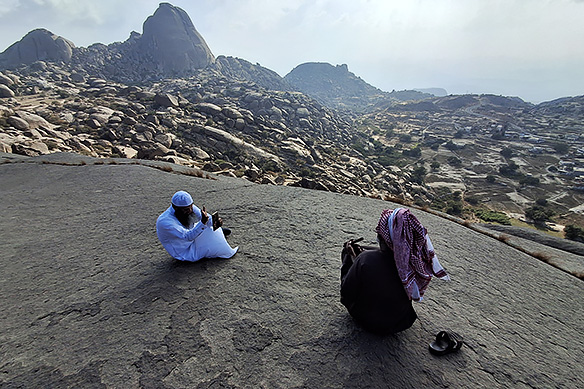
travel diaries: one traveller, mount shada, and happiness

I stare, first in awe, followed by disbelief. There are massive granite boulders around me, everywhere. Climb these? Heck, no.

But then every time I stand stuck, wondering how to traverse a massive crevice, or slide across a cliff topped with a rock that stood precariously over it, my guide Saeed’s hand would be there. And I’d make it. Higher and higher up the barren Lower Shada till I am looking down at the avalanche of rounded buttery stones till as far as the eye can see. The two accompanying villagers, who call these craggy heights their home, settle down on a sloping plateau. One plays his flute. Just like his ancestors did, and his children maybe will. And I find myself beaming with happiness. Continue reading →

adobe fortresses and futuristic skyscrapers: 72 hours in riyadh

Riyadh, the Kingdom of Saudi Arabia’s capital in the middle of the Najd desert is a city of contrasts. Mud-brick fortresses from the ruling family’s yesteryears, and steel and glass skyscrapers reaching for the sky jostle next to each other in seamless ease. It is a city where the country’s past, present, and future have agreed to coexist.

If perchance you find yourself in Riyadh, here is how to make the most of 72 hours in it. Taking in the obvious, and some lesser-known gems.

But first, a little crash-course on the country’s modern political history to put things in context:

– The Kingdom of Saudi Arabia is the only country in the world named after its ruling family. ‘Saudi’ is derived from the the ‘House of Saud,’ who are originally from Diriyah next to Riyadh. Continue reading →

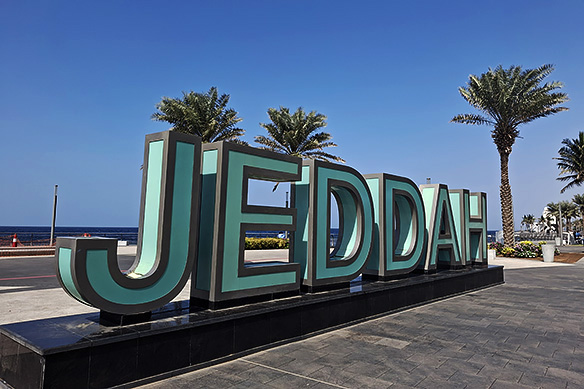
5 reasons why jeddah needs to be on your saudi arabia bucket-list

Jeddah Ghair!

If you wondering what it means, it is the city’s motto, and means “Jeddah is different.”

And it is. Cosmopolitan, liberal, capitalistic.

Most countries, over time, are seen to end up with two megapolises—the traditional, political heart and the commercial wheeling and dealing hub bursting with an eclectic art and food scene. Hanoi and Ho Chi Minh. Delhi and Mumbai. Washington and New York. Beijing and Shanghai.

In Saudi Arabia, it is Riyadh and Jeddah. But Jeddah is not just different from the country’s capital in the arid Najd desert. It is different from the whole peninsula. A difference it celebrates with a self-congratulatory pat. Continue reading →