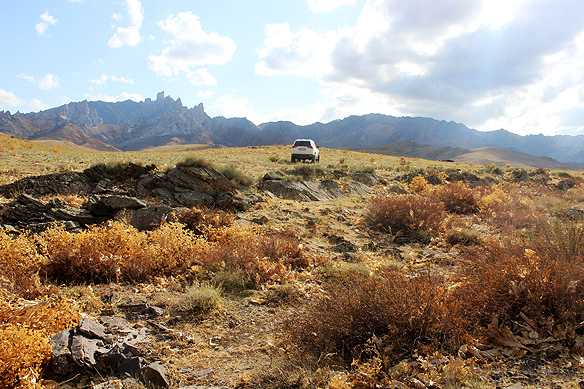
In search of the Arpauzen petroglyphs in southern Kazakhstan.
I wish I had some form of 360-degree vision and could see nature’s entire spread around me at the same go. On one side, the Prisyrdarya Karatau Mountains‘ dark craggy peaks encircled the isolated silent valley swathed in wild tulips and golden heather. On the other, colossal black chunks of rock glistening in the afternoon sun cascaded down the slopes. Pinch me, I whispered to myself. Is this really for real!
But this was all just half its magic …
“Come, look here. There are etchings of two double-humped Bactrian camels and a hunter with a bow and arrow.” My guide, Islam’s excited voice broke into my reverie, and the otherwise pin drop silence punctuated with the sound of our footsteps on crackling sun-dried tangled gorse, and neighing of wild horses grazing a mere stone’s throw away. Continue reading


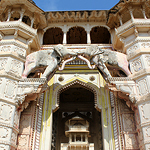 Bundi. The very name is evocative. Translated literally it means sweetened, fried chickpea flour—a snack indigenous to Rajasthan. When applied to a small, sleepy, powder-blue painted town nestled in a deep gorge surrounded on three sides by the Aravalli hills with a spectacular fort and palace looming over it, it becomes synonymous with one of India’s best kept secrets. A secret with myriad secrets within its folds.
 rama toshi arya's blog